








![CALCULATING THE CHANGES. As study habits have changed, the materials used have changed too. "I remember the day when [my brother] came home with his graphing calculator, [which] had Mario. And I was blown away," Spanish teacher Peter Daniels said. (Photos: Fair Use; Wikimedia Commons)](https://www.rubiconline.com/wp-content/uploads/2026/05/Untitled-design-4-1200x800.png)



































![BEWARE. Junior Maisy Torres was expecting a Nickelodeon ride when she entered the haunted house at the State Fair. What she encountered was much more horrifying. "There's not enough money in the world to pay me to do [it again]," Torres said.](https://www.rubiconline.com/wp-content/uploads/2026/05/Never-again-with-nabeeha-1-e1778077989386-1200x802.png)



![[QUIZ] What famous scientist are you?](https://www.rubiconline.com/wp-content/uploads/2026/01/Untitled-design-3.gif)







100% Agreement
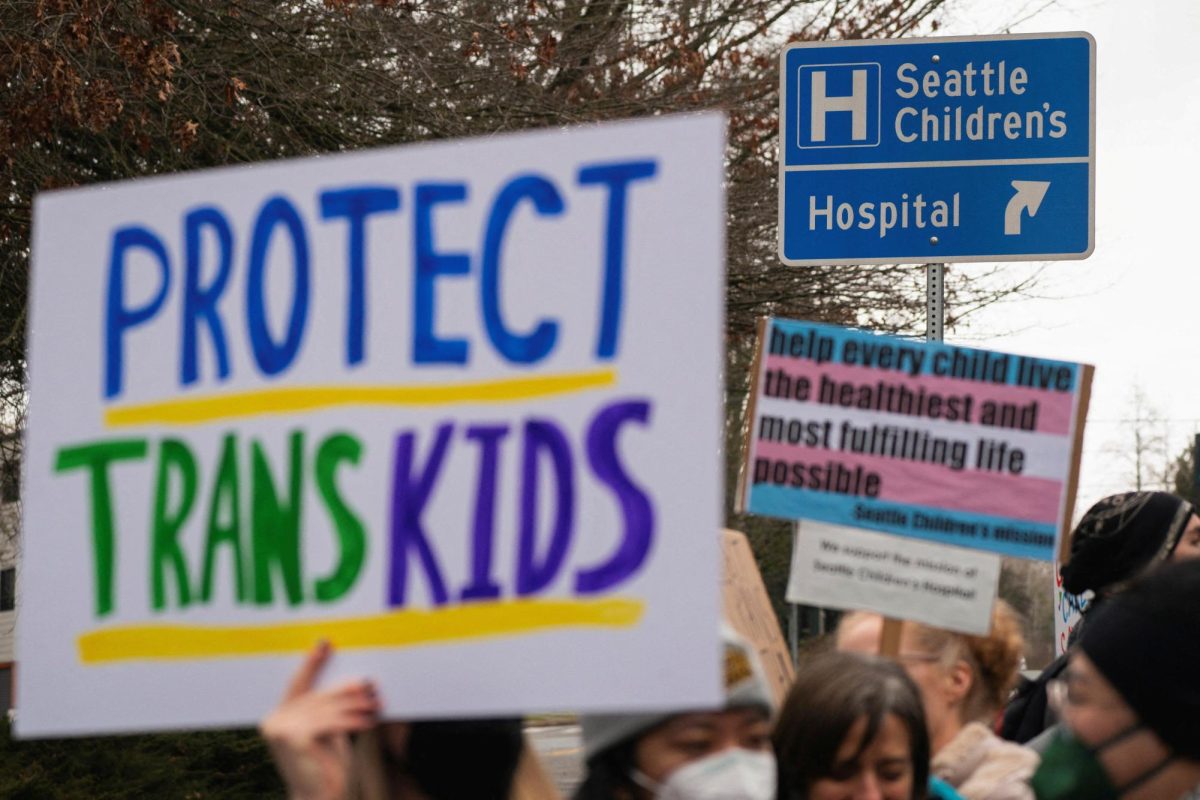
Given the recent attacks on the transgender community, now more than ever it’s essential to help provide trans people with a sense of belonging and safety.
In early 2025, President Donald Trump signed a series of executive orders limiting transgender healthcare and rights on the federal level. Then, on Aug. 27, the horrific shooting at the Annunciation Catholic School and Church in southwest Minneapolis created more fear for the trans community.
The shooter was reported as a transgender woman, a fact anti-trans activists used to further their political agendas. Just a few days later, Aug. 29, Minnesota Republican Rep. Tom Emmer called on Minnesota lawmakers to revoke the state’s trans refuge law. The bill, passed in 2023, established the state as a legal refuge for anyone seeking gender-affirming care. Emmer’s call is just the latest in a long string of political attacks on trans individuals and their identities, a string with unfortunately no end in sight.
The school administration shares part of the responsibility to make members of the LGBTQ+ community feel welcome, and there are already some policies in place that support transgender identities. These policies include the barring of discrimination based on students’ gender identity and students’ ability to share their preferred name and pronouns regardless of their legal ones.
In addition, they affirm St. Paul Academy and Summit School’s support of all students participating in their chosen athletics, regardless of gender identity. SPA’s LGBTQ+ affinity group, Rainbow Connections, also provides a safe space for trans students. While the administration and student groups must continue to provide support, the entire student body shares responsibility.
Students need to be aware that their actions have a far larger impact on belonging than administrative decisions, and that students need to respond to the administration’s call to create belonging seriously. It is common for students to share their name and pronouns during class at the beginning of the school year; students need to take these shares seriously and refer to their fellow students by these names and pronouns.
Beyond this, students should avoid asking their trans classmates personal or complicated questions that they wouldn’t ask of a cisgender person. This can create a feeling of othering, even if it comes from a place of genuine curiosity.
There are other actions students can take to show their support and understanding for our trans peers. The first is to make themselves more knowledgeable about the issues that trans people face daily. Not just during times of distress (like now), during pride month, or on trans days of visibility and remembrance, but on a regular basis. Trans people don’t just face struggles when attention is drawn to them; they face them every day.
The second is by challenging those at all levels of government who will use the fear of trans identity to take away rights. Recognize that most judgments passed by people who are against trans identities are factually incorrect and are meant to spread hate.
When peers or classmates speak out against trans communities, respond by bringing the conversation back to the real people behind the labels. Most of the hostility directed at the trans community stems from dehumanization and ignorance. It is essential that students not only resist this narrative but also fight back against it.