










![CALCULATING THE CHANGES. As study habits have changed, the materials used have changed too. "I remember the day when [my brother] came home with his graphing calculator, [which] had Mario. And I was blown away," Spanish teacher Peter Daniels said. (Photos: Fair Use; Wikimedia Commons)](https://www.rubiconline.com/wp-content/uploads/2026/05/Untitled-design-4-1200x800.png)


































![BEWARE. Junior Maisy Torres was expecting a Nickelodeon ride when she entered the haunted house at the State Fair. What she encountered was much more horrifying. "There's not enough money in the world to pay me to do [it again]," Torres said.](https://www.rubiconline.com/wp-content/uploads/2026/05/Never-again-with-nabeeha-1-e1778077989386-1200x802.png)



![[QUIZ] What famous scientist are you?](https://www.rubiconline.com/wp-content/uploads/2026/01/Untitled-design-3.gif)






“There are things known and there are things unknown and in between are the doors of perception.” — Aldous Huxley
I’m Huxley Westemeier (26’) and welcome to “The Sift,” a weekly opinions column focused on the impacts and implications of new technologies.
______________________________________________________
Last week, I was in Phoenix for the International Science and Engineering Fair (ISEF). Late Wednesday night, after 7 hours of finalist judging, an event at Chase Field, and multiple rounds of the card game BS, I realized that a wonderful opportunity awaited me in the suburbs of Phoenix: an In-N-Out Burger.
But it was never truly about the In-N-Out.
Phoenix is one of 11 U.S. cities where Waymo, the autonomous robotaxi company owned by Google’s parent company Alphabet, operates full commercial services. It is not a pilot program; in March, it was reported that over 500,000 paid rides occur each week across Waymo’s fleet, a number which has grown tenfold in just two years. So, naturally, two other ISEF finalists and I booked a Waymo to In-N-Out the same way you’d order an Uber (and it ended up costing less than an Uber, too, due to the odd time of day).
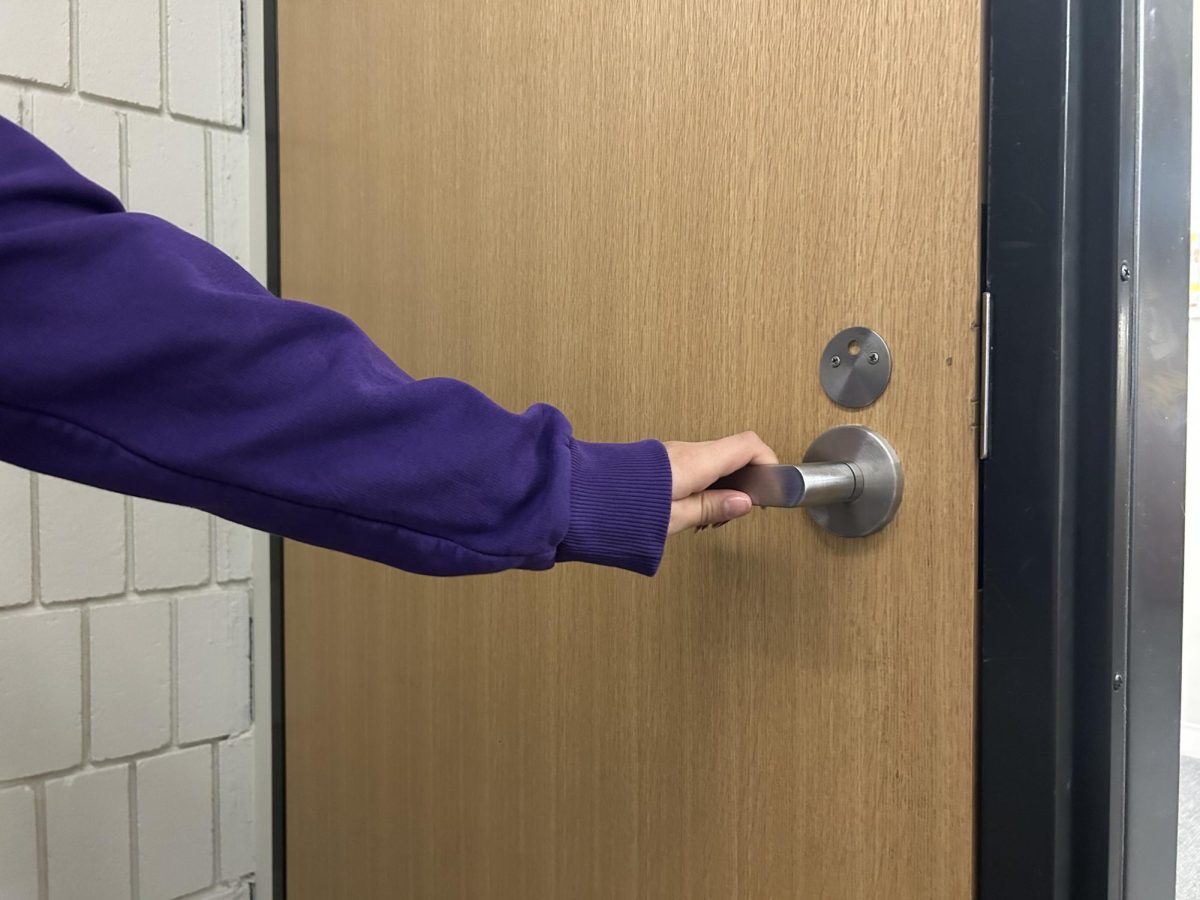
When the car arrived (a white Jaguar I-PACE with a large array of sensors on the roof and side panels), the door handles extended outward, and I took the passenger seat. After we buckled in, the steering wheel turned by its own accord, and we exited the Phoenix downtown, departing into the suburbs with nobody behind the wheel. I’m not sure that I can fully articulate what riding in a Waymo feels like: I wasn’t scared, but I also wasn’t impressed in any flashy way. I would characterize it as unsettling, as the car was doing exactly what it was supposed to without any intervention.
Now, the ride to In-N-Out took 24 minutes. The Waymo was overly patient, cautious, and devoted to staying under or near the speed limit, and so the trip took notably longer than Google Maps’ suggested 15 minutes. On the central screen, a live map displayed the processed version of the live sensor feed. Waymo’s sixth-generation system runs in 13 cameras, 6 radars, and 4 LiDAR units. LiDAR is a technology similar to Apple’s Face ID system that fires millions of infrared laser pulses every second, measuring how long each pulse takes to bounce back, and using that time to extrapolate distance and build a live three-dimensional picture of the road. At one point, a pedestrian stepped off a curb half a block ahead of us, and the car registered and responded to them (highlighting their outline on the screen) before I even noticed they were there. At 10 PM on an unfamiliar dark street, that’s impressive.
Ah, but Waymo’s aren’t perfect. According to the Los Angeles Times, on April 20, during heavy rain in San Antonio, a Waymo detected flooded roads, slowed to what it calculated was a safe speed, but drove into the water anyway, where it was swept off the road and into Salado Creek (albeit without any passengers).
Yikes.
Waymo responded by recalling 3,791 vehicles and issuing a software update to fix the issue. However, just this week on May 20th, another Waymo in Atlanta stalled in a flooded location, and service in Atlanta and across all freeways in the U.S. has been paused until the company can develop a more permanent solution. You can watch an Instagram clip of the stuck car here.
Why did this happen?
All the Waymo sensors involved did “see” the water; the problem is that water is both reflective and transparent, which led the LiDAR pulses to scatter off the surface at angles that tricked the software into viewing the water as flat, drivable ground. Georgia Tech professor Glen Chou, who focuses on designing autonomous algorithms, told local Atlanta news that this is a known limitation: neither LiDAR nor radar systems can reliably estimate the depth of puddles. Alternatively, a human driver would have instinctively turned around, and training computer vision systems to understand the gap between sensor data and instinct is a challenging problem.
Still, I believe Waymo systems are worth considering as they expand into more metro areas. NBC News recently reported that women in San Francisco have stopped using services such as Uber and Lyft at night because they don’t want to be alone in a car with a stranger who can access their home address (a problem Waymo solves entirely). Additionally, software can always be recalled and patched, while human driving cannot. Waymo vehicles have been found to cause 92% fewer crashes with serious injuries than human drivers in comparable conditions (partially due to drunk, distracted, or sleep-deprived drivers), across 170 million fully autonomous miles (which is almost twice the distance from the Earth to the Sun).
To recap: for less than an Uber, a robot drove me across Phoenix at 10 PM in a Jaguar.
What a beautiful sentence to type in 2026.