
![CALCULATING THE CHANGES. As study habits have changed, the materials used have changed too. "I remember the day when [my brother] came home with his graphing calculator, [which] had Mario. And I was blown away," Spanish teacher Peter Daniels said. (Photos: Fair Use; Wikimedia Commons)](https://www.rubiconline.com/wp-content/uploads/2026/05/Untitled-design-4.png)
Private and public. Third grade and 12th grade. Then and now. No matter which school someone goes to, what grade they are in or if they’re a current student, most have had to take some form of tests. That’s where studying comes in.
With tests throughout the year, students, former or current, naturally develop study habits, specifically tailored to them. As the world becomes more digitalized, tests have shifted to a more online perspective, with resources available with greater access to practice problems and solutions.
For junior Noah Abraham, study habits have been defined by a mix of unit tests and finals preparations.
“I go over the work that we’ve done in the unit, mostly homework. I go over notes and use them to help review for tests,” he said. “A lot of my classes have specific main themes and points in each unit to know for the final.”
Not surprisingly, considering classes of different difficulties, Abraham prioritizes more challenging classes.
“I think for my easy subjects, I tend to avoid studying because I’m not as worried [about them] compared to the really hard tests that I know I’m going to have in other classes,” he said. “So I spend more time preparing, and I also start studying a bit earlier for those kinds of tests.”
Distractions can seriously affect studying by breaking concentration and making it harder for students to retain information. According to the University of North Carolina at Chapel Hill, distractions can come in the form of phones, friends, computers or even personal thoughts. To combat this, Abraham keeps himself away from his phone. “When I study, I put my phone away or put [it] in my bedroom, and then work somewhere else. That helps me avoid being distracted by my phone,” he said.
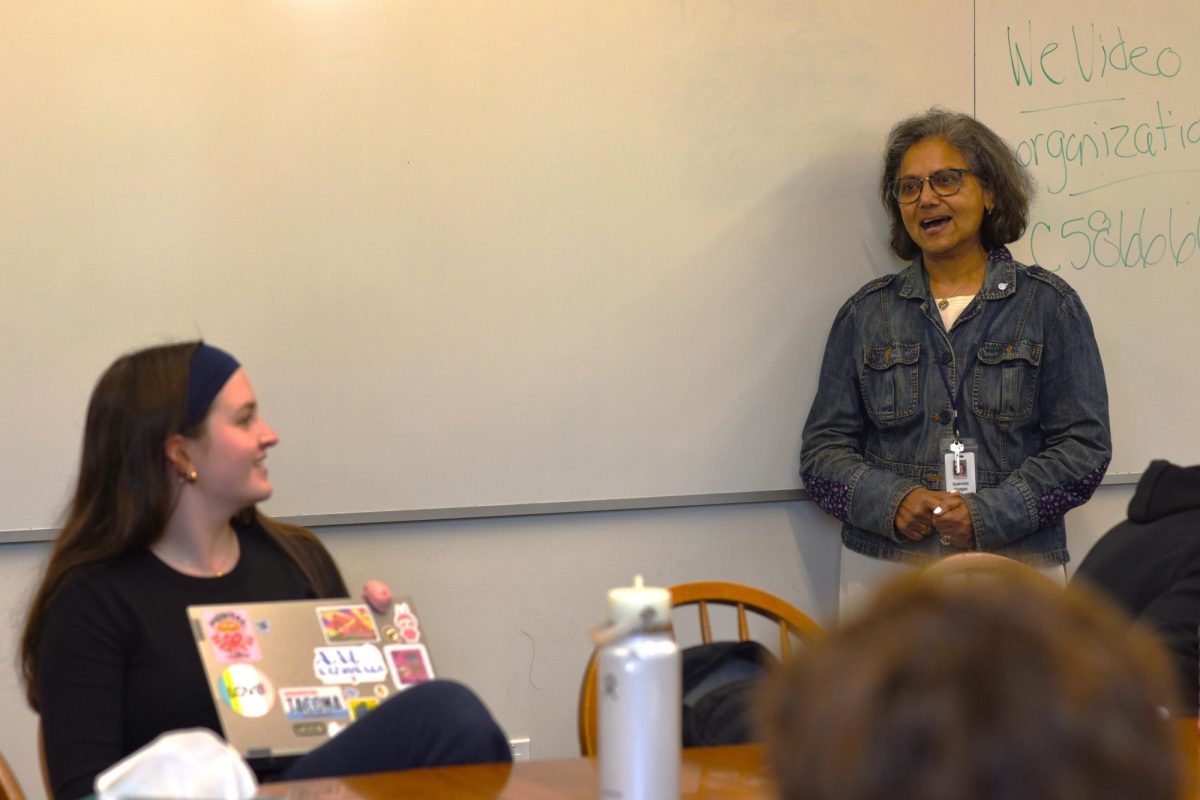
In the 1990s at St. Paul Academy and Summit School, Spanish teacher Peter Daniels heavily relied on paper-based materials for studying. “I started in kindergarten, graduated in 2002 … I remember putting a lot of time into studying. Going over the reading, my notes [and] making flash cards by hand. A lot of that process of writing things out by hand, that helps to sink into your deeper memory,” he said.
Daniels also described finals as more cumulative and required a different set of skills. “I remember finals… They were all cumulative, and they took so much work to put all the details together… You had to be really good at keeping a folder of all your materials,” he said.
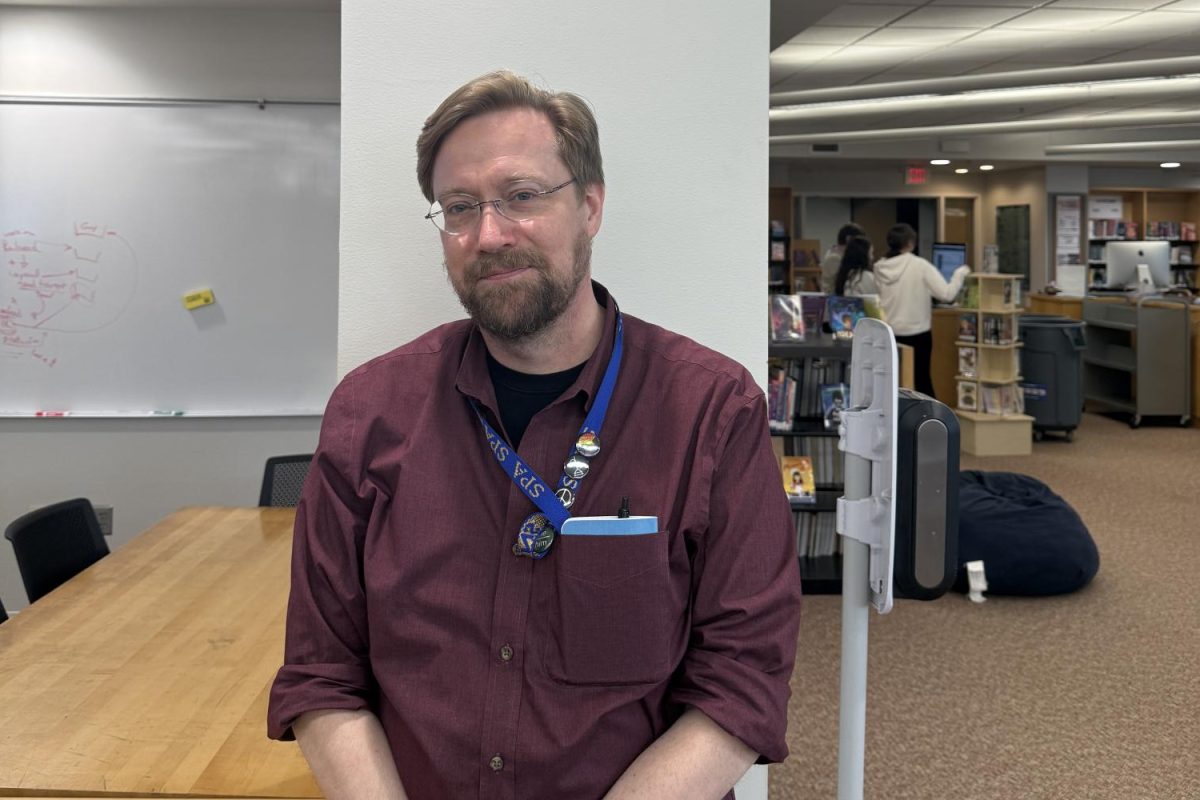
Unlike Abraham, Daniels’ distractions were more about social interactions and items students now have access to every day. “I remember the day when [my brother] came home with his graphing calculator, [which] had Mario. And I was blown away,” he said. “The distractions were more social, the people around you, the jokes, the passing notes, the side conversation in the classroom, it was all in the moment, while you [were] there.”
When comparing studying now versus his time as a student, Daniels finds that organization has become an aspect that is taken for granted. “It’s not like now, where you can go back in Google Classroom and find everything just in order, organized, digitally available to you,” Daniels said.
Artificial intelligence has also become a big part of studying. According to the University of Illinois, AI can be used to personalize learning, provide immediate feedback and provide greater access to resources. However, it can also exhibit biases, provide incorrect information and lead to plagiarism. To reduce these downsides, Abraham exclusively uses AI to write review questions. “I use ChatGPT and Claude a lot to help. I create review questions, and then I go through those, [which] helps me study,” he said.
Studying has always been a part of school for both Abraham and Daniels. While both have used different methods, resources and technology, each has found study habits that best suit them for tests and finals.