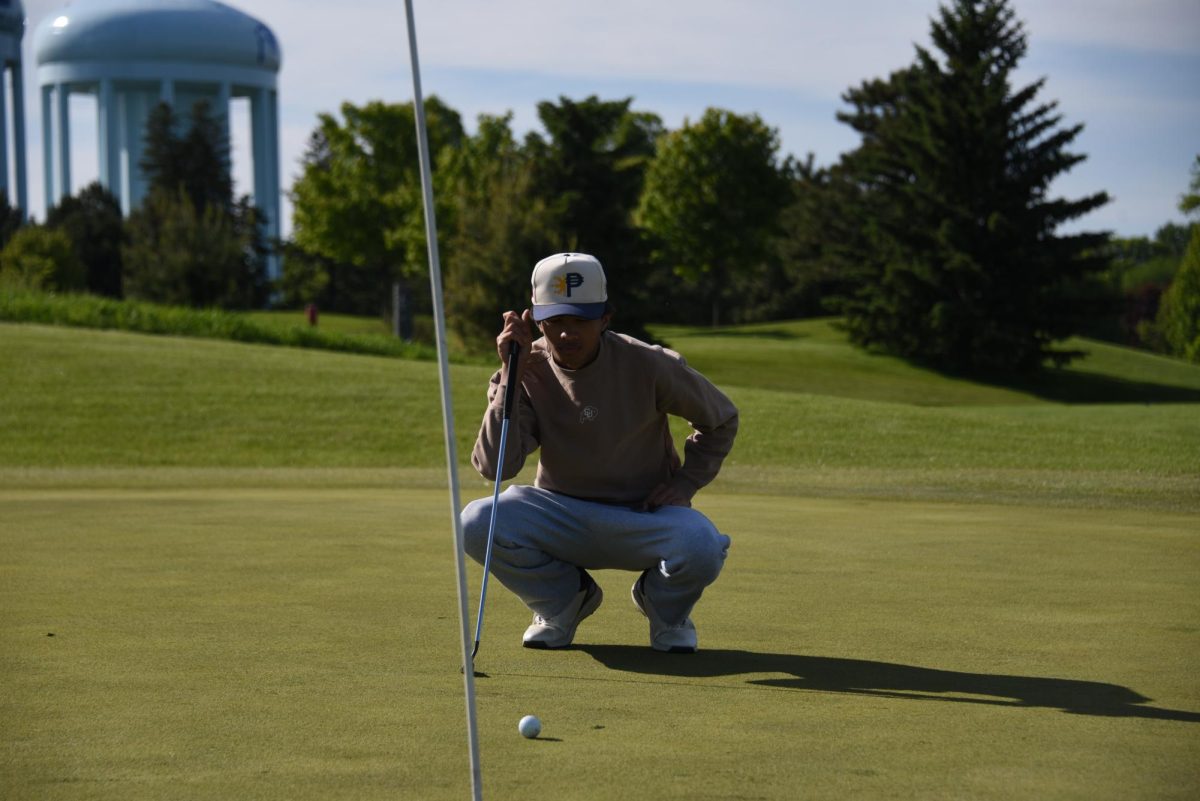

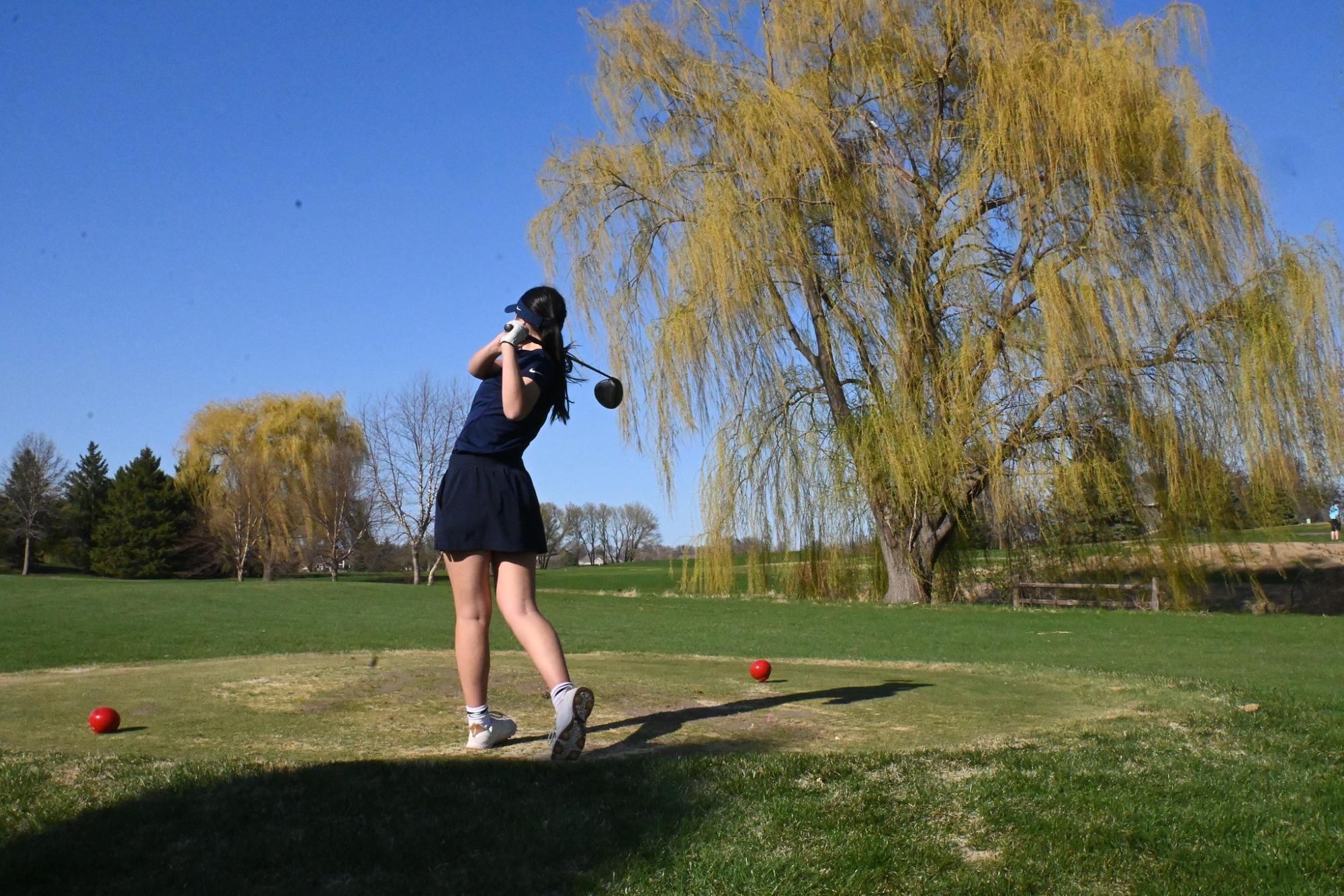
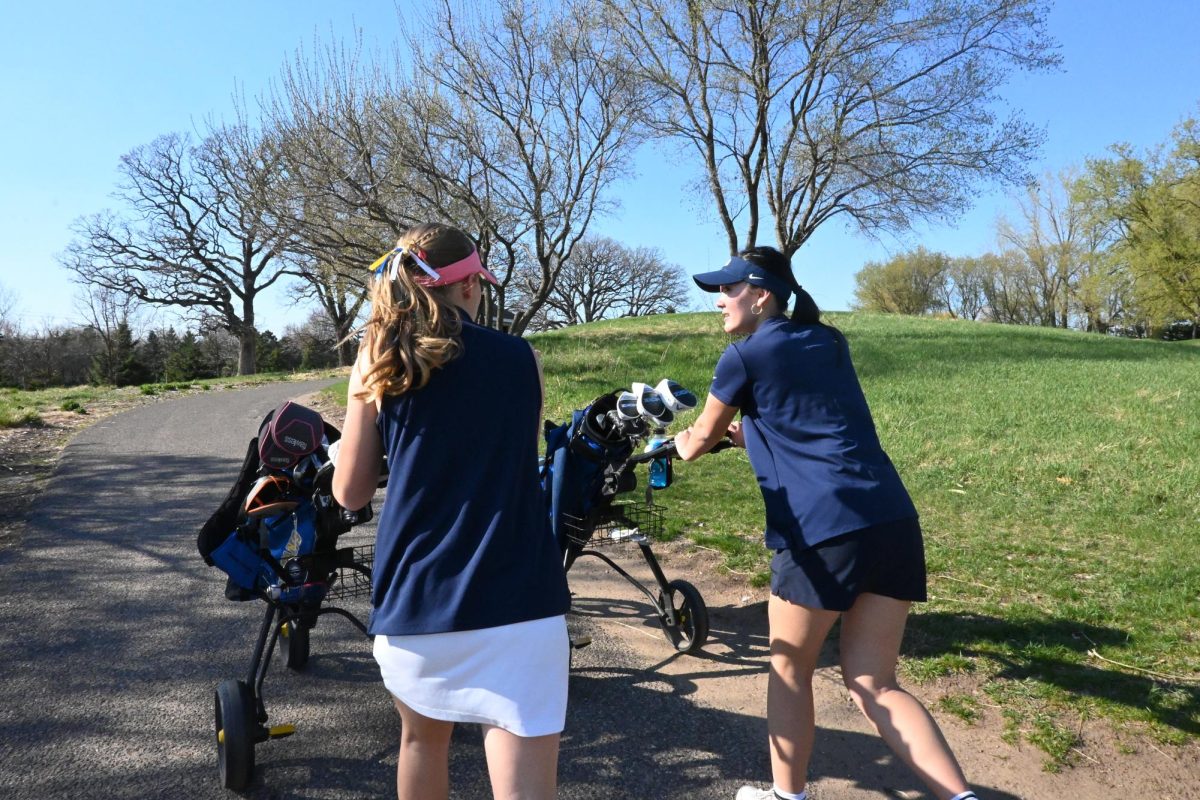
For captain Alyda Overgaard, this season of golf has felt different, but in a good way.
Now in her second year as captain, Overgaard describes a shift not just in her self-assurance but also in her team’s confidence. With more returning players and stronger communication and collaboration strategies, the team has found what she calls “rhythm.”
“Last year, I kind of stepped back a little bit,” Overgaard said. But this year, “it’s nice to be able to feel a little more comfortable, like giving them some advice.”
Confidence has been built through intentional teamwork. Regular communication between captains and coaches, along with clear goal-setting strategies, has helped define both individual and team priorities. Players are encouraged to support each other as they develop their own game, a unique and sometimes difficult balance to strike in an individual sport.
“I think a lot of times it’s nicer to get advice from kids your age,” Overgaard said. “And sometimes it’s nice to get advice from a coach. We’ve found a good balance through communication.”
This stability has contributed to a team culture centered on positivity and connection. Despite being a relatively young group, the team has learned the social aspect of golf, making practices and matches as much about relationships as results.
For ninth-grader Brooke Spilseth, that sense of community has been one of the biggest surprises of the season.
“Golf has always been, in my head at least, like everyone’s in it for themselves rather than a community sport,” Spilseth said. “But here, golf has been like a social sport. While you’re playing, you are talking to all of your people versus just being in your head the whole time.”
As a first-year player, Spilseth said the team environment has been especially welcoming.
“All of my teammates have been very inclusive,” Spilseth said. “It’s just been fun to play golf.”
Much of that transition has been supported by team leadership.
“Our team captains have been very inclusive of everybody,” Spilseth said. “They show us where we are striving to be with our skills in a constructive way.”
Head coach Angie Kritta said the team’s culture has been shaped by both experience and continuity within the roster. The team includes 17 golfers, with 14 returning players and three new players, many of whom have been competing together for many consecutive years.
The consistency of the roster has helped the team stay steady even through challenges this season, specifically the loss of a previous home course at the University of Minnesota. With the team’s previous practice location no longer available, they have had to adjust their routines entirely.
“The challenge this year is finding someplace that we can play,” Kritta said. “We’ve been able to coordinate with a couple of different courses, but it does mean we have to travel a little bit more.”
Despite the logistical challenges, the players have persevered and adjusted well this season.
“The team has been taking it really well in stride,” Kritta said. “They’re actually kind of excited, because they get to play more courses than they normally would with just one course.”
There are still some clear disadvantages to not having a consistent home course available. Players are unable to master a single course and constant switching between places requires more travel, adjustment and coordination.
Even with these challenges, the team has remained cohesive. With a strong core of returning players, the group has leaned on experience and leadership to remain persistent and emphasize growth throughout the season.
“We have girls that have never picked up a club before and we have girls that have been playing since they were five,” Kritta said. “There is a place for everybody on the team.”
That inclusivity has helped new players like Spilseth not only adjust to the team but also to the increased commitment of high school athletics.
“There’s a lot more playing on the course and it takes more time,” Spilseth said. “But it’s been worth it.”
As the season continues, both players and coaches point to adaptability as one of the team’s defining traits, whether adjusting to new courses, new roles or new expectations.
Along the way, the team has also found time to build connections off the course, from simulator practices to post-event ice cream outings. These small moments reflect a larger sense of unity.
On a team built around an individual sport, that sense of connection may be its greatest strength.
Their next match is on May 12 at Minnehaha Academy.