











![CALCULATING THE CHANGES. As study habits have changed, the materials used have changed too. "I remember the day when [my brother] came home with his graphing calculator, [which] had Mario. And I was blown away," Spanish teacher Peter Daniels said. (Photos: Fair Use; Wikimedia Commons)](https://www.rubiconline.com/wp-content/uploads/2026/05/Untitled-design-4-1200x800.png)









































![BEWARE. Junior Maisy Torres was expecting a Nickelodeon ride when she entered the haunted house at the State Fair. What she encountered was much more horrifying. "There's not enough money in the world to pay me to do [it again]," Torres said.](https://www.rubiconline.com/wp-content/uploads/2026/05/Never-again-with-nabeeha-1-e1778077989386-1200x802.png)




![[QUIZ] What famous scientist are you?](https://www.rubiconline.com/wp-content/uploads/2026/01/Untitled-design-3.gif)






Weighing the truth of sustainable production and corporate transparency
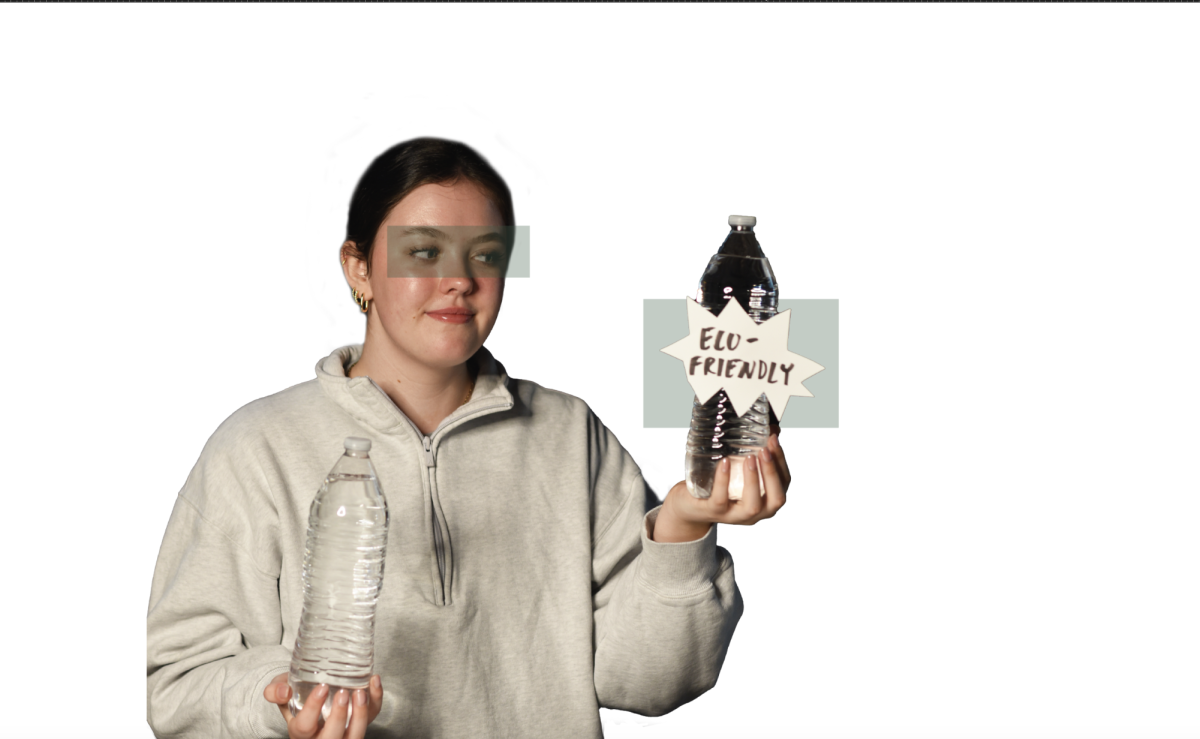
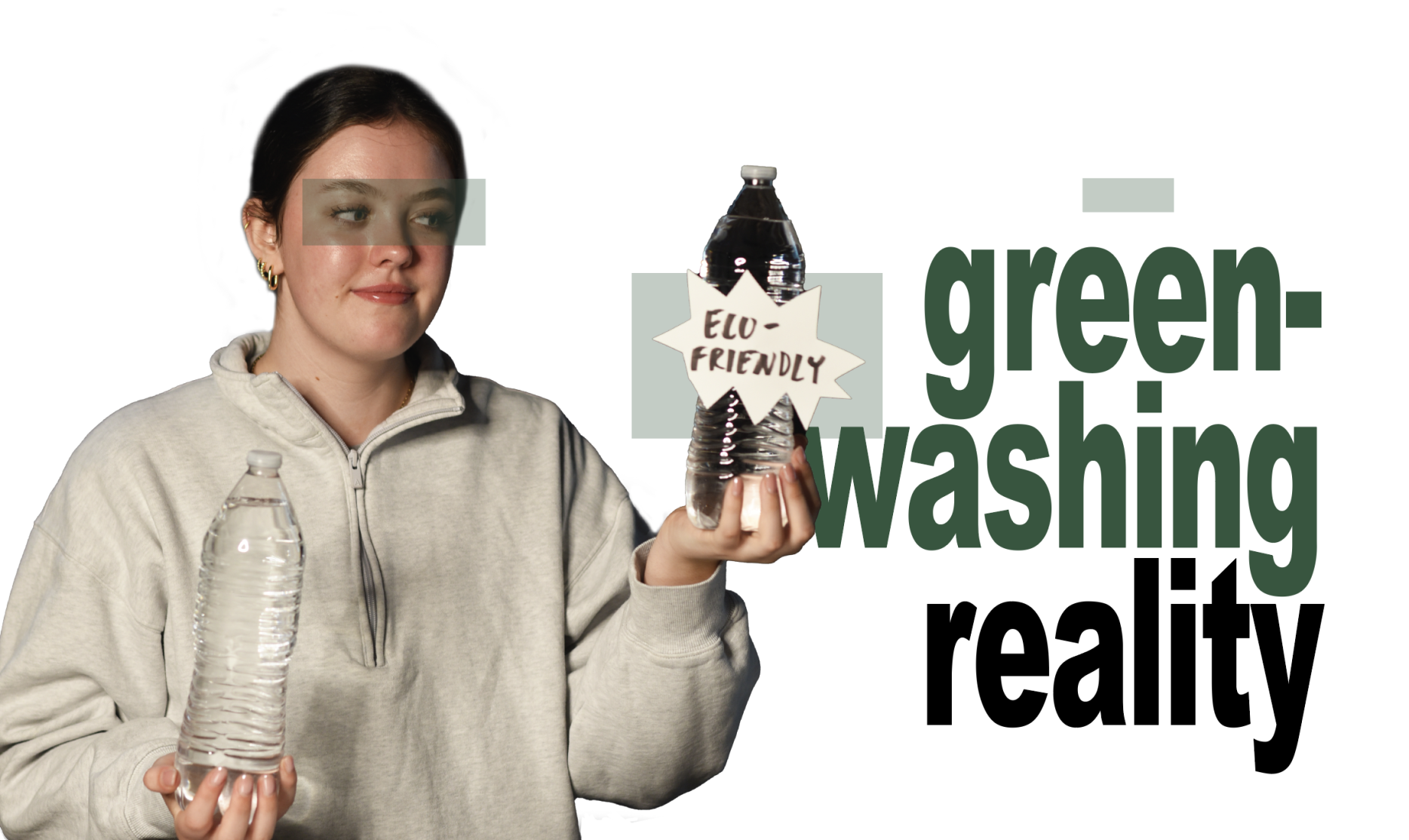
“Eco-friendly.” “Green.” “All-natural.” Many corporations use these broad terms, claiming that they prioritize sustainability in their manufacturing to persuade consumers that their purchases have little environmental impact. But how much are these companies actually doing, and how meaningful are their efforts?
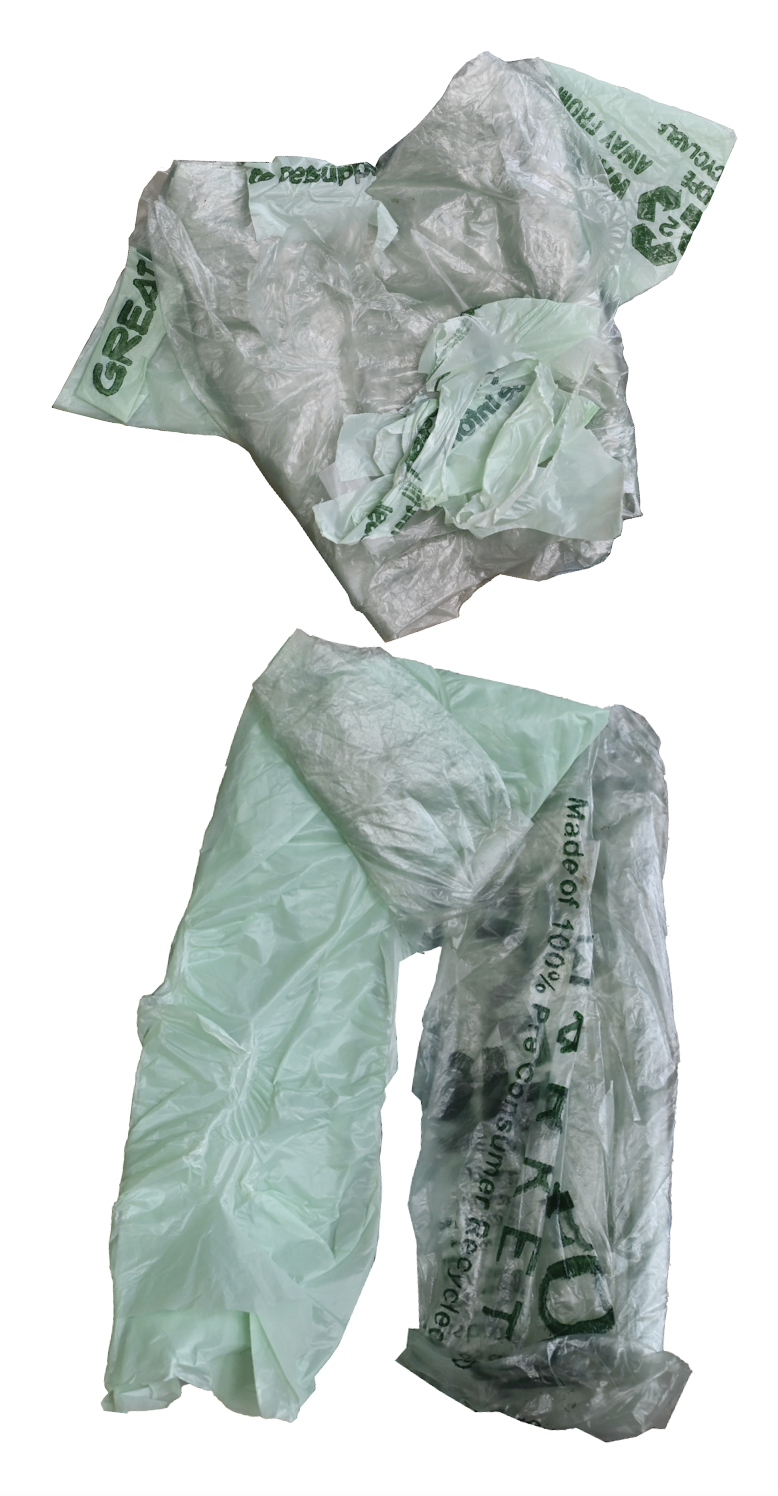
This raises the concern of greenwashing, a term used to describe companies that exaggerate or falsify their environmental efforts, often misleading consumers. By relying on vague language and selective data, many companies make statements about their climate efforts, but don’t make substantial adjustments to their manufacturing methods.
Sophomore Anna Klevan believes that companies greenwashing can blur the fine line between authentic efforts to be environmentally friendly and misleading marketing. “I’ve heard about a lot of companies trying to become more sustainable but it’s hard to discern real sustainability from the greenwashing so many brands are using,” she said.
TRANSPARENT LABELING
For example, the meat and dairy industries, which have had the greatest environmental toll among food producers, highlight their minor sustainability initiatives while continuing large-scale practices that contribute heavily to greenhouse gas emissions. A 2026 study by PLOS Climate found that out of 1,233 climate effort claims made by 33 of the world’s largest meat and dairy companies, 98% could be categorized as greenwashing using a framework that researchers have developed.
Despite widespread greenwashing, some companies have prioritized transparency over misleading statements. One of those companies is Patagonia.
Over the years, Patagonia has earned the reputation of a leading company in environmentally friendly production. Ninth-grader Ava Mays appreciates Patagonia’s sustainability initiatives, particularly their use of recycling in clothing.
“I like Patagonia because you can bring in your old clothes and they’ll recycle them into new clothes. That’s kind of cool,” she said.
The clothing company released its first impact report in 2025, which discussed how they have improved their products to be more sustainable, their industry partners in climate efforts and specific data on their impacts. Impact reports are common for government bodies, but detailed and high-quality reports for manufacturing companies are less common.
The report also laid out the environmental goals they met and those they did not. Though the report listed many successes, failures were not hidden in the fine print; they were presented in bold headlines. The report was praised by Forbes for raising awareness and increasing visibility around climate efforts, regardless of success.
Junior Lachlan Gaspard believes that this level of authenticity should be the standard for manufacturers.
COMPANY EFFORTS
“I think reports like the one released by Patagonia should be normalized for all companies of that size,” he said. “As a consumer, I value honesty above anything else.”
Other companies have faced mixed public reactions to their environmental accountability efforts. IKEA, a Swedish furniture retailer, has implemented specific environmental initiatives, such as using recycled wood.
Additionally, IKEA has prioritized creating products quickly and cheaply, earning the label of a fast furniture brand. Klevan believes this method of production completely sacrifices sustainability.
“Manufacturing can be sustainable, but at some point, mass production can never be,” she said.
LONG-TERM GOALS
According to Gaspard, there are two main barriers to reducing mass production.
“Realistically, the largest problems right now are greenhouse emissions from energy, as well as the fact that the main material used is plastic,” he said.
Plastic is a hard material for large companies to avoid, as it has properties that are difficult to replicate with green alternatives.
“While biodegradable materials are the best solution for many things, people generally prefer plastics because they are largely more flexible and stronger than biodegradable materials,” Gaspard said.
Though roadblocks like these are difficult to overcome, Gaspard still hopes production can have a sustainable future if companies directly address their problems instead of trying to maneuver around them.
“If factories used sustainable energy for power and switched to a biodegradable material, the emissions would be largely manageable,” he said.
As companies continue to promote environmentally friendly manufacturing, the extent of their efforts range widely. Some businesses provide transparency through detailed data, and others shine a light on their minuscule impacts while failing to address larger environmental problems. Across industries, from clothing to furniture brands, the task remains to not only reduce the effect of production on the environment, but also to clearly communicate to their consumers what their efforts involve.
Sustainable consumption stems from awareness
Consumerism is everywhere. Whether it is food, clothing, technology or household appliances, near constant spending has become a societal norm. Advertisements intrude on everyday media, encouraging individuals to buy and buy. According to Visual Capitalist, in 2023, U.S. consumer spending reached a high of $19 trillion per year.
SOCIETAL COSTS
Junior Murphy Miltner believes that consumerism creates an unhealthy social environment.
“[Consumerism] creates a need, socially, to have whatever’s new, instead of reusing what you have and buying quality pieces,” she said. “And because trends come and go so quickly in this day and age, it just is so wasteful.”
According to the United Nations, the current trend of consumer habits will not be sustainable for the Earth’s future: it is predicted that if the planet’s population increases to 9.8 billion by 2050, the equivalent of three planets’ resources will be required to sustain current lifestyles. Thus, sustainable consumption is a recommended practice among many experts.
GLOBAL ISSUES
Middle school social studies teacher Bobak Razavi focuses his yearlong global issues course for seventh graders on sustainability.
“Sustainable consumption, to me, means that you are taking from the earth or our markets in a way that those materials can still be replenished,” he said.
Throughout Razavi’s class, his students learn about sustainability through sources on new urbanism, drowning island communities, fast fashion and even lab-grown meat. Razavi leads his class through discussions and debates regarding sustainability issues.
“We start with clothes in here,” Razavi said. “If you can get a kid just to look at the tag on their hoodie, that starts the process of awareness, and that starts the discussion.”
FASHION WASTE
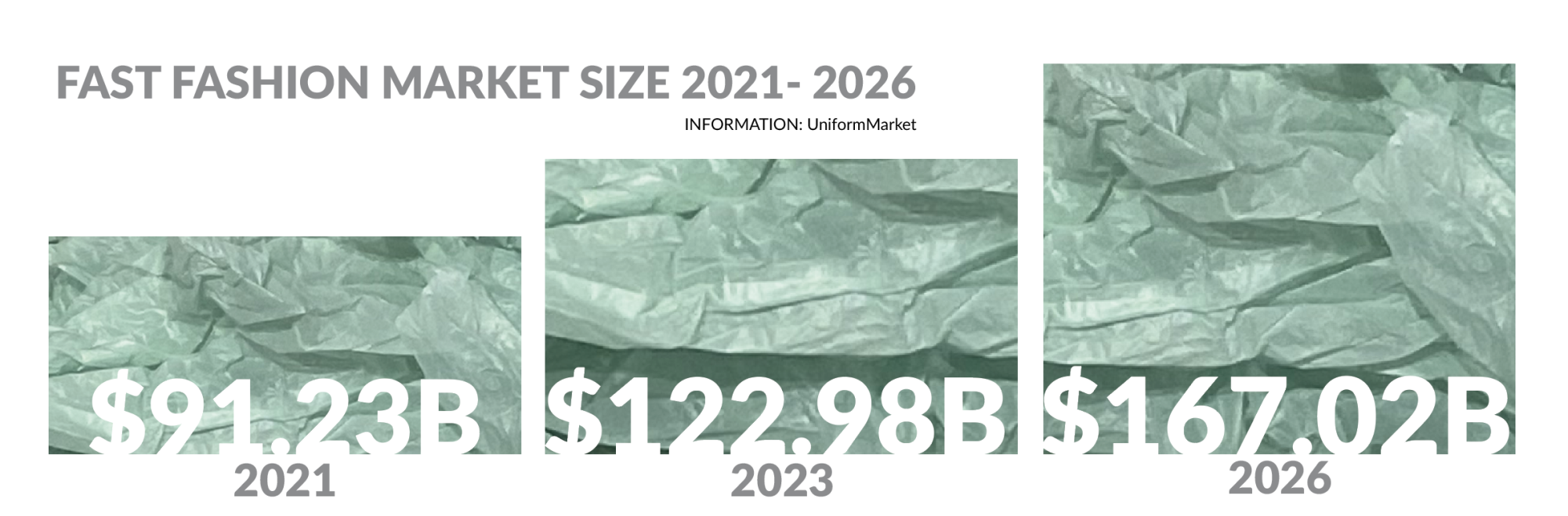
Fast fashion is a growing route of mass consumerism and has numerous environmental consequences. A 2024 Sustainability: Science, Practice and Policy study found that global clothing production has doubled over the last 15 years, while, on average, garments are worn less and discarded faster.
Sustainable consumption, although it requires sustainable options on the market, also involves seeking items that can be repaired, reused, or recycled, a process referred to by the UN Environment Programme as ‘Lifecycling.’
CORPORATE POWER
Sophomore Addy Davies believes brands should be expected to pursue sustainability in this way.
“I think brands, especially skincare [or] hair care – that kind of product that you just throw away the packaging after you’re done with it – [should] either [try] to make their packaging easier to recycle, or have refills, so that you’re not throwing something away and going and buying it again every time you run out of the product,” she said.
Davies also finds it difficult to consistently choose sustainable options due to price.
“It’s also a factor of how much money I have to spend. Because, for sure, I would buy everything super sustainably if I had the money for that,” Davies said.
Despite obstacles such as price, social pressure, and advertisement, Razavi’s advice for students becoming sustainable consumers is simply awareness.
GREEN(ER) PLATE
Clothing is only a factor of what people consume on a day-to-day basis, as the U.S. Bureau of Labor Statistics reported that apparel and services accounted for only 2.5% of household expenditures in 2024. Other more popular categories included Housing, Transportation, and Food.
According to the research library Ballard Brief, food production, consumption and waste have detrimental environmental impacts. 30% to 40% of the U.S. food supply is wasted each year.
By teaching students about sustainable consumption, Razavi has learned more about sustainable food consumption and has altered his habits accordingly.
“Through teaching this course and reading a million articles, … I have stopped eating as much red meat. I had no idea before I taught this course the giant impact that eating red meat has,” Razavi said.
Food habits are crucial to sustainability. A 2020 Science of The Total Environment study, found if all Americans switched to eating beans instead of meat, it would free 42% of U.S. cropland and reduce carbon emissions by 334 million metric tons.
BETTER ENERGY
Additionally, a switch to clean energy or renewable energy would have a great impact on reducing individuals’ carbon footprint. According to the U.S. Environmental Protection Agency, about 40% of total energy consumption in the U.S. is used to generate electricity. Adopting renewable energy practices would have little to no impact on the environment.
Ninth-grader Louis Goldbaum thinks it is everyone’s job to monitor sustainability when consuming products.
“Sometimes that’s a really big change that can often be hard to make, especially when it’s easier to buy from unsustainable places,” he said.
BE THE CHANGE
Miltner advises others to be mindful of what they buy, where the product comes from, and what happens when the consumer no longer wants it.
“So, if there’s a new water bottle you want to get, [think] why do you want this new water bottle? What does it have [that] your old water bottle doesn’t have? … Can you donate the old one so that it’s getting used?” she said.
The intensity of consumerism has made it difficult for consumers to step back and consider the product they are buying.
As Razavi said, “[There] are little changes we can make, but if you’re not aware of it, you can’t make any change.”