




![CALCULATING THE CHANGES. As study habits have changed, the materials used have changed too. "I remember the day when [my brother] came home with his graphing calculator, [which] had Mario. And I was blown away," Spanish teacher Peter Daniels said. (Photos: Fair Use; Wikimedia Commons)](https://www.rubiconline.com/wp-content/uploads/2026/05/Untitled-design-4-1200x800.png)















![BEWARE. Junior Maisy Torres was expecting a Nickelodeon ride when she entered the haunted house at the State Fair. What she encountered was much more horrifying. "There's not enough money in the world to pay me to do [it again]," Torres said.](https://www.rubiconline.com/wp-content/uploads/2026/05/Never-again-with-nabeeha-1-e1778077989386-1200x802.png)


![[QUIZ] What famous scientist are you?](https://www.rubiconline.com/wp-content/uploads/2026/01/Untitled-design-3.gif)
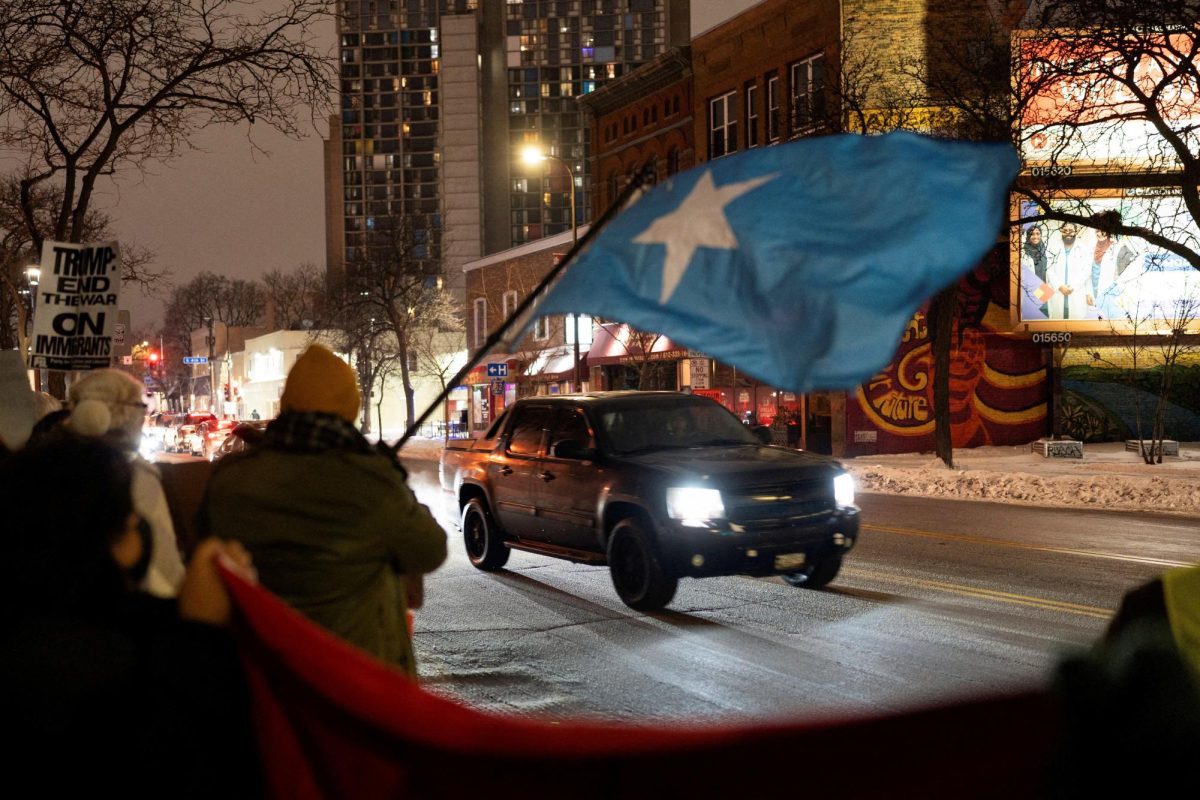




Twin Cities in the spotlight: protests inspire and inform youth
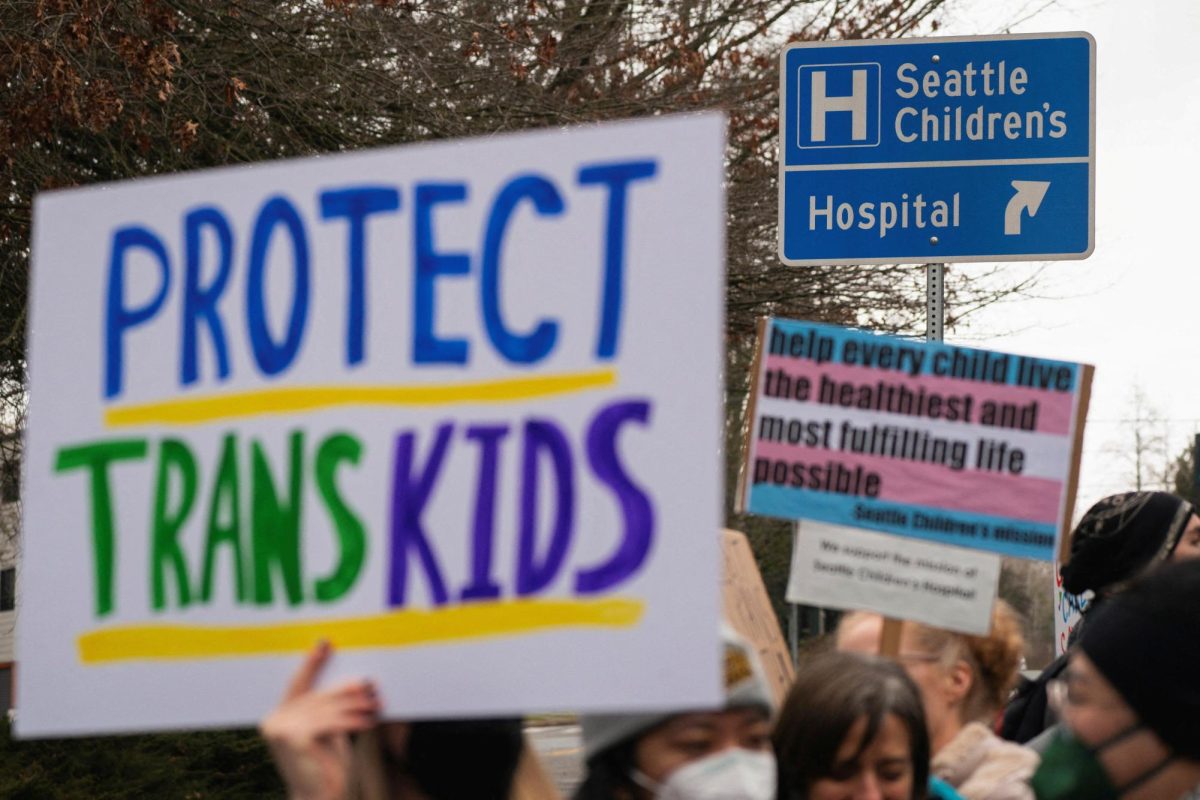
From Black Lives Matter to Operation Metro Surge to No Kings, Minnesota has been Ground Zero for activist movements throughout many upper school students’ adolescence.
Senior Fletcher Coblentz protested for the first time as a sixth-grader, following the murder of George Floyd by Minneapolis Police Department officer Derek Chauvin in May 2020.
His parents were nervous about allowing him to attend but eventually agreed.He described these protests as an important part of the development of his political consciousness.
“I hated why Minnesota was in the national spotlight, and I hated the demonization and misrepresentation of the people that were speaking out … but I also thought that it was very impactful for me to see my home be in the national spotlight and be the center of attention for that reason,” he said.
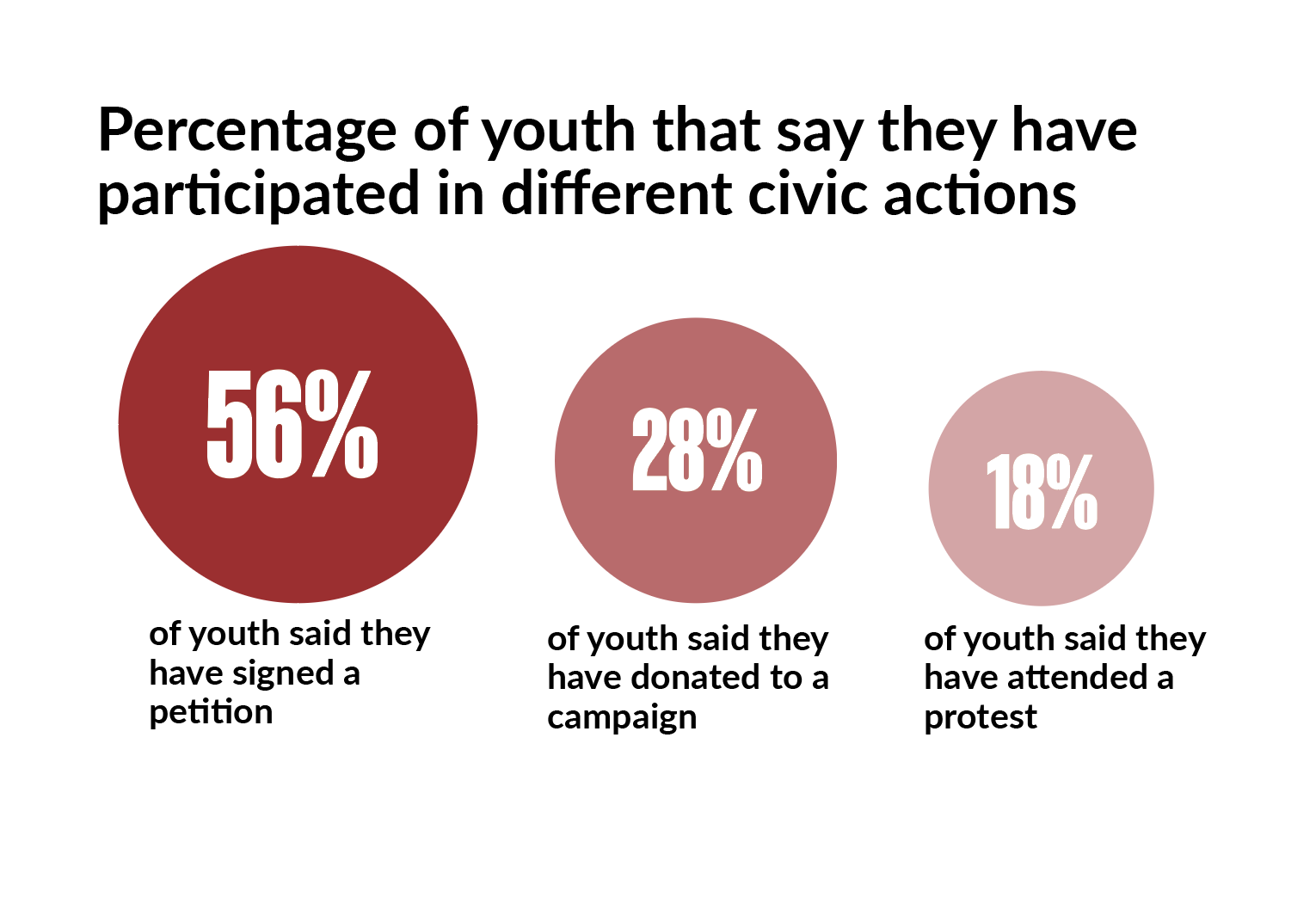
Thousands took to the streets in May and June 2020, with protests spreading to 60 countries, according to a May 2025 MPR article. Although Black Lives Matter was founded seven years prior, Floyd’s killing prompted a “racial reckoning” and increased attention for the movement. A Pew Research Center survey by Kim Parker, Juliana Menasce Horowitz and Monica Anderson found that 67% of Americans said they supported Black Lives Matter in June 2020.
While some point to Floyd’s murder as the pivotal moment of Minnesota activism, the organizing started earlier – in 2015, two MPD officers fatally shot Jamar Clark; a St. Anthony Police Department officer shot and killed Philando Castile in 2016. For many, Floyd’s killing reopened old wounds and calls for justice previously unfulfilled. Chauvin was convicted on all charges, but no charges were filed after an MPD officer shot and killed Amir Locke, who was armed, in 2022.
Coblentz, who marched again in response to Locke’s death, does not believe the protests were ineffective but instead indicative of a systemic issue.
“I thought that it was the perpetual cycle of state violence perpetrated against people who are deemed oppressed in our society,” he said. “It wasn’t as much of a failure of the protest part. I thought it was much more a failure of our legislators and our lawmakers that they allowed this to continue to happen and allowed police corruption to go on.”
Five years after Floyd’s death, a May 2025 Pew Research Center report noted that 72% of Americans believe the focus on race after Floyd’s killing did not lead to improvements for Black people.
Similarly, senior Hazel McCarthy noted the muted legislative response – at least so far – to the shooting at Annunciation Catholic Church and School on Aug. 27, 2025. She participated in a student walkout against gun violence the following week.
“I think it is discouraging that nothing has changed, but it’s also not surprising, given how many shootings there have been and how many protests there have been from every school shooting,” she said.
McCarthy’s earliest experience with activism occurred at the Women’s March in 2017, when she joined with her mom. Eight years passed before she attended another demonstration, but since then, she has grown to appreciate the power of protests, especially when feeling powerless.
“I wish that I went to more in the time that I didn’t, but now that I’ve started going, I’m going to try and keep that going even when I don’t see the things that are happening,” she said. “With the ICE out protests, I saw my community being affected … so then I went, so I want to try going to more protests, even when I don’t see what’s wrong directly.”
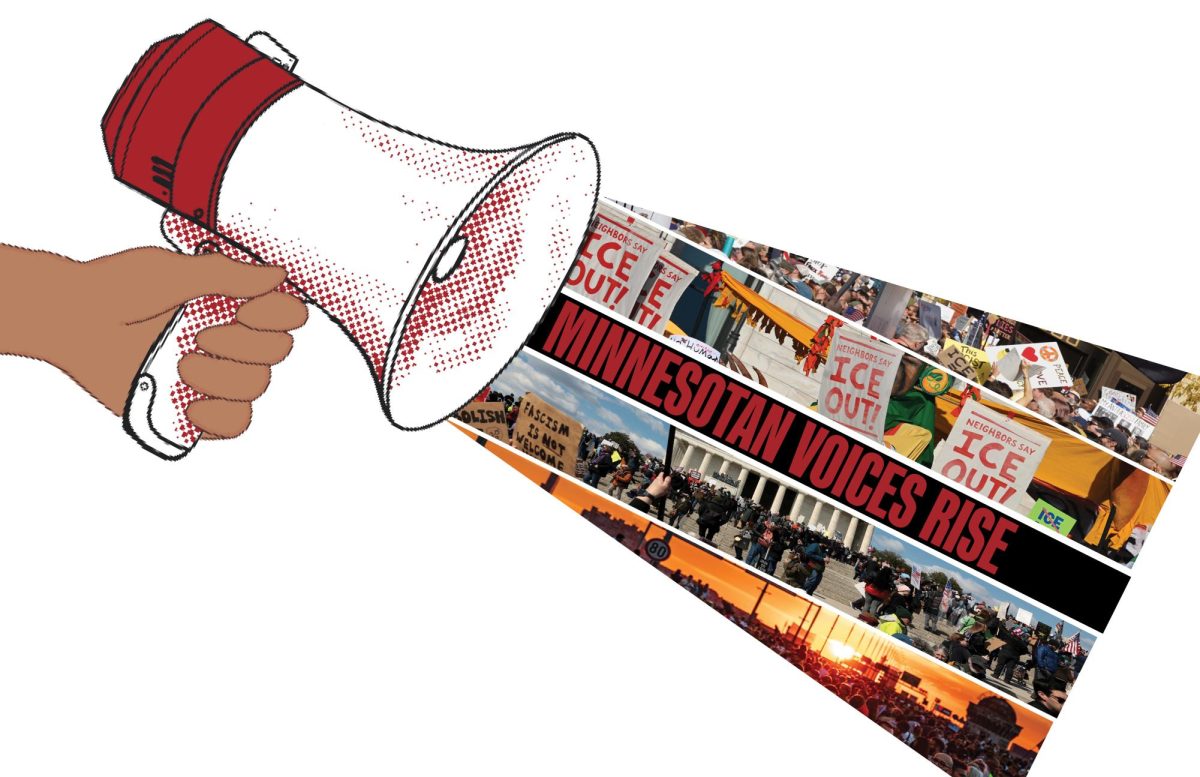
Students including Coblentz, McCarthy, sophomore Keian Bietz and ninth-grader Siri Holden all joined the movement in the Twin Cities against U.S. Immigration and Customs Enforcement. The organized response to Operation Metro Surge encompassed marches, food and rent assistance, volunteer school patrols and statewide economic blackouts.
Bietz protested for the first time in the St. Paul Public Schools’ student-led walkout to the Capitol on Jan. 14. He felt empowered seeing young people from across St. Paul standing together for a common cause: “It’s important for youth to be involved in protests, because it kind of shows how [these issues are] affecting everyone, and not just certain people that want change, but the next generation [too],” he said.
The coordinated movement against ICE helped pressure border czar Tom Homan to announce a drawdown and end to Operation Metro Surge. However, Holden and other activists are asking for greater legislative reform.
“I wouldn’t say it [was] really a victory … I want [ICE] to stop in general,” she said.
To honor the mobilization against ICE, St. Paul was chosen as the flagship city for the third No Kings protest, a nationwide movement led by several progressive organizations in opposition to the Trump administration. While McCarthy appreciated the recognition of Minnesotans’ efforts, she worries that without a clear set of demands, No Kings will fall short of change.
“I felt really proud to live in the Twin Cities and to be in a place that’s doing good … [but] the best type of protests are the ones that actually ask something, like the ICE out ones,” she said.
Reflecting on a school year full of activism, Holden said it can feel frustrating that so many crises have occurred so close to home: “It’s obviously disappointing that these things are happening, but I feel like the more stuff happens, the more people should be trying to speak up.”
Silence, she said, is not the answer.
Media distortion shifts attention from activism
The First Amendment guarantees the right to protest as an undeniable liberty. When politicians don’t want to face the reality of public upset, they turn to a rebrand.
Instead of “No Kings,” it’s a day of “Hate America Rallies,” as National Republican Congressional Committee Spokesperson Maureen O’Toole said. “Anti-ICE” protests are morphed into a so-called “insurgency,” in the words of White House spokesperson Abigail Jackson.
For students like junior Alex Haupt, who have grown up witnessing major demonstrations in Minnesota, the gap between reality and representation stands out.
“I generally don’t try to listen to what the politician is saying about the protests. I try to listen to what the people are saying,” he said.
Few events highlight these discrepancies more clearly than the coverage and commentary following and during the protests in the aftermath of George Floyd’s killing in 2020. These protests are still cited as examples of violent demonstrations, even as many participants described them as overwhelmingly peaceful.
Junior Eddie Sofen recalls the difference between media coverage and reality.
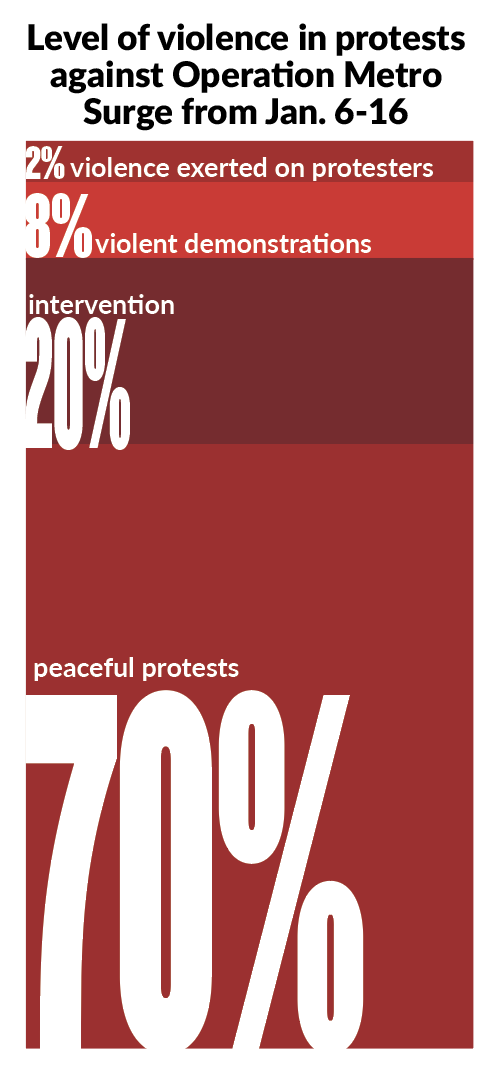
“I remember during the George Floyd riots, some parts of it were obviously peaceful and some were dangerous, but I feel like a lot of the ways I saw it described in the news was that it was all riots and bad,” he said.
This contrast creates two competing narratives: one of community action and engagement, but another of extreme disorder and unrest. While it is possible that both examples contain elements of truth, politicians or media outlets tend to emphasize the side of the story that aligns with their beliefs. For example, on June 1, 2020, President Donald Trump issued a statement on the protests in Minnesota. “In recent days, our nation has been gripped by professional anarchists, violent mobs, arsonists, looters, criminals, rioters, Antifa and others,” he said.
After the No Kings protests, Sofen recalls a very positive response from many politicians, even though he thinks they may have an ulterior motive when describing it this way.
“I feel like it still kind of helps them to describe it that [positive] way because … I feel like it’s the kind of protest that they think is good,” he said, “just people walking, and I think feeling better about themselves for participating.”
Sophomore Zoe Brenner mentioned Trump’s use of art generated by artificial intelligence in social media as a reaction to the recent No Kings protests. “I remember the post Trump made related to No Kings where he was wearing a crown and portraying himself as a king,” she said.
Politicians frequently express their opinions on demonstrations, sometimes to make fun of or delegitimize them. The flagship No Kings protest took place in St. Paul on March 28, and an estimated 100,000 to 200,000 people attended.
In recent statements, officials have dismissed the “No Kings” protests seen throughout the country and even throughout the world as “Hate America Rallies” or claimed they are sponsored by “leftist funding networks.” This dangerous language completely reframes protesters by describing them not as citizens who are exercising their rights, but as threats to democracy or extremists. When language is used to exaggerate, minimize or redirect attention, it can obscure the truth.
“Obviously, the president loves to antagonize the Democrats, so that’s one thing he would certainly benefit from,” Haupt said.
Minnesota saw a rise in protest misrepresentation during Operation Metro Surge from early January to Feb. 12. Trump was quoted as calling the response to U.S. Immigration and Customs Enforcement an insurgency, adding fuel to an already intense situation. While not participating directly in the protests, Haupt heard different perspectives on the news. “I was definitely hearing earlier this year about the protests … and how the president was talking about how they were violent, even though it was a peaceful protest,” he said.
Regarding politicians’ messaging about demonstrations, Brenner believes they try to highlight all of the negative aspects if they are against the cause.
“[Politicians] are cherry-picking, for sure. They’re cherry-picking to find stuff that they can use to make the side they’re against seem violent and out of control,” she said.
Haupt believes that protesting is important because it means you can’t be arrested or indicted for sharing your views.
“The right to protest means to be able to speak out against things that you don’t like, specifically the government,” he said.
As a fundamental part of the First Amendment, the right to protest is exercised every day across the nation. When some protests garner substantially more attention or occur on a larger scale than others, it’s easy for politicians and the media to distort the core message. While no protest is without complexity, reducing it to a single narrative, whether peaceful or chaotic, fails to capture the full truth.


