
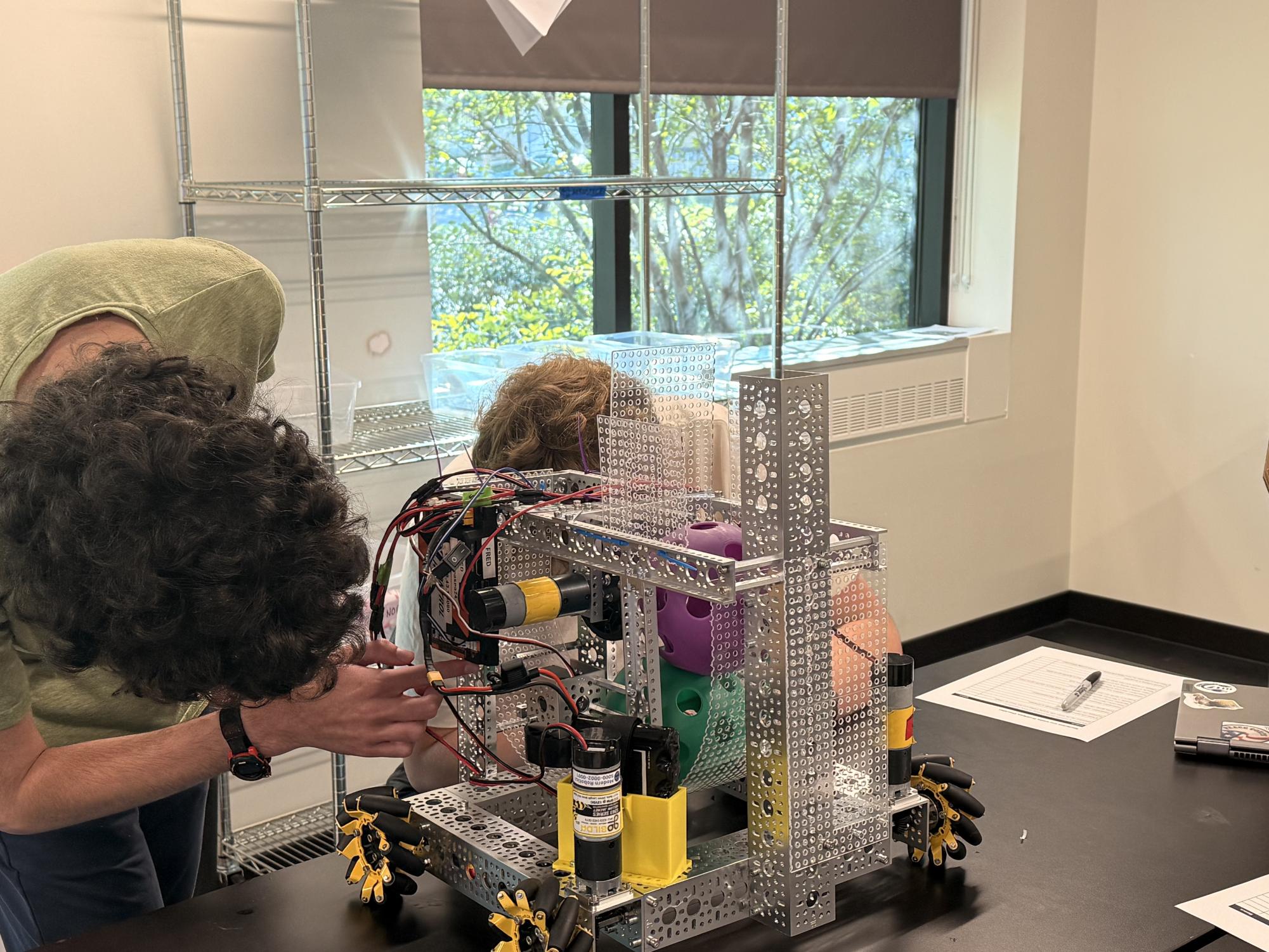
The whir of motors and the glow of a laptop screen are not sounds most students hear after school, but for sophomore Leo Mosenfelder, they are part of his daily routine. While many students head home at the end of the day, Mosenfelder stays in the design lab, continuing to build and program robots even after the official fall season has already ended.
As a member of the robotics team, Mosenfelder spends his time tackling complex engineering challenges through FIRST Robotics competitions. Each fall, teams are given a specific game and must design a robot to complete tasks and score points. But for Mosenfelder, the end of the season is not really an ending. This year, he and several teammates decided to keep working into the offseason, focusing on building a simpler, more flexible robot while also learning from past designs.
“We’re building a basic robot that can drive and is easily modifiable,” Mosenfelder said. “It’s more about learning and reflecting on what we did last season and preparing for what’s next.” The robot is designed to act as a foundation that the team can easily adjust and improve as they test new ideas. By experimenting during the offseason, Mosenfelder and his teammates hope to better understand what worked well last year and what they can improve before the next competition season begins.
Robotics is not a short project. It is a long process that requires months of teamwork, problem-solving and persistence. Mosenfelder works as the team’s programmer, responsible for designing and writing code, focusing on how the robot moves and responds, and collaborating with teammates on design decisions. For him, that collaboration is one of the most important parts.
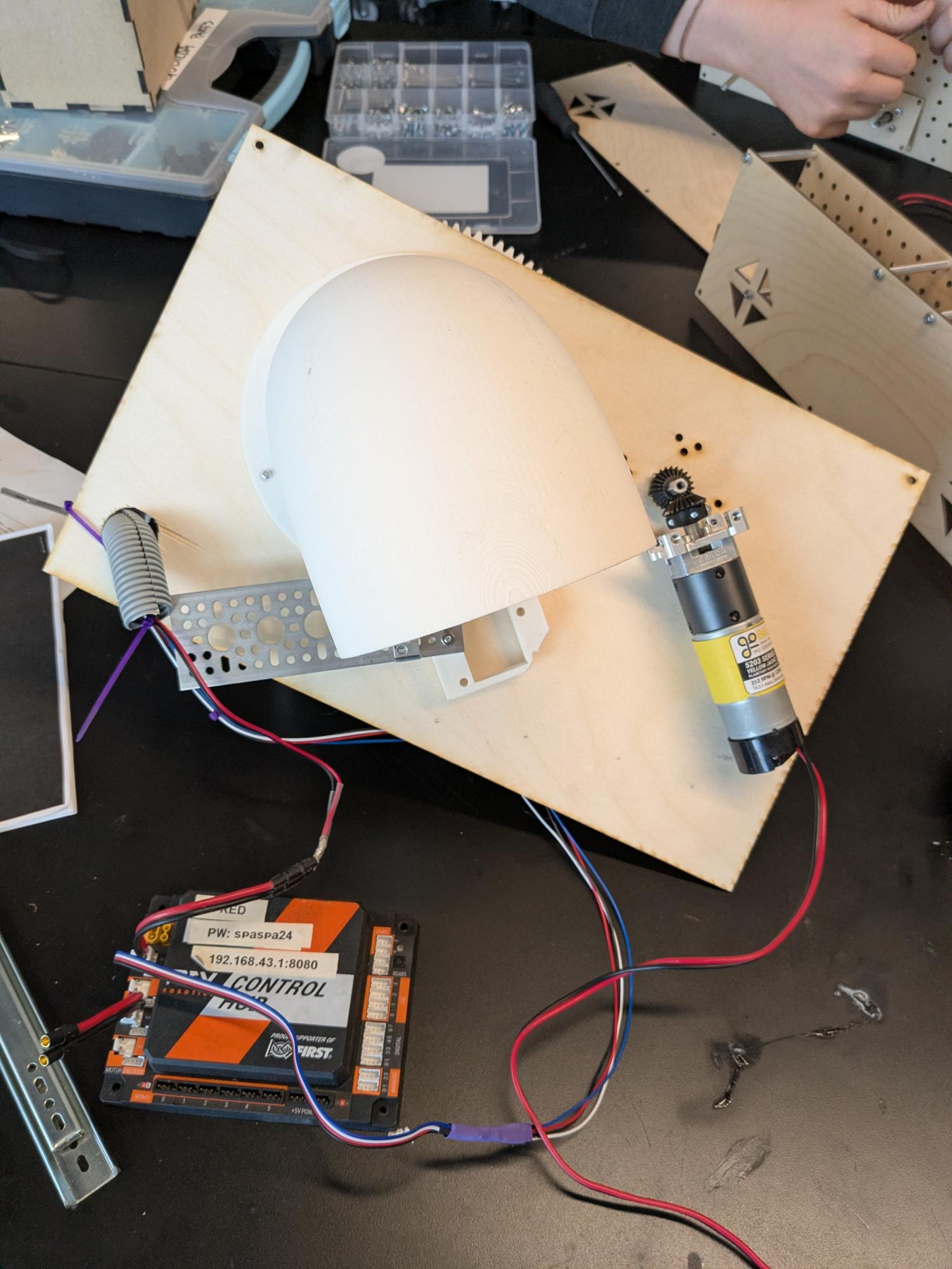
“I like working with people because I can focus on what I do, but still have input on everything else,” Mosenfelder said. “I don’t think I could do it alone. There’s just too much work.”
Even outside of competition, the challenges continue. When FIRST recently released early details about future game elements, Mosenfelder and his teammates quickly got to work. They met after school to test ideas and think ahead, using the offseason as a chance to improve rather than take a break.
“I guess it’s a passion,” Mosenfelder said. “It’s engineering, it’s working with my friends, and it’s something I enjoyed so much during the season that I just wanted to keep going.”
For Mosenfelder, robotics is more than just building machines. It is about learning how to solve problems as a team and constantly improving. The offseason gives him the space to reflect, experiment and prepare for what comes next.
Mosenfelder continues working with his team after school, using the spring to build skills and prepare for future competitions. “We’re learning about engineering and robotics and just trying to be better prepared,” he said.
By choosing to stay involved even when the season is over, Mosenfelder shows that for some students, learning does not stop when the bell rings.

![CALCULATING THE CHANGES. As study habits have changed, the materials used have changed too. "I remember the day when [my brother] came home with his graphing calculator, [which] had Mario. And I was blown away," Spanish teacher Peter Daniels said. (Photos: Fair Use; Wikimedia Commons)](https://www.rubiconline.com/wp-content/uploads/2026/05/Untitled-design-4-1200x800.png)