


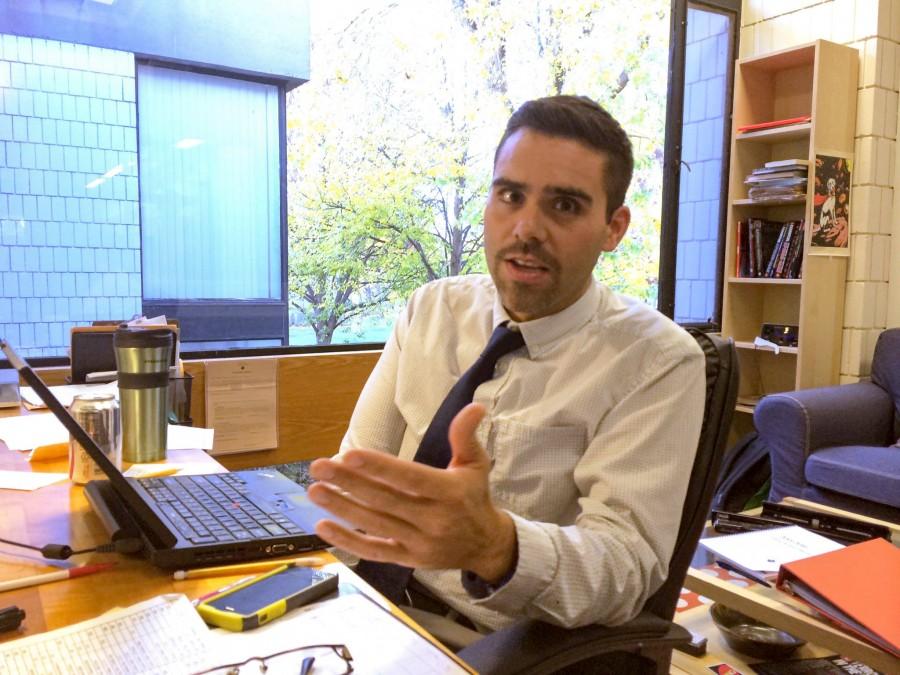
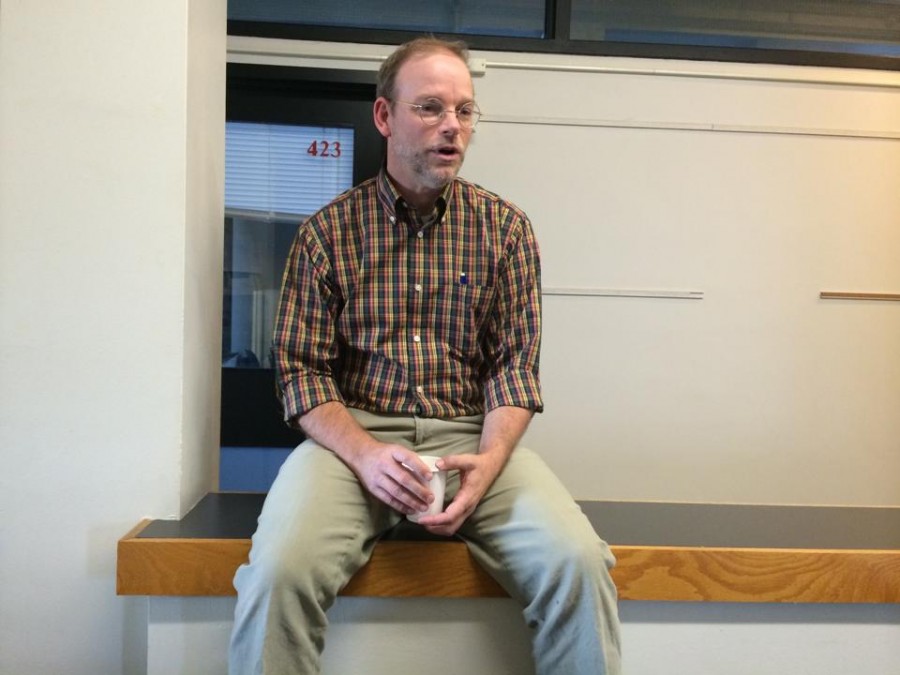
![CALCULATING THE CHANGES. As study habits have changed, the materials used have changed too. "I remember the day when [my brother] came home with his graphing calculator, [which] had Mario. And I was blown away," Spanish teacher Peter Daniels said. (Photos: Fair Use; Wikimedia Commons)](https://www.rubiconline.com/wp-content/uploads/2026/05/Untitled-design-4-1200x800.png)



















![BEWARE. Junior Maisy Torres was expecting a Nickelodeon ride when she entered the haunted house at the State Fair. What she encountered was much more horrifying. "There's not enough money in the world to pay me to do [it again]," Torres said.](https://www.rubiconline.com/wp-content/uploads/2026/05/Never-again-with-nabeeha-1-e1778077989386-1200x802.png)


![[QUIZ] What famous scientist are you?](https://www.rubiconline.com/wp-content/uploads/2026/01/Untitled-design-3.gif)





What happens when photos and videos being spread by official politicians and government agencies aren’t even real? This is not a dystopian hypothetical, but the current reality. On Jan. 22 at 9:21 A.M., Secretary Kristi Noem shared a post of Nekima Levy Armstrong, a civil rights lawyer, after being arrested due to her involvement in an ICE protest that disrupted a church service in Minneapolis. Then, a half an hour later, the official White House X account shared what seemed to be the same photo with some noticeable differences. In the original one posted by Noem, Levy Armstrong has a neutral expression while looking offscreen. In the second photo, Armstrong is depicted as crying and distraught while looking into the camera. The photo garnered 6.3 million views on X alone. Several sources attributed the digital alterations to AI use, which sparked conversations across the internet.

The altered Levy Armstrong photo isn’t the first instance of AI in politics, simply a reminder that politicians are and have been utilizing these tools. It also offers insight into the danger and rapid spread of these images. If it wasn’t for Noem’s post of the original photo, people wouldn’t have known the second image had been altered. Misinformation in the media has been on the rise especially in the past decade due to the prevalence and accessibility of fake news. The overwhelming amount and constant stream of information online has made it extremely difficult for the public to decipher real from fake. When AI is factored into the equation, this issue is amplified on a major scale.
So what are politicians and the government using AI for? Generated content and misinformation has clearly been a use, especially under the current administration. AI regularly makes appearances on social media. A notable post was a video posted on Truth Social that depicted several concerning visuals, like Trump dumping sewage across protesters and the Obamas as apes. The video was extremely divisive due to the unprecedented nature of AI used for hateful propaganda as well as the blatant racism, especially during Black History Month. This type of AI use is clearly generated and false and would be described as propaganda. Other politicians have been using AI in this way like Andrew Cuomo and Gavin Newsom. The concern with this type of use is the new way politicians and campaigns are rapidly able to manipulate and create images, allowing little thought to go into their generation and how they will be received and interpreted. It also blurs the line between reality and not. While most of the AI propaganda shared right now is identifiably generated, some images are teetering the line between fact and fiction. Especially for older or distracted viewers, they might see such images and take them for the truth.
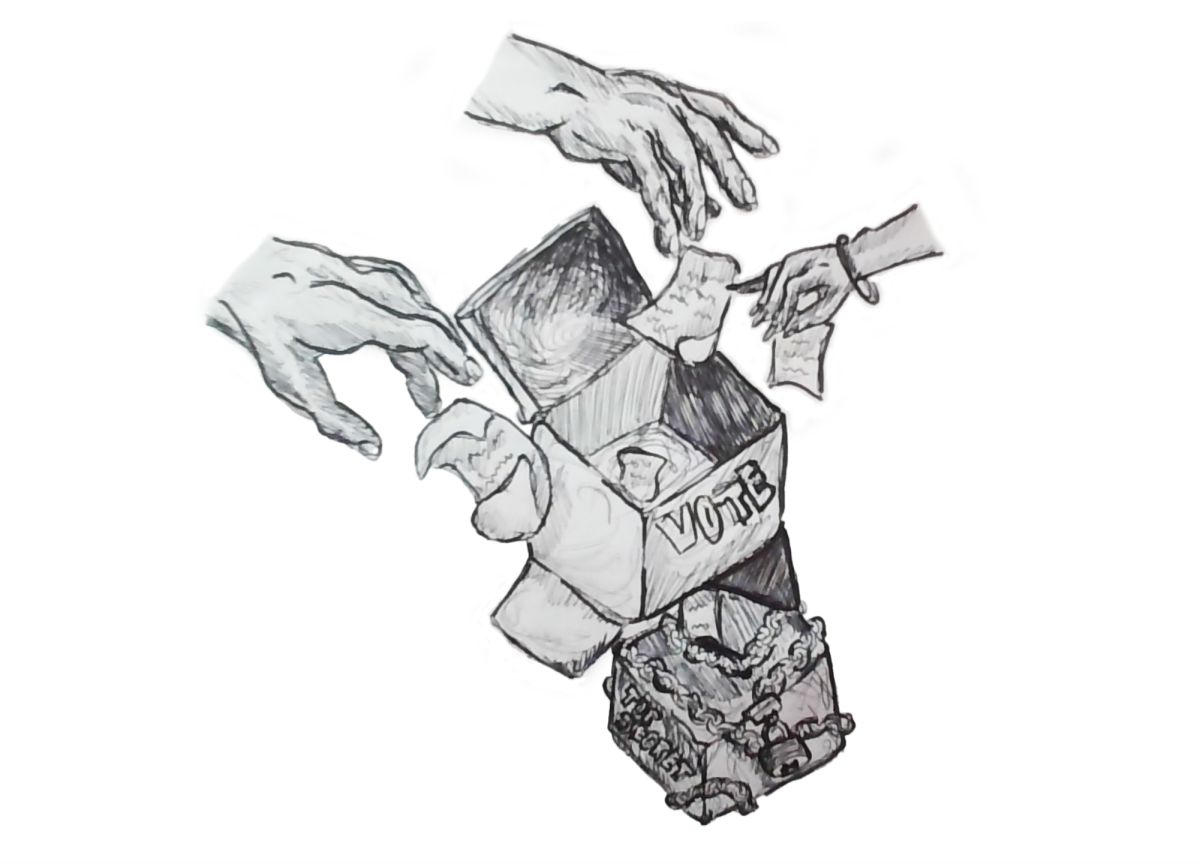
The side of AI in politics that flies under the radar is AI algorithms influencing voters. Similarly to targeted advertising, politicians can use AI to understand, categorize and, in some cases, exploit their community. This could look like more accurately understanding the concerns of voters and personalizing messaging to connect with different demographics. However AI can also be used to manipulate voters. Personalized messaging and campaigns can lead to distrust in the voting process and voter intimidation. The Journal of Democracy said AI has the ability to destabilize democracy based on these tactics.
The rapid increase in ability for Artificial Intelligence is not met with restrictions, legislation or transparency. While the use of AI has the potential to improve the democratic process and efficiency of lawmakers, the damage far outweighs any benefits seen by the public. Politicians’ use of AI leads to more division, distrust and misinformation. Until there are ample parameters and restrictions set in place, Artificial Intelligence shouldn’t have a place in politics.
![[RUBI CROSSWORD] Don't be puzzled be informed.](https://www.rubiconline.com/wp-content/uploads/2026/03/Untitled-design-1-e1772595498251.png)
![[The 5] Tensions rise across issues from wildlife and schools to immigration and geopolitics](https://www.rubiconline.com/wp-content/uploads/2019/09/The-5.jpg)


![[The 5] State fair ticket costs, the Tiktok ban, South Korean President and more](https://www.rubiconline.com/wp-content/uploads/2025/01/The-5.jpg)
