

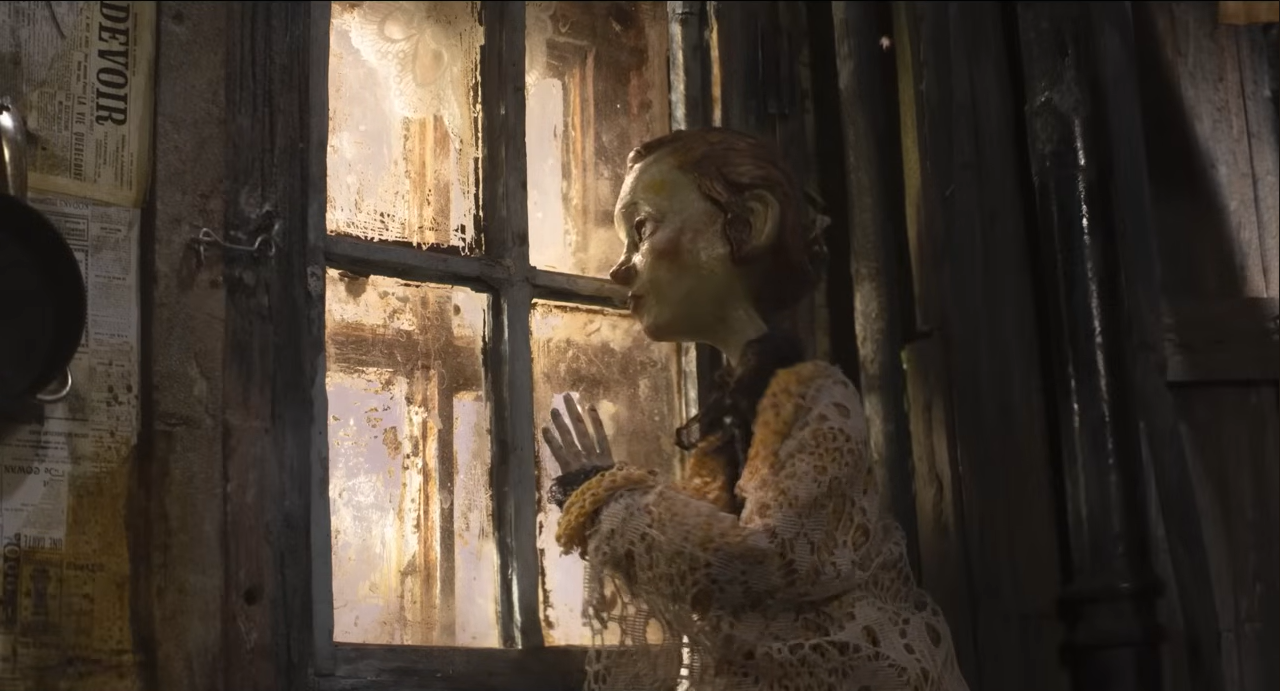
What would you do if someone’s tears were worth a fortune? The Oscar-nominated stop-motion short film “The Girl Who Cried Pearls” explores this unsettling question through a unique story rooted in magical realism.
The film follows a grandfather telling tales to his granddaughter of when he was a desperate young boy and met a girl who had the unusual ability to cry pearls. What begins as a mysterious gift quickly reveals a darker meaning: the pearls represent material wealth, and the boy’s obsession with collecting them shows how easily human compassion can be replaced by greed.
The film follows a simple yet meaningful storyline that encourages viewers to think about how people treat others who possess something valuable. Whether it is talent, money, or fame, people are often taken advantage of for what they can provide to others.
In the film, the girl’s unusual ability makes her vulnerable to exploitation, while the boy becomes increasingly desperate to benefit from it. At the same time, the story suggests that the boy is not cruel, but rather driven by hardship, a seemingly misunderstood character. This complexity makes both characters feel more relatable and encourages viewers to reflect on the consequences of greed.
Another memorable aspect of the film is its stop-motion animation. The visuals are clear and expressive, helping the audience understand the emotions of the characters without much dialogue, since the boy narrates his experience to his granddaughter as a lesson.
The careful movements and detailed design help create a quiet, dreamlike atmosphere that fits the magical realism of the story. While the animation is not the main focus, as stated in the Animation World Network, it strengthens the film’s emotional impact and helps convey its message.
I found it rewarding to recognize the themes, especially the idea that greed can turn something meaningful into something harmful, through the boy’s growing fascination with the pearls. At first, he seems curious and desperate, but his intense focus on obtaining the pearls causes him to inflict and overlook the girl’s pain, demonstrating how the pursuit of wealth can slowly replace empathy.
This idea gave the film a strong emotional impact. I felt especially sad for the girl, who was already suffering abuse and was then treated as if her gift was more important than her feelings. Simultaneously, I also felt some sympathy for the boy. Although his actions are questionable, his intentions did not seem entirely malicious. The film suggests that his impoverished circumstances heavily influence his choices.
Overall, I would recommend The Girl Who Cried Pearls and would rate it a 4.5 out of 5 stars as it is a beautiful, emotional, and thought-provoking piece. It combines striking animation with a meaningful message about greed, empathy, and the value people commonly place on wealth, making it a memorable short film.
Some moments are slightly vague and may leave viewers with questions, or room for interpretation, which could be a positive, which is why I would rate it 4.5 out of 5 stars. Still, the film succeeds in leaving viewers with a reminder that the pursuit of something valuable, materially speaking, can sometimes blind people to the feelings of those around them, just like the pearls in the story.