

The pursuit of oil is a major catalyst for many of the United States’ international relations. According to a 2020 Department of Energy report, the oil and gas industry provided 12.3 million American jobs and saved $203 billion for American consumers.
“It’s very simplistic, [oil] is energy. The U.S. wants more energy,” history teacher Jon Peterson said, “[But] there’s a limited amount of it.” While the U.S. itself produces more oil than any other country in the world, the type it produces, lighter oil, isn’t always what’s needed. As a result, the country looks to other countries for heavier oil production. Some of these imports come from relationships with neighboring countries, such as Canada and Mexico, while others come from farther away, including some of the world’s other top producers such as Saudi Arabia, Iran and Iraq. When these countries don’t supply oil to the U.S., it can be detrimental to the American economy.
In order to obtain oil from other countries, the U.S. has historically intervened militarily in oil-rich regions. In 2003, under the George W. Bush administration, the U.S. saw an opportunity after the Sept. 11 attacks to go into Iraq. Despite the fact that Iraq wasn’t involved in the attacks, Bush “indicated there was a connection between Saddam Hussein of Iraq and Osama bin Laden, who actually did mastermind the attack on 9/11,” Peterson said. Using the justification that Iraq had mass weapons of destruction, which was later reframed as bringing democracy to Iraqi citizens, the U.S. launched air strikes and an invasion into the country to secure oil.
The Iraq War, which these invasions would go on to be known as, was the aftermath of the Gulf War more than a decade earlier. In 1980, President Jimmy Carter, in his now infamous Carter Doctrine, claimed that any force attempting to gain control of the Persian Gulf was an “assault on the vital interests of the U.S.” and any protruders would be met with any necessary military response.
Ten years later, the Carter Doctrine was put into practice. In 1990, Hussein invaded Kuwait and the U.S. feared further invasion into Saudi Arabia. Despite there not being “any concrete evidence,” such an invasion would occur, according to Peterson, the U.S., valuing the oil fields in Saudi Arabia, commenced war in Kuwait and Iraq. Between civilians and military personnel, the death count of the 1991 Gulf War has been estimated to be around 30,000. In this case, the liberation of Kuwait was the justification. “The point was [the U.S.] was going to help Kuwait,” Peterson said, “Kuwait wants to be independent … Bush said we’re creating a new world order.”
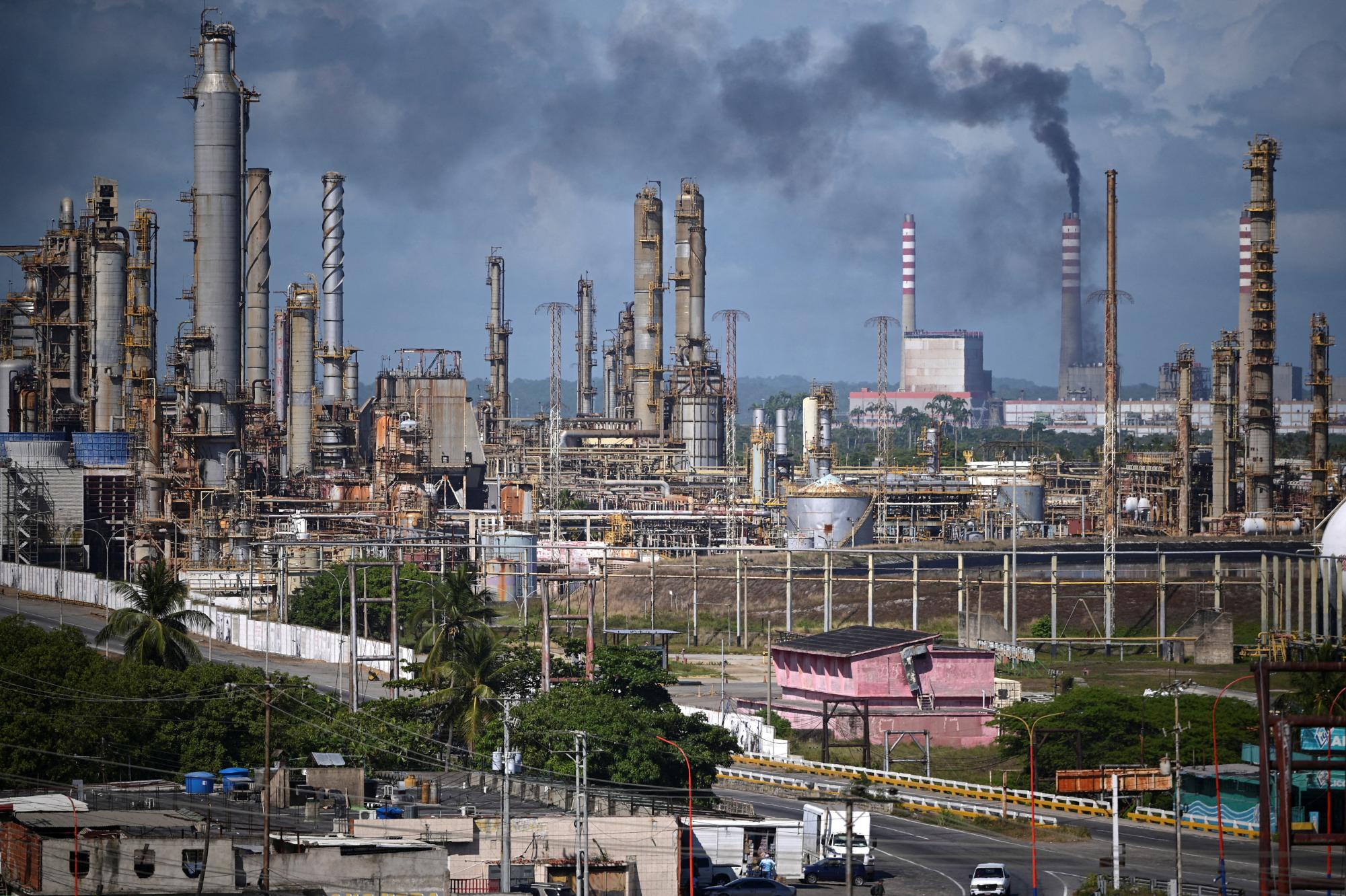
Fast forward to 2026 and President Donald Trump is repeating many of his predecessors’ actions. On Jan. 3, following a year of conflict, President Trump ordered a strike on Caracas, Venezuela, capturing President Nicólas Maduro. Venezuela, which has long held one of the world’s largest oil reserves, has faced increased human rights concerns and poverty issues under Maduro, a fact which the U.S. government has attempted to use as justification, even if its invasion caused an estimated 30 or more deaths to civilians. According to Trump, quoted on the official Department of War website, the United States’ temporary control of Venezuela aims to put the country “back on track, make a lot of money for Venezuelans and give people a great way of life.”
America’s influence in the Venezuelan oil industry is far from recent. After an abundance of petroleum was discovered in the 1920s, foreign companies such as Exxon, Shell and Gulf Oil were responsible for 99% of oil production under the Gómez government from 1908-1935, according to Juan Vicente Gomez and the Oil Companies in Venezuela, 1908-1935 by B.S. McBeth. Nevertheless, in 1976, Venezuela’s oil industry was nationalized and taken over by the PDVSA, a state-owned oil company.
Trump has been distinctly transparent with his goals in Venezuela. “[Trump] said the quiet part out loud,” Peterson said, “We’re here for the oil.” According to the president, large investments from oil companies will be the key to rebuilding Venezuela, which he claims has stolen their oil industry from the U.S. “All that stuff was only hinted at before,” Peterson said about the Gulf War and the Iraq War.
Trump’s immediate transparency should draw attention to the United States’ history of military intervention and the lessons it offers. While he may simply be the next in a long line of presidents interested in overseas invasion, his bluntness suggests the case in Venezuela may be handled with less care than his predecessors. Most recently, the House shut down a resolution that would have stopped the president from deploying military forces in Venezuela, indicating that the situation may escalate further.



![CALCULATING THE CHANGES. As study habits have changed, the materials used have changed too. "I remember the day when [my brother] came home with his graphing calculator, [which] had Mario. And I was blown away," Spanish teacher Peter Daniels said. (Photos: Fair Use; Wikimedia Commons)](https://www.rubiconline.com/wp-content/uploads/2026/05/Untitled-design-4-1200x800.png)