When arts funding fades, whose voices go quiet?


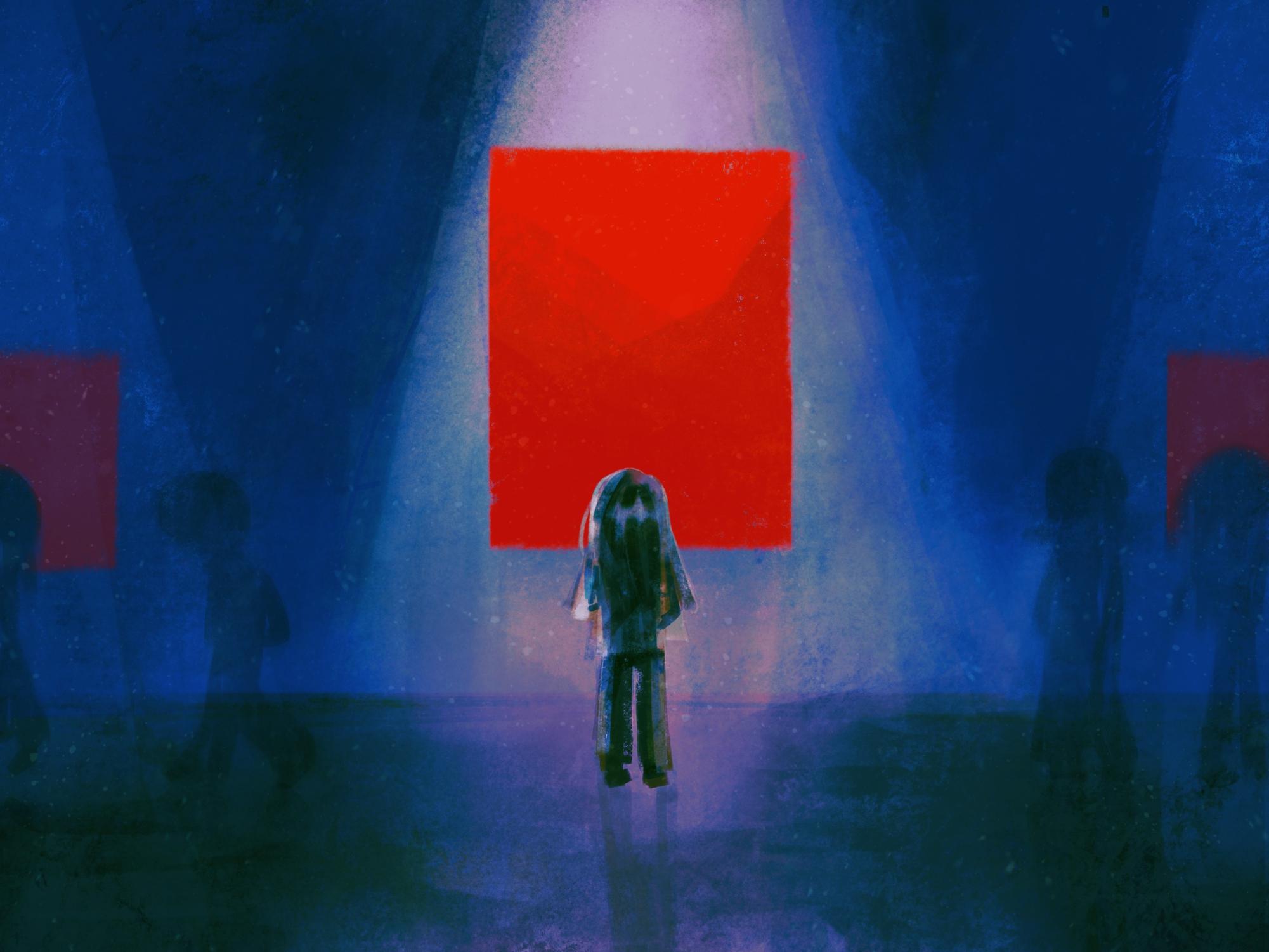
Art history is human history.
During the Baroque period, lasting from 1600 and 1750, political tension including wars and the reestablishment of the British monarchy prompted waves of new art techniques like chiaroscuro and newfound attention to emotion and drama in art. During World War I and preceding the global Great Depression, the era of Dadaism reflected both the literal and emotional effects of the war, exhibiting chaos and absurdity in art. These same art styles made an appearance in efforts to combat propaganda and tragedies of war during World War II; the dominant art movement of the 1940s was Abstract Expressionism, creating space for nontraditional and symbolic art. These periods are only a few examples of art made by citizens of the world, reflecting the world back outward.
However, while artists around the world fought with their art, governments applied pressure by not only censoring art, but also by weaponizing art through propaganda. Censorship is the deliberate suppression or removal of writing, artistic work or media that is considered obscene, politically unacceptable or any kind of general threat to security. Government censorship of art has historically been seen as a tell-tale sign of the rise of a fascist regime. Fascism is a far-right ideology that is characterized by an intense authoritarian government and the suppression of opposing ideologies. So, if meaningful art spikes when politics are rigid, why is it that when artistic creation is soaring, governments feel the need to silence artists?
The fascist method of silencing certain demographics, like artists, is one that has been featured in the rise of many governments. By removing people’s freedoms to speak and create, taking control over large groups of people becomes less difficult.
One prime example of censorship is the banning of books. “1984” by George Orwell is one of the most notorious banned books ever written. This 1949 dystopian fiction was intended to be a lens into the future, with key warning points like all-seeing devices, the dangers of totalitarianism, particularly Stalinism, constant propaganda and the mass-manipulation of truthful governing. It was banned by the United States government due to its heavy social and political themes including intense government criticism. As a consistent author of dystopian fiction, Orwell touched on censorship and constant surveillance in “1984”, which led to the banning of his book. A large determining factor of the censorship of this book was the stigma surrounding government flaws following the end of World War II. Another exhibit of attempted literary censorship is “Fahrenheit 451” by Ray Bradbury, a book that follows the plot of a “fireman” whose actual job is to go into people’s homes and burn their books, as physical media has been outlawed. Bradbury’s book title cleverly represents the temperature at which paper ignites and burns. “1984” and “Fahrenheit 451” can still be purchased in stores, but by challenging the publicity of a book, it can potentially be removed from libraries, bookstores and public schools in certain states.
An artist that faced heavy censorship throughout his career was Andy Warhol. Several of Warhol’s pieces faced criticism and censorship both during his career and after his life had already ended, one of which being his “Mao” series (1972). This series featured eight colorful and highly saturated paintings of former Chairman of the Chinese Communist Party, Mao Zedong. The series was banned in 2012, 25 years after Warhol’s death, by Chinese authorities due to political insensitivity.
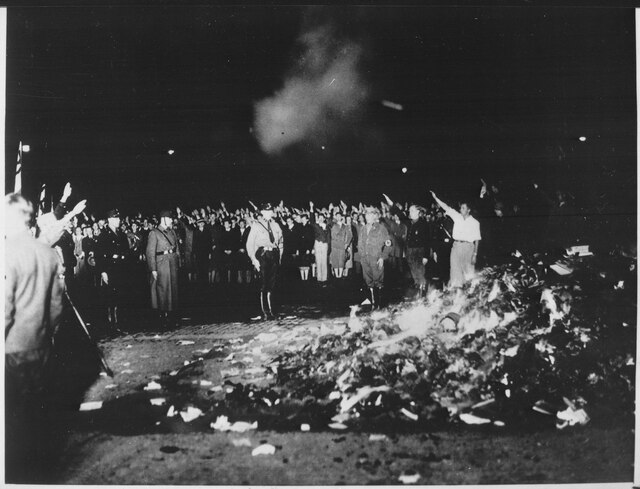
There are also forms of censorship that are more rebellious than governments legally banning books, like the Nazi book burnings of 1933. The Nazi regime’s Students’ Association for Press and Propaganda (SAPP) organized mass book burnings to eliminate “un-German” ideologies in literature. In order to be burned, the authors and contents of the books simply needed to be seen as a sort of public enemy to the Nazi party: Jewish authors, communist authors, socialist authors etc. The burnings took place at around 20 university towns and cities across Germany. The SAPP was an initiative of German university students, taking around five months’ time to burn tens of thousands of books in bonfires in efforts to wipe Germany of non-German history, culture and ideology. This form of censorship crosses the line from typical censorship — which can be used to mitigate inappropriate content such as sexual, explicit or insensitive content — into fascist censorship. The forms of fascist censorship used by the Nazi party and other fascist regimes throughout history strived to gain complete control over all forms of media and forms of communication and expression in order to suppress dissent. The book burnings took place the year of Adolf Hitler’s appointment to office and are considered one precursor to the tragedies committed in World War II by the Axis Powers.
During Francisco Franco’s rule of Spain starting in 1939, art and media culture were heavily censored to promote ideological unity. His regime was based on traditional Catholic values, which eventually translated into censoring all forms of Spanish art in order to subdue any public disputes regarding politics or history. Franco’s censorship affected all facets of art: visual arts including Picasso’s “Guernica” and “The Dream and Lie of Franco”, 1937, literature such as Cela’s “The Hive”, 1950, films including Buñuel’s “Viridiana”, 1961, and even music. Many artworks made under Franco’s rule were banned or censored until the beginning of the disintegration of the regime, including some that were originally released and later removed for decades due to political upset.
It’s not ridiculous to feel like all of this historical censorship and suppression is behind and certainly beneath American society because, after all, we’ve come so far, right? With social media and rapid-response communications available, seeing different kinds of art — political or not — is not as hard to accomplish as it once was.
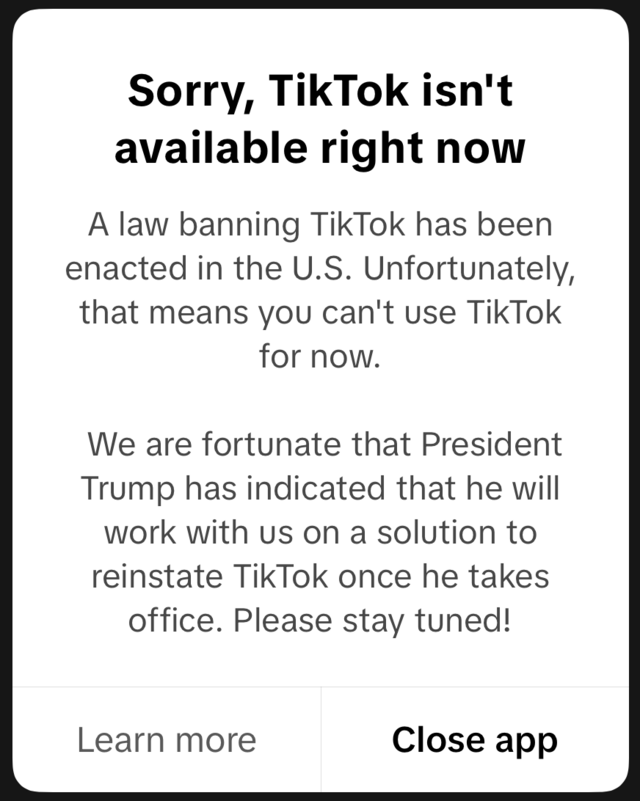
However, censorship looking a little bit different decades later doesn’t mean it isn’t still here. The 2025 Trump administration TikTok ban was arguably an attempt at censorship: it cut an entire country’s access to an inter-continental and community-forming social media platform and reduced exposure to personalized media. Even after TikTok usage was resumed, certain anti-Trump administration posts are pushed to the bottom of the algorithm or have a TikTok database-written message warning users of disinformation.
While art history is human history in all the best ways, it also reflects the cyclical nature of human greed in government that can be so blinding. There are no bounds or rules to the ways that art imitates life. If it isn’t 1930s Spain or 1940s Germany, it’s the 2020s United States and the art people make and consume clearly reflects that.
In art wing, dried paint crusts the rims of jars and unfinished canvases lean against the walls, tangible reminders of the creative spaces federal funding helped make possible nationwide. However, currently, many artists, museum workers and educators felt anything but optimism when President Donald Trump released his Fiscal Year 2026 budget proposal earlier this year.
The recent proposals under the Trump administration recommend eliminating the National Endowment for the Arts (NEA), the Institute of Museum and Library Services (IMLS), the National Endowment for the Humanities (NEH), as well as reducing support for institutions including the Smithsonian and public broadcasters such as NPR and PBS.
These threats are not new. Similar cuts were proposed annually during Trump’s first term. However, the renewed push has revived national anxiety about cultural access with potentially dire consequences for who would lose access. According to updates from the Pittsburgh Arts Council, most threatened cuts would occur through the quiet reduction in federal grants which small museums, local arts nonprofits and youth programs rely on.
For schools like SPA, visual and performing arts classes remain central to student life despite the school’s status as a private institution. But the national conversation still raises local questions: What disappears when public arts funding shrinks? And whose voices are most at risk of being quieted?
Federal support for the arts in the United States has long been inconsistent, but its history helps explain why current threats alarm cultural workers. When the NEA was founded in 1965, it ushered in what many cultural historians consider a “golden age” of public arts investment, a period stretching from the late 1960s through the early 1990s, where as funding expanded, museums grew more accessible and grants helped local organizations bring the arts into classrooms, community centers and rural spaces. That era ended abruptly in the mid-1990s, when political backlash led Congress to cut the NEA budget nearly in half and eliminate most individual artist grants. Since then, federal support has remained significantly lower in inflation-adjusted dollars and arts organizations continue to grapple with the long-term effects of that decline.
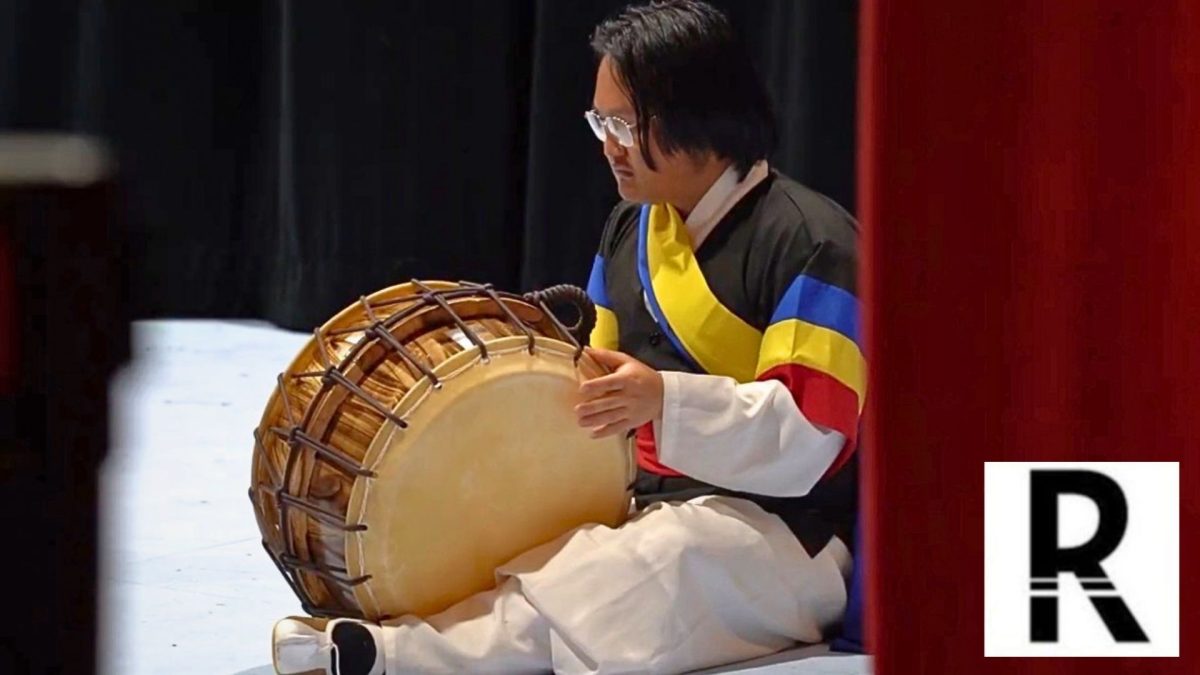
While private institutions like SPA are insulated from the immediate fiscal impact of federal cuts, the national climate around arts funding still shapes the cultural ecosystem students learn in, from museum access to the diversity of programming. Inside SPA’s Advanced Art: 2D classroom, students articulate the significance of art in ways that reflect national conversations about expression, identity and access. Senior Ethan He describes art as a form of expression that expands beyond language.
“With writing, [it] is also a creative expression. But I feel like [with] art, you can do a lot more and sort of show yourself in a different media,” he said. For He, expression through art is tied to public access and free speech. Although he was not aware of recent federal funding threats, he said he would like policymakers “to help people be able to express themselves publicly.”
Museums carry both limitations and deep value. He has also seen the tension between museums’ ability to protect art and their tendency to remove work from its original context.
“I’ve seen museums with Basquiat or like Banksy … they take them out of where they were and sort of get rid of some of their meaning,” he said. Even so, he also believes museums remain essential spaces where people encounter perspectives they might never otherwise access. “There are pros and cons, but I feel like overall, [museums are] good because they give normal people access to a wide variety of artworks and messages,” He said. His comments reflect a national trend: younger artists increasingly view museums as both protective gatekeepers and institutions capable of distorting original meaning.
Senior Maeve Duncan, who primarily expresses herself through fashion, said art’s value lies in its individuality.
“Art is so personal to the artist, so they can communicate whatever they want through their art, whether that’s very explicit or if it’s kind of like something you have to uncover,” Duncan said. Diversity and creative expression, she argued, is what keeps art vibrant. Without it, museum visits would feel repetitive and predictable. “If it wasn’t diverse, we would just be seeing the same kind of art all the time and going through a museum wouldn’t be as exciting if it’s just like all the same artists coming from the same background,” she said.
While He and Duncan emphasize the role of art in expression and perspective, junior Margaret Bonin, who is currently enrolled in the Drawing II: Mixed Media class at SPA, views creative work as a space defined by freedom. For her, art offers the ability “to put your emotions or your message into the paper without any restrictions,” she said.
Bonin often uses art to think through political and social questions. She is also more aware of the proposed funding reductions, particularly those affecting NPR, PBS and the Smithsonian.
For Bonin, the proposed cuts carry broader implications for access to reliable information and early childhood education. She noted that cuts to PBS, whose children’s programming she grew up with, could remove an important educational resource for families who depend on public broadcasting. “It really helped me figure out what I’m interested in,” she said. “Losing that access, especially for younger kids, is really unfortunate.”
Bonin also raised concerns about how reduced funding could limit opportunities for communities already facing barriers to the arts. “The art world is expensive,” she said. “It’s very important that you’re able to express yourself and be able to share your art.”
If art is a language beyond words and a vehicle for perspectives that would otherwise go unseen, then cutting NEA and NEH support does more than reduce budgets. It narrows who gets to speak. When grants quietly disappear, so do the small community programs, youth workshops and artist-led initiatives that expand whose stories fill museums, libraries and public spaces. As funding disappears and censorship creeps in, institutions feel pressure to choose “safe” or conventional work over challenging or politically uncomfortable pieces. The result is a cultural ecosystem where marginalized voices are the first to go quiet.
For He, Duncan and Bonin, the freedom to experiment, to express identity and to encounter unfamiliar viewpoints depends on an arts landscape that remains well-funded and uncensored. The question becomes not whether art will survive federal cuts, but whose art will.
Art is political. Although this may be a controversial statement, it is certainly true enough for governments to start taking down pieces they disagree with. Because of certain art pieces’ inherent political-ness, fascist governments tend to go after any pieces that stray from their view of what society should look like. When governments start to take down art and censor individual creativity, democracy is threatened.
Fascist governments have historically censored visual forms of art in attempts to control the public and reduce the opposition’s autonomy. A prime example of Nazi censorship of art was the creation of the “Degenerate Art” exhibit. During the Nazi regime, Hitler sanctioned many pieces of art to be shamed publicly. These pieces were all modern art pieces associated with styles such as expressionism, surrealism, abstraction and more. Although they weren’t all created by Jewish artists, the Nazis would purposefully claim that these pieces of “ridiculous” art were all products by ethnic groups such as Jewish people and other people with differing ideological standpoints than Nazi Germany in attempts to shame them and outcast them further. The creation and label of “Degenerate Art” is a form of censorship and also humiliation to suppress minority groups in order for the Nazi government to make a political statement that they have absolute control over the people.
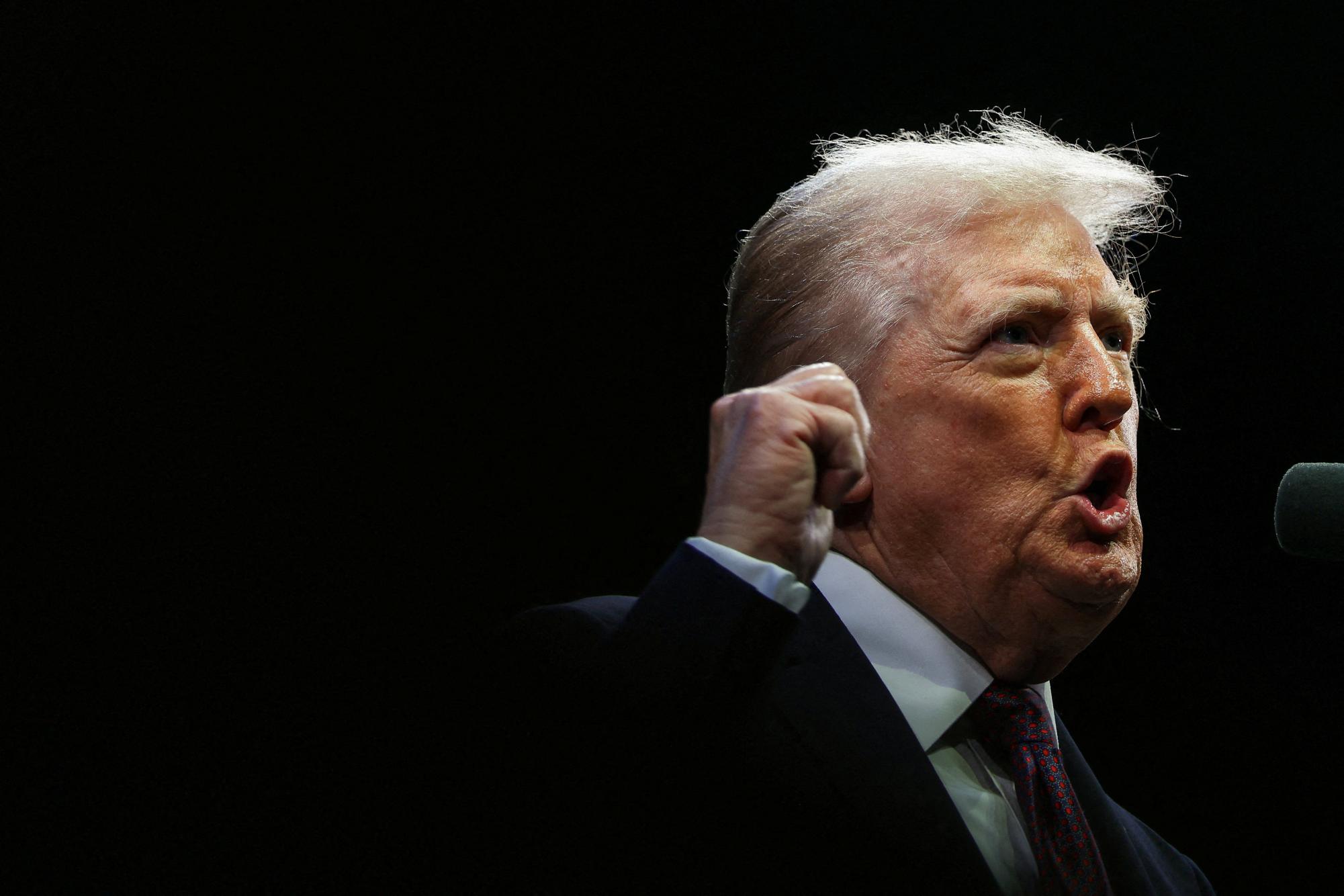
One of Trump’s executive orders in March called “Restoring Truth and Sanity to American History” is a continuation of targeting art that the government does not agree with. With past and also present regimes aiming to censor and take down art, one may wonder, why do governments do this? Taking a closer look at the pieces of art these governments have taken down in the past, it becomes increasingly clear that even though these governments claim that it is the art that was offensive to the eye or to the existing regime, it is actually the artists themselves that the governments feared posed a threat to their regime.
Nowadays, although governments are not shaming art publicly, they are still actively supporting the removal of art pieces they don’t agree with and even museums themselves that host these pieces of art are also self-censoring. According to data and surveys gathered by PEN America, not only are there no clear policies regarding the removal and censorship of art, but also 45% of art museum directors have chosen to take down pieces of art and self-censor simply because the art was considered “potentially offensive or controversial”. Is the removal of something which is considered “potentially offensive or controversial” truly justified when art is meant to evoke emotions and allow individuals to express their own experiences?
Although art pieces are themselves protected from destruction and mutilation without the artists’ consent by the Visual Artists Rights Act, there are no specific policies against the removal of art from individual museums. The lack of policies protecting art from the removal from the public eye makes it quite simple for museum directors to self-censor for the purposes of what they often consider to be curation. But the line between curation and self-censorship is blurry, and when museum directors curate under pressure, it is still self-censorship. Especially in today’s world, it is crucial for museums to draft up policies to protect culturally important art pieces from being taken down when the reasonings do not suffice and to dictate when the reasonings do suffice for an art piece to be taken down.
When pieces of art are taken down due to censorship of any kind, whether that be from the government or the museum directors, democracy continues to be threatened. At its core, art is a form of self expression of individuals and communities alike. When governments and art museums begin to shut down people’s creativity, that is when we know that democracy is being threatened. Moving forward, America needs policies to protect art from unnecessary removal and consensus amongst museum directors and the public for what justifies the removal of art.
![CALCULATING THE CHANGES. As study habits have changed, the materials used have changed too. "I remember the day when [my brother] came home with his graphing calculator, [which] had Mario. And I was blown away," Spanish teacher Peter Daniels said. (Photos: Fair Use; Wikimedia Commons)](https://www.rubiconline.com/wp-content/uploads/2026/05/Untitled-design-4-1200x800.png)