











![CALCULATING THE CHANGES. As study habits have changed, the materials used have changed too. "I remember the day when [my brother] came home with his graphing calculator, [which] had Mario. And I was blown away," Spanish teacher Peter Daniels said. (Photos: Fair Use; Wikimedia Commons)](https://www.rubiconline.com/wp-content/uploads/2026/05/Untitled-design-4-1200x800.png)







































![BEWARE. Junior Maisy Torres was expecting a Nickelodeon ride when she entered the haunted house at the State Fair. What she encountered was much more horrifying. "There's not enough money in the world to pay me to do [it again]," Torres said.](https://www.rubiconline.com/wp-content/uploads/2026/05/Never-again-with-nabeeha-1-e1778077989386-1200x802.png)



![[QUIZ] What famous scientist are you?](https://www.rubiconline.com/wp-content/uploads/2026/01/Untitled-design-3.gif)






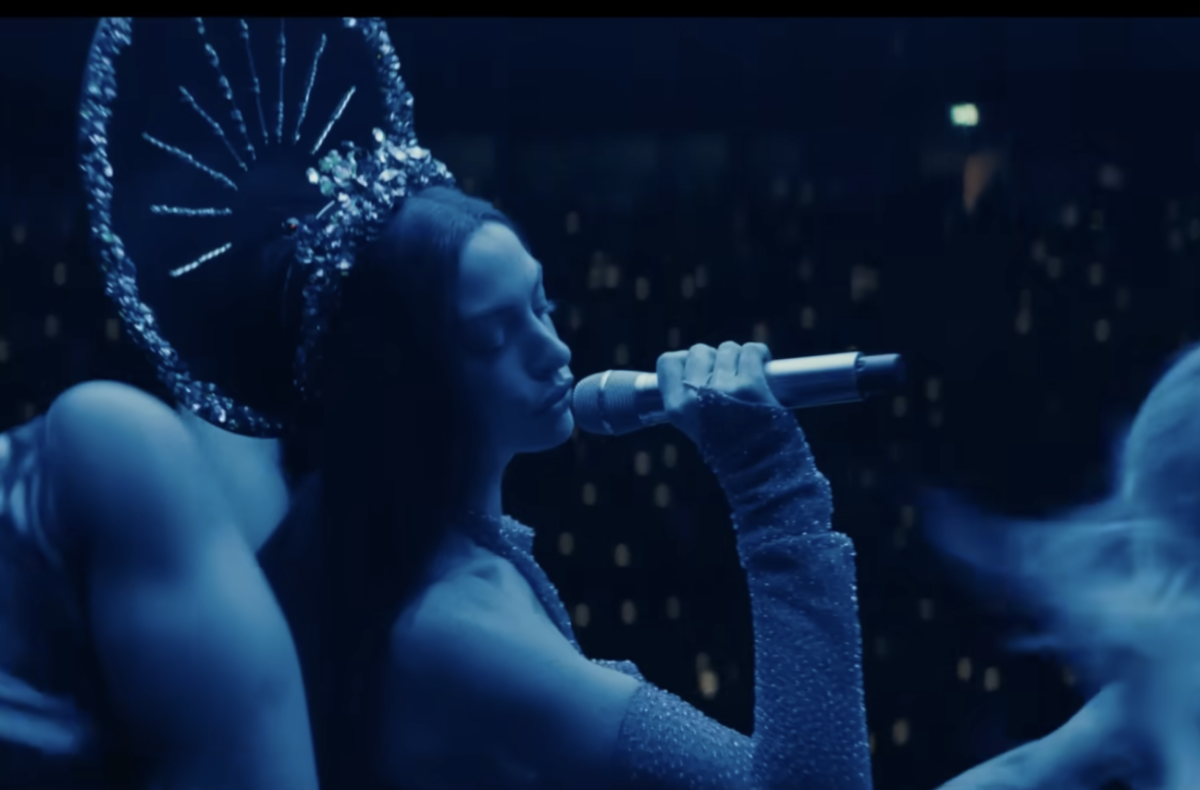
Black spidery eye makeup. Diamond studded jumpsuit. A dark silhouette emerging from a dark body of water. Who is it? What is it? Is it dangerous? “No, but karma is,” singer and influencer JoJo Siwa replies (probably).
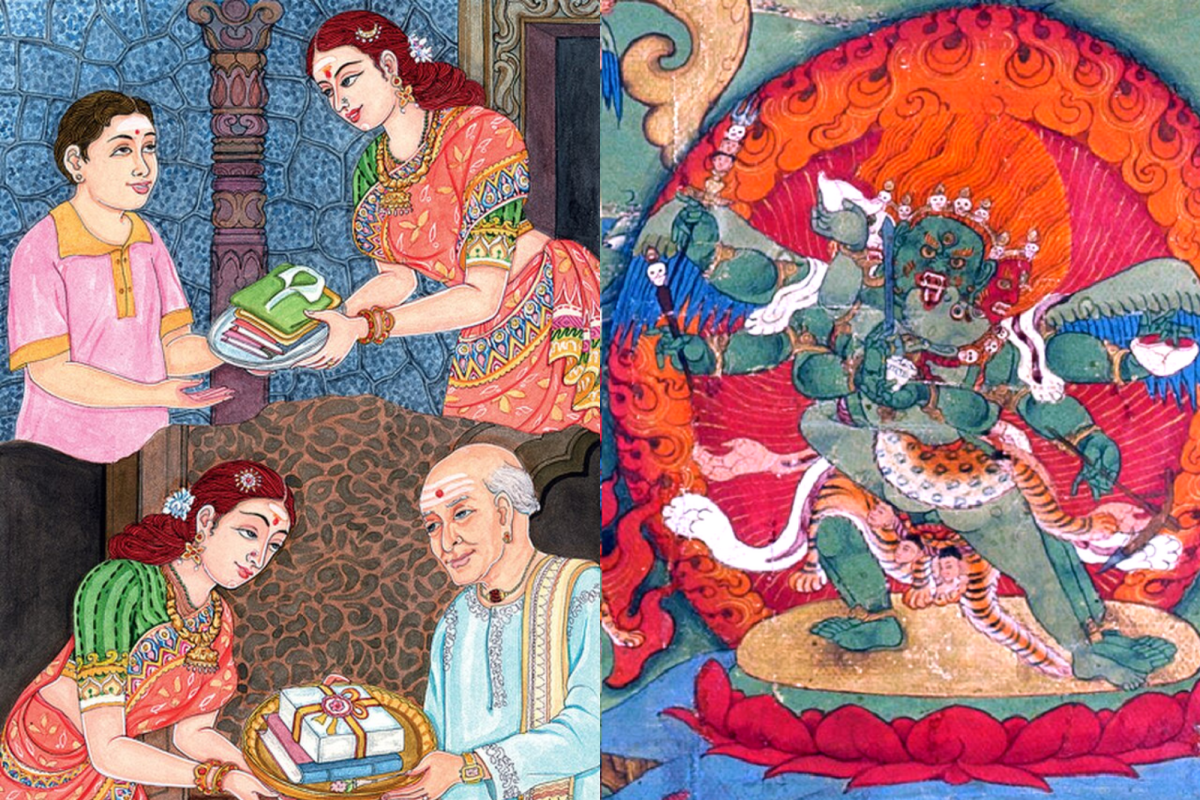
The past four years have placed karma at the forefront of many hit singles, such as “Karma” by Taylor Swift and Chappell Roan’s “My Kink Is Karma.” These songs are catchy, and follow the typical belief that karma is someone getting what they deserve. Although it can easily be simplified into a system of reward and punishment, karma also has ancient roots and cultural significance.
Karma first appeared in Hindu scripture around 4,000 years ago. It was later adopted by Buddhism, Sikhism and Jainism as a widespread foundational value. In these religions, karma is the result of one’s actions that continue the cycle of reincarnation. The ultimate goal of karma is to balance it and ascend to a final spiritual level, called “moksha” in Hinduism and Jainism, “nirvana” in Buddhism and “mukti” in Sikhism.
Junior Adi Narayan’s grandparents gave him his first insights into the traditional Hindu belief of karma and reincarnation.
“[My grandparents] believe that you’re going to be reincarnated and depending on what your life was, your next reincarnation is different,” he said.
The repercussions for karma are felt in current or future lives, meaning that positive karma will give someone a better future life.
“It’s kind of like heaven and hell,” Narayan said. “But more in the sense that in your later life you’ll be better off if you do better in your life right now.”
Meanwhile, in Buddhism, karma strives to answer the question of inequality; nothing happens that someone does not deserve, and people are responsible for their own misery or happiness. In religions like Hinduism and Sikhism, an alignment with God’s will is also an important part of releasing karmic energy. Jainism is unique in its belief that karma is manifested in physical particles, but like the other belief systems, the way to rid karma is through self-control and ethics.
Narayan noted the far-reaching influence of karma: “A more theological version [of karma] would be reincarnations, but now not just Hindu people use it. A lot of people say ‘bad karma,’ like if you do something bad, then you’ll have bad energy.”
According to a 2023 poll by the AP-NORC Center for Public Affairs Research at the University of Chicago, around 63% of U.S. adults believe in karma. However, as of 2015, only about 22% of the global population is Hindu or Buddhist, according to Statista.
Even if one doesn’t practice the religions associated with karma, karma as a spiritual belief was popularized in the U.S. by hippies. In the 1960s, alternative means of religion were sought out. The idea of karma was easily adopted as a moral justice system and was simplified.
Junior Olivia Andres explains her interpretation of karma: “I believe that the energy you put out into the world is the energy you’re gonna receive … when I’m being positive and looking on the bright side, my day is better and I have better outcomes,” she said.
Karma’s accessibility makes it an easy concept to grasp and apply to daily life.
Even those who are not spiritual or are atheist can find inarguable karmic truths in physics. Karma draws a parallel to Newton’s third law of motion, which states that every action will result in an equal and opposite reaction. For some, karma is simply an application of a scientific principle to the moral, spiritual and immaterial realm of cause and effect.
Sophomore Zoe Brenner sees a relationship between actions and consequences, but doesn’t necessarily attribute them to karma.
“I think that people who frequently have done harmful things are just harmful people. Eventually, because they’re constantly doing harmful things, they get in a lot of trouble for it,” she said.
However, beliefs are put to the test when karma seems to fail. Andres focuses on perseverance when faced with unfortunate events. “Bad things happen to everyone, and that’s not really something that you can control. I’m still gonna have days that are bad. I think for me, the true purpose of karma is not letting that get me down and continuing to do my best and be kind to those around me,” she said.
One influential pop culture reference to karma occurred in Siwa’s song “Karma,” where she detailed karma’s impact on her life. Siwa was uncharacteristically negative while explaining the consequences of her actions. “To say ‘You screwed me over by doing X, Y, Z, and now all these bad things are happening to you, and it’s your fault, and I’m happy about it,’ I don’t think that makes any sense,” Brenner said.
Pop culture often misconstrues karma due to a lack of understanding. While the songs may suffice for catchy one-hit-wonders, they can fundamentally alter people’s perception of karma, and border on misinformation.
Karma is multifaceted and has roots going back thousands of years across different religions, belief systems and cultures. The commonly used idea of karma as a transactional force can reduce it into a potentially negative power. Karma transcends cultural divides, not only aligning with ancient theological beliefs, but also science and bleached blonde mohawks dancing on a yacht.
