




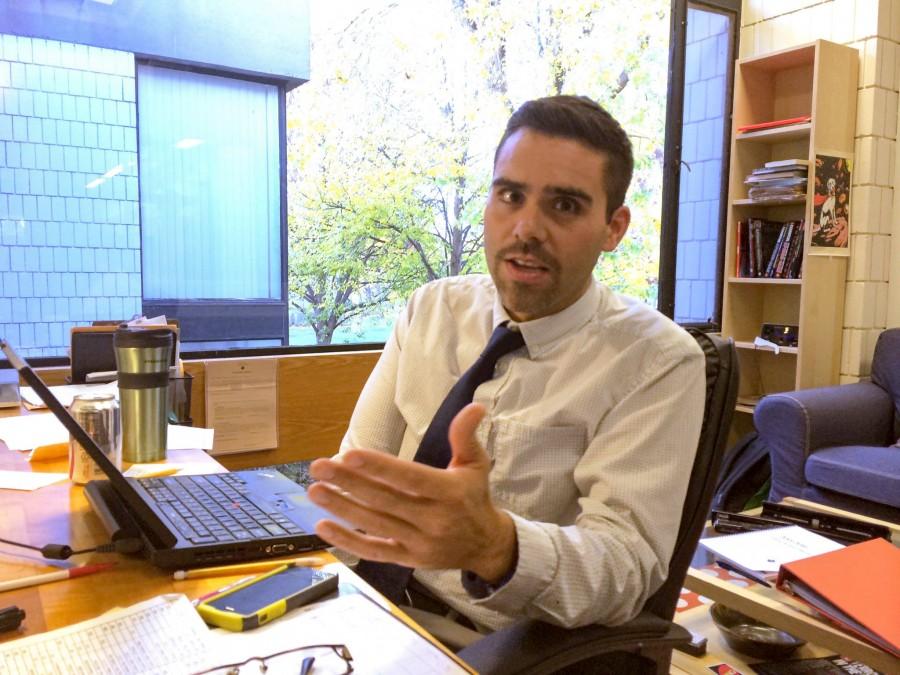
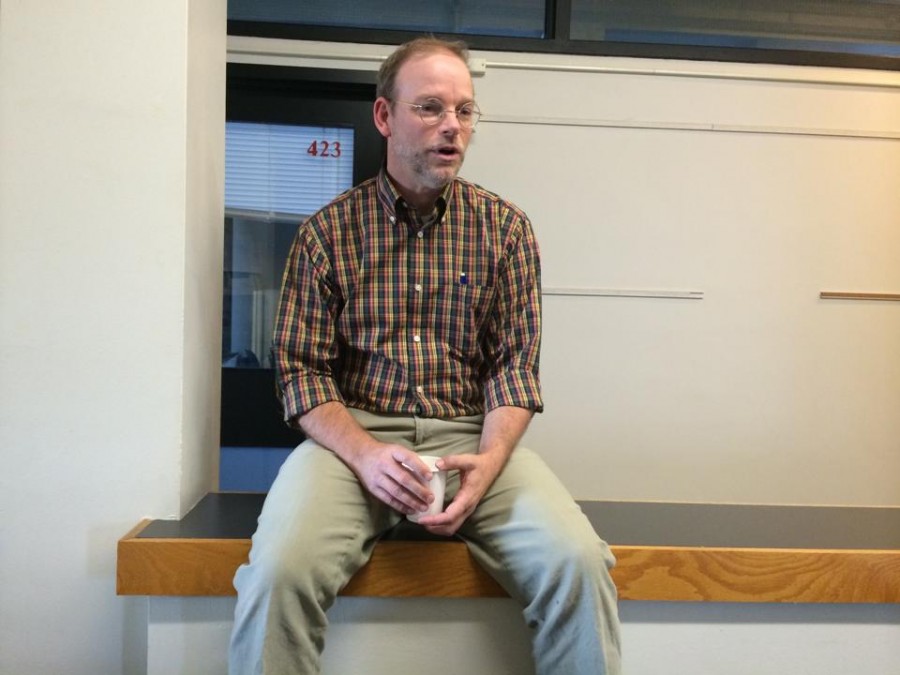
![CALCULATING THE CHANGES. As study habits have changed, the materials used have changed too. "I remember the day when [my brother] came home with his graphing calculator, [which] had Mario. And I was blown away," Spanish teacher Peter Daniels said. (Photos: Fair Use; Wikimedia Commons)](https://www.rubiconline.com/wp-content/uploads/2026/05/Untitled-design-4-1200x800.png)































![BEWARE. Junior Maisy Torres was expecting a Nickelodeon ride when she entered the haunted house at the State Fair. What she encountered was much more horrifying. "There's not enough money in the world to pay me to do [it again]," Torres said.](https://www.rubiconline.com/wp-content/uploads/2026/05/Never-again-with-nabeeha-1-e1778077989386-1200x802.png)


![[QUIZ] What famous scientist are you?](https://www.rubiconline.com/wp-content/uploads/2026/01/Untitled-design-3.gif)






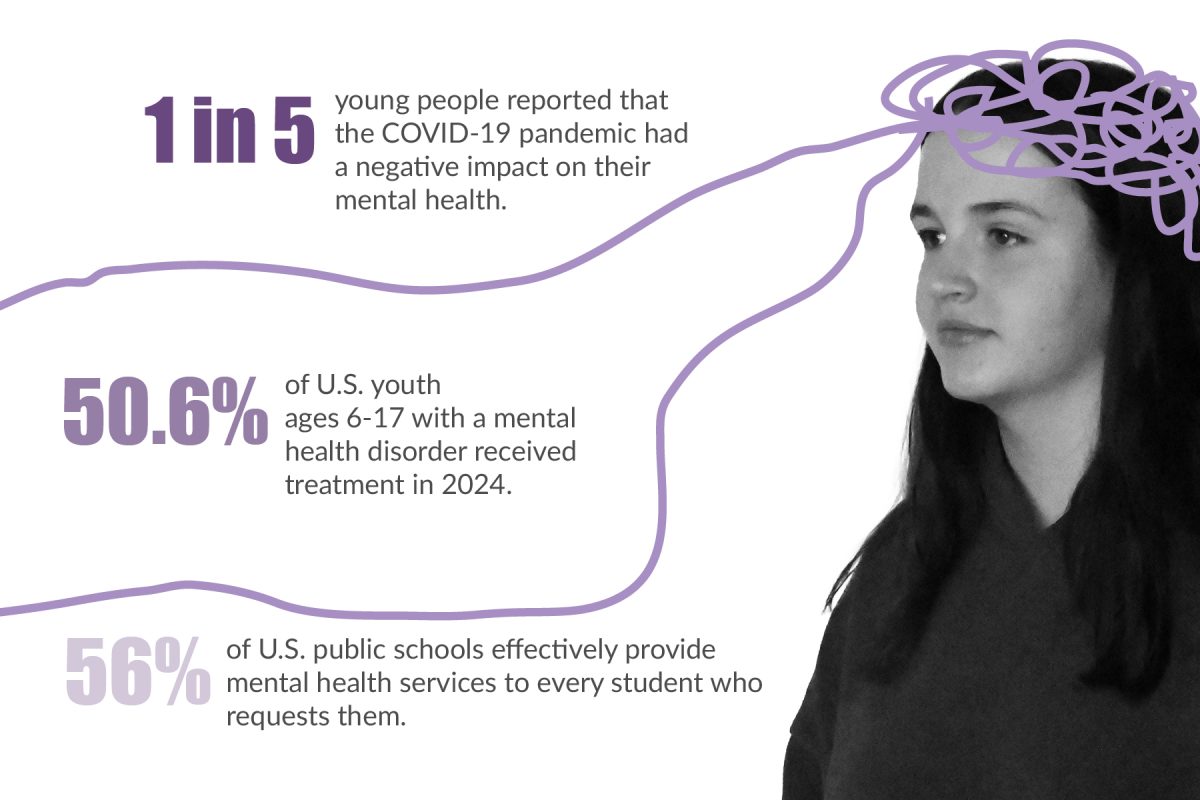
When the COVID-19 pandemic confined millions of Americans to their homes in 2020, the strain on mental health became prevalent, as a 2024 Pew Research Center survey by Giancarlo Pasquini and Emma Kiku suggests. The crisis exposed long-standing stigmas and emboldened the importance of mental health.
According to a 2022 survey conducted by the Kaiser Family Foundation and CNN, 90% of U.S. adults believe the nation is experiencing a mental health crisis.
This battle with mental illness has only grown more prevalent as time has elapsed. The number of individuals facing mental health challenges was exacerbated by the pandemic, when one-fifth of adults in 2020 were recognized as struggling with a mental health condition.
TABOO TOPICS
Societal attitudes toward mental health tend to be complex. A 2016 study from The Lancet by Graham Thornicroft and Nisha Mehta, et al., revealed that individuals tend to accept the medical or genetic nature of a mental health disorder but are still prone to bear negative feelings toward the person with the condition.
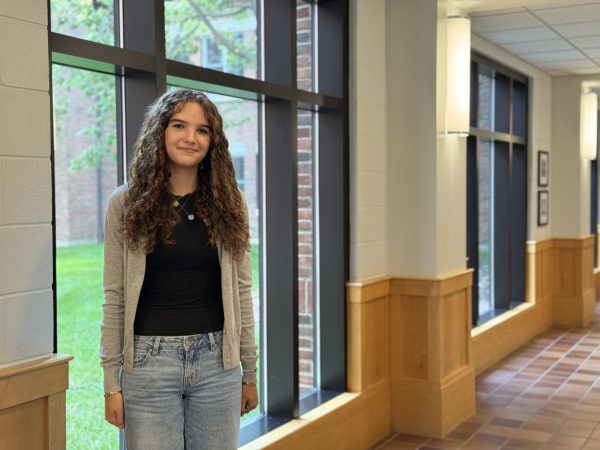
Junior Nico Martin noticed that people his age tend to be reluctant to discuss mental health openly.
“I do notice that within communities of kids, talk of mental health is kind of a taboo … and it can really only be brought up when you’re super close friends with somebody,” Martin said. “If you’re struggling and having a hard time making friends, then it’s almost impossible to get a conversation out about mental health.”
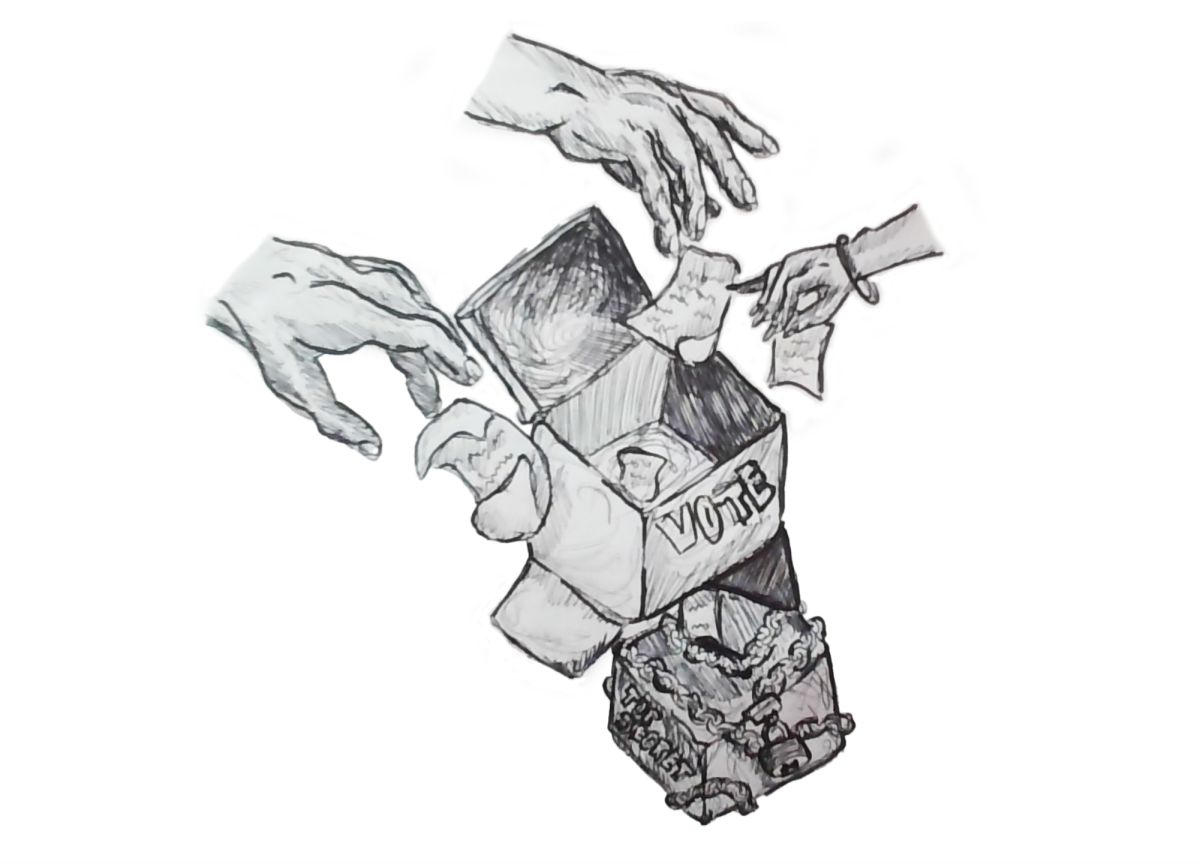
The reason for this “taboo” is stigma. According to an article titled “Stigma, Prejudice and Discrimination Against People with Mental Illness” written by the
American Psychiatric Association, more than half of individuals struggling with mental health issues do not get help for their conditions.
The most commonly reported reason for this is the fear of change in treatment from others.
Upper School Counselor Clare Roney urges community members to support one another proactively. She has observed that after receiving support, seeking professional support often seems more manageable.
Roney emphasized the risks that can come with the neglect of an individual’s mental health care needs. “I also notice that students feel when people do share, they’re not the only ones struggling. I fear that when we don’t talk about it, and we don’t normalize mental health, and we don’t have resources available, people kind of stuff it,” Roney said. “They try to cope the best way they can, sometimes with unhealthy coping mechanisms, and eventually, I think it impacts all areas of their life.”
SOCIETAL STIGMA
Researchers have identified several kinds of stigmas. The first is public stigma, which encompasses discriminatory ideologies that others have about mental illness.
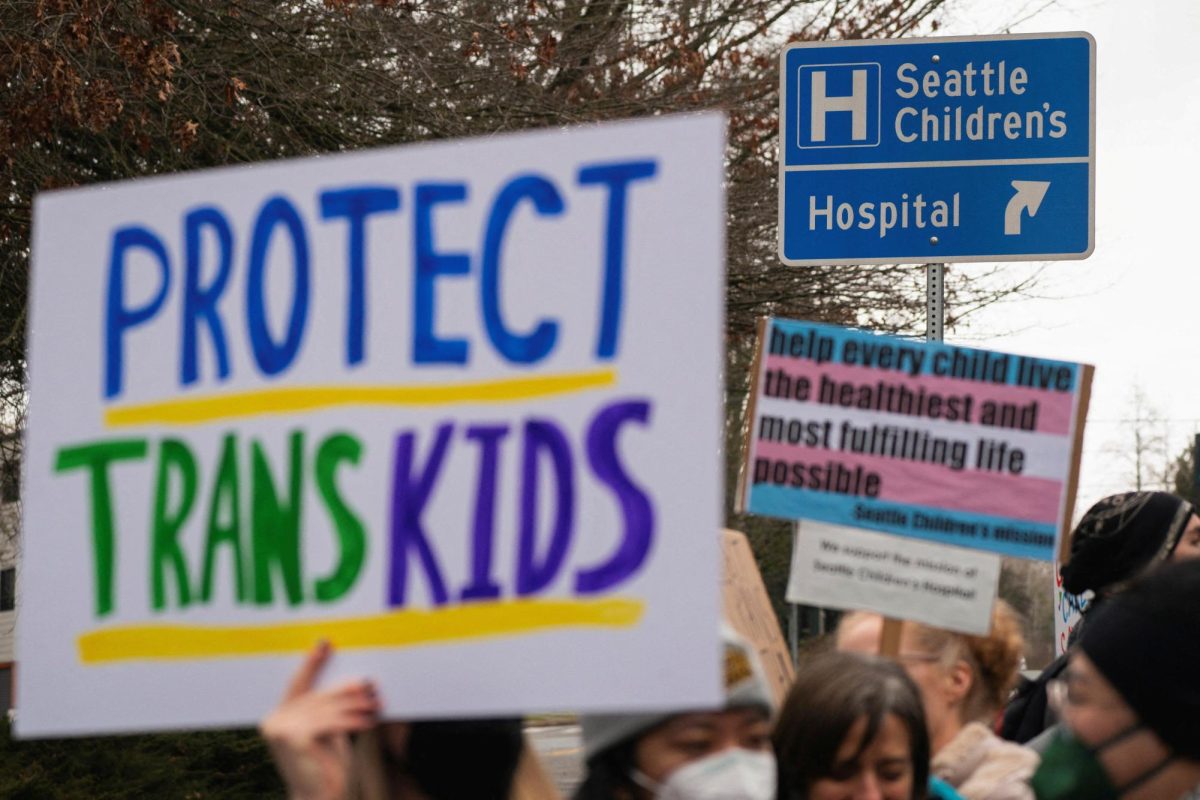
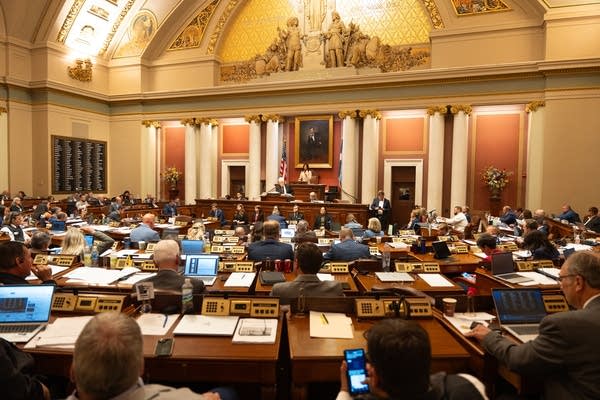
The second is self-stigma, or internalized shame. Finally, the third is structural stigma, meaning policies or systems that institutions have in place to intentionally or unintentionally impair those with mental illness, such as lower funding for mental health research.
Another example of structural stigma is the lack of care available in the U.S. Hesitancy to verbally advocate for oneself comes from this stigma. However, this isn’t the only obstacle in the way of obtaining support. Slightly more than half of counties in the U.S. lack any practicing psychiatrists, making treatment for mental health increasingly difficult to access.
Access to mental health facilities in 18% of large rural areas and 40% of isolated rural areas is scarce, as most care facilities are located at least 30 minutes away from these areas.
ACCESSIBILITY ISSUES
Additionally, these areas have a higher proportion of households without access to essential telecommunication devices, meaning telehealth opportunities are inaccessible, according to a University of South Carolina Rural Health Research Center study titled “Access and Quality of Mental Health Services in Rural and Urban America.”
It is also reported that mental health stigma disproportionately deters certain groups from getting support. According to an article from Cambridge University Press, “What is the impact of mental health-related stigma on help-seeking? A systematic review of quantitative and qualitative studies,” ethnic minorities, youth, men, military members and health professionals tend to shy away from seeking help because judgments are instilled by surrounding stigmas.
MOVING FORWARD
Obtaining help isn’t only necessary during times of hardship. Sophomore Naomi Mann emphasizes the importance of mental health maintenance. “You don’t have to have something wrong with you to go to therapy. I think it’s just a good opportunity. Everybody deserves a space to talk about what’s going on in their life. And I think that it needs to be normalized,” Mann said.
The first step toward nullifying the power of mental health stigmas is to normalize mental illness and support community members through their best and worst moments. Battling mental illness is not a linear process, and treatment varies between patients; however, options can include immediate crisis support via hotlines, discussing mental health with primary care providers and finding a therapist.

Institutes of Health) (Izzy Middlebrook)

![[HEALTH] How do you get good sleep?](https://www.rubiconline.com/wp-content/uploads/2025/12/Screenshot-2025-12-11-at-12.14.31-PM-1200x785.png)