












![CALCULATING THE CHANGES. As study habits have changed, the materials used have changed too. "I remember the day when [my brother] came home with his graphing calculator, [which] had Mario. And I was blown away," Spanish teacher Peter Daniels said. (Photos: Fair Use; Wikimedia Commons)](https://www.rubiconline.com/wp-content/uploads/2026/05/Untitled-design-4-1200x800.png)


























![BEWARE. Junior Maisy Torres was expecting a Nickelodeon ride when she entered the haunted house at the State Fair. What she encountered was much more horrifying. "There's not enough money in the world to pay me to do [it again]," Torres said.](https://www.rubiconline.com/wp-content/uploads/2026/05/Never-again-with-nabeeha-1-e1778077989386-1200x802.png)


![[QUIZ] What famous scientist are you?](https://www.rubiconline.com/wp-content/uploads/2026/01/Untitled-design-3.gif)







Writer-director Jafar Panahi has been imprisoned twice by the Iranian regime, first for six years in 2010 on charges of “propaganda against the state,” and again in 2022 for a shorter, eight-month stint to finish off his 2010 sentence (he got out on bail the first time). His prison time, like that of many other Iranian citizens, was horrifically torturous: “The first time I was in prison I was in solitary confinement. I was on my own in a tiny cell and they would take me out blindfolded to a place where I would sit in front of a wall and hear this voice at my back,” he told The Guardian in May 2025. For months at a time, he was blindfolded and tortured, and shown practically no humanity. The very films for which he was imprisoned are compassionate, familial dramas that depict rarely documented life in Iran. His latest effort, the complex moral thriller “It Was Just An Accident,” is a new cinematic exercise for Panahi.
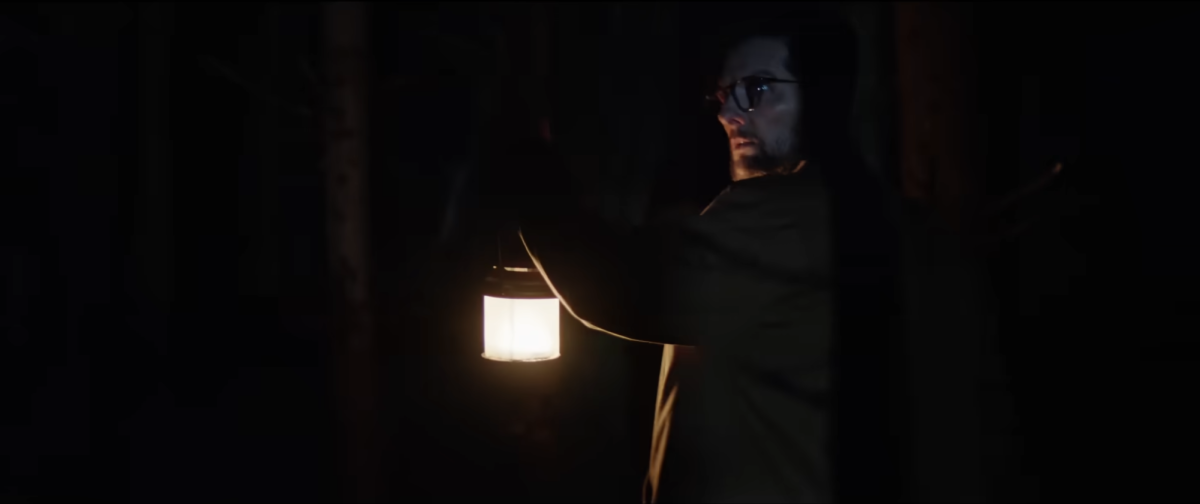
The film follows Vahid, a middle-aged man who was formerly imprisoned and violently tortured by the Iranian regime. Because he was blindfolded for the entirety of his imprisonment (like Panahi’s real experience), he was forced to only rely on the auditory around him, the chief sound he experienced being the signature squeak of his torturer, Eqbal’s peg leg. When he believes he has found this man again, due to the aforementioned squeak, he knocks him out and plans on burying him alive. However, he has doubts whether it is really his federal tormentor, which leads to a thrilling hundred minutes of wedding photos, a childbirth, and an impossibly difficult moral decision.
The moral complexity lies in the decision our cast of protagonists is forced to make if they discover that this man really is Eqbal. Should they vengefully slaughter him and resort to the ways of their oppressors? Or should they show mercy and let him go, which could result in retaliation or a lack of moral closure?
The country of Iran has been a theocratic dictatorship since 1979, and is infamous for human rights abuses and lack of political freedom. The unjust imprisonments that Vahid fictionally experiences and Panahi suffered through are a common occurrence of the current regime. On top of this, executions have only continued to get more common, with 2024 having 1,000 executions, the largest yearly count since 1994, per Human Rights Watch. Panahi, who was imprisoned for protests and political filmmaking, clearly loathes the government but adores his fellow Iranian civilians. Every character in the film is painted with sympathy and humanity, and the governmental figures are depicted as cold-hearted and ruthless.
Alongside Vahid, the other formerly imprisoned characters include artists (a photographer and a bookshop owner/author). Panahi sees himself within these characters, a passionate creator who has been unfairly targeted by an inequitable government. Panahi’s message is clear as day: a love letter to the people of Iran, and an attack on an Iranian dictatorship that abuses its people and suffocates their art.
In addition to its strong thematics, the film is expertly crafted. A minimalist yet flawless script, Oscar-worthy performances from Vahid Mobasseri, Mariam Afshari, and Ebrahim Azizi, and astonishing, wide-angle lens photography are among the incredible technical elements the film possesses. However, because of its incredible importance to the narrative, the most essential technical aspect of the film is its sound design. The absolute lack of score or soundtrack forces the viewer to be completely absorbed by the terrifying state these characters live in every day. The seemingly innocent squeak of Eqbals’ peg leg is menacing every time it’s on the screen, and the tactile and realistic soundscape perfectly accompanies the plot.
Although Panahi’s themes aren’t terribly complex, they’re wonderfully formidable and philosophical. The film is certain to make a run in this year’s Academy Awards with its strong performances and sound design, but is unfortunately a long shot for Best Picture. Although its theatrical release is limited, it’s an incredibly important film that every filmgoer should seek out.


