





![CALCULATING THE CHANGES. As study habits have changed, the materials used have changed too. "I remember the day when [my brother] came home with his graphing calculator, [which] had Mario. And I was blown away," Spanish teacher Peter Daniels said. (Photos: Fair Use; Wikimedia Commons)](https://www.rubiconline.com/wp-content/uploads/2026/05/Untitled-design-4-1200x800.png)





















![BEWARE. Junior Maisy Torres was expecting a Nickelodeon ride when she entered the haunted house at the State Fair. What she encountered was much more horrifying. "There's not enough money in the world to pay me to do [it again]," Torres said.](https://www.rubiconline.com/wp-content/uploads/2026/05/Never-again-with-nabeeha-1-e1778077989386-1200x802.png)


![[QUIZ] What famous scientist are you?](https://www.rubiconline.com/wp-content/uploads/2026/01/Untitled-design-3.gif)




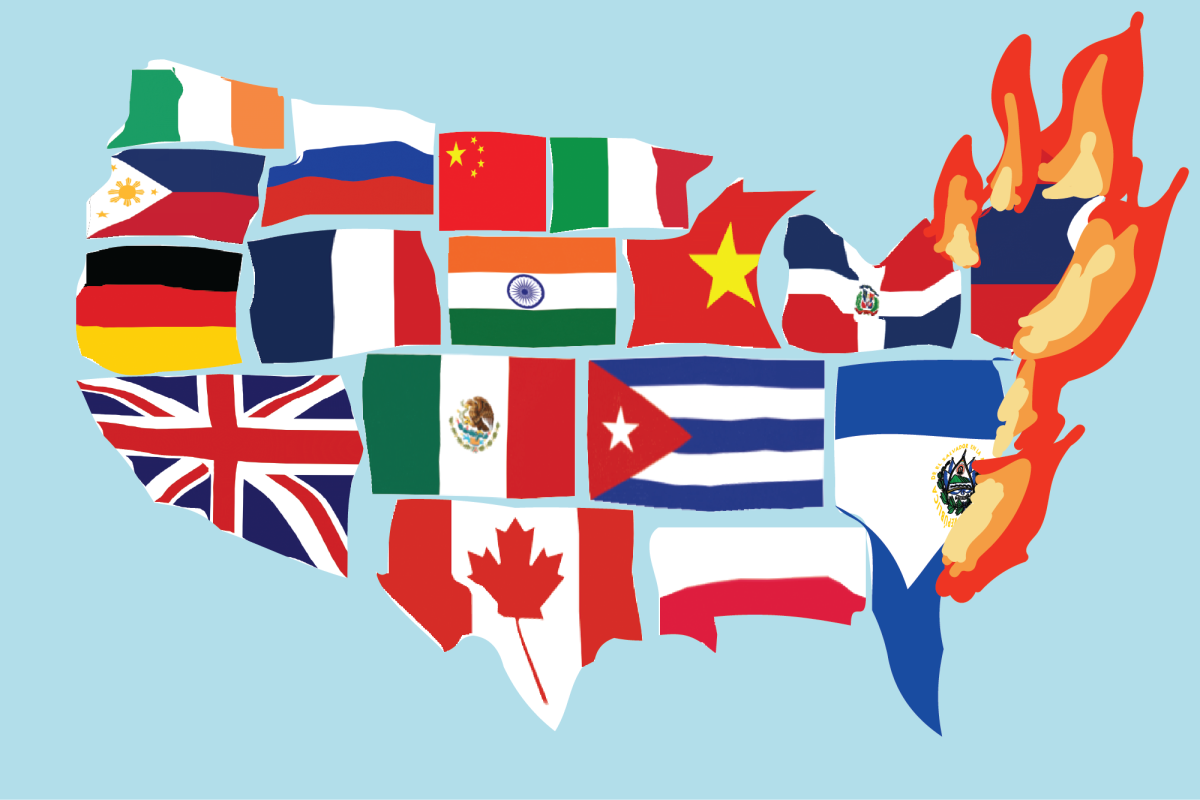
Art is inherently tied to the artist’s societal and global identity. The first recorded art piece dates back to approximately 100,000 BC and is a form of African Rock Art. African Rock Art can be distinguished by three distinct geographic regions: the Southern, Central and Northern regions. Even the most ancient forms of art can be divided into regional groups, which demonstrates the essential role geography plays in creating art, as well as the strong connection between art and the spatial identity of the artist.
Far from ancient African Rock Art, the contemporary art world is one vastly connected by technological advances and widespread globalization. Due to the ease of communication across continents, artists are constantly liaising with one another, and as a result, the emphasis on nationality within art has declined. In an article published Aug. 7, 2023, by Composition Gallery titled “The Global World is Your Oyster: How Globalization Has Changed the Art World,” the authors define globalization as “a process of integration between large-scale social and economic factors, through the increase of trade and communication channels.”
Composition Gallery mentions the rise of art fairs and large gallery openings, as well as the art collecting and integration of modern-day technologies into art.
These factors have enabled artists to reach a larger audience and provided more artistic opportunities within their work; however, there are some drawbacks. There is intense pressure on young artists to conform to styles and trends and appeal to an international audience, resulting in a decline in the sense of localization within artistic communities.
Senior Elle Williams believes that social media has had a massive impact on the global artistic community. “Art has never been more globalized than with the rise of social media,” she said.
Williams also believes that artwork can mix cultures beyond the artist’s lived experience.
“Art can also be representative of more than one nationality or culture; it’s much more connected than it used to be,” she said.
The impact of globalization is also apparent at school. The wide selection of visual arts electives provides students with an understanding of different worldwide artists, as well as of how their nationality plays into their work.
Junior Eliza Bray said, “I have been taught a good amount about who the artists are, and we learn about how they express their nationality through their art.”
Some students believe that their nationality inherently influences their art, whether they are conscious of it or not. Senior Eliza Dayton is one of these students. “I think nationality influences my art, not on purpose because it’s not what I try to represent, but it can be Eurocentric, which I do know,” she said.
Art has long been a means for artists to express their national identity; however, with the rise of social media and global connectivity, this has evolved. Art can tell the story of the world, rather than just an artist’s experience. A story of multiple cultures can subconsciously reveal itself in an artist’s artwork. With the globalization of the art world, the way and form in which an artist’s nationality is represented in their art is no longer the same as it was prior to globalization, but it is still very much present.
ART MATCH UP
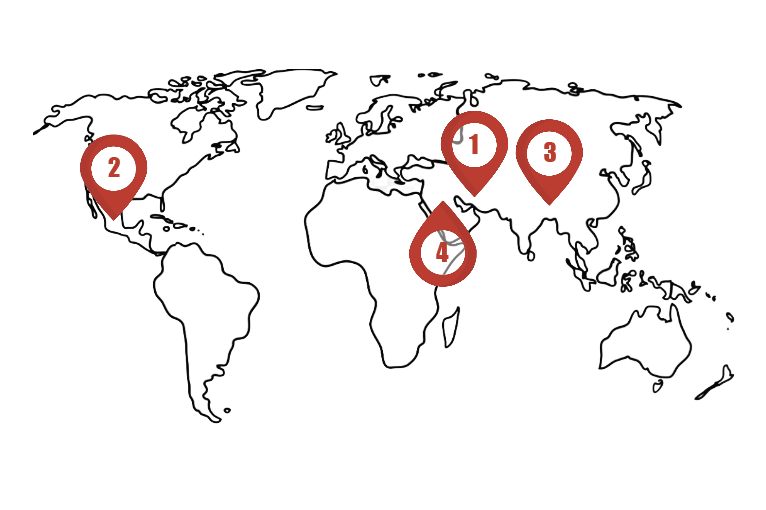
Look at the map above to see the region of the world the art below comes from.


