

The rise of “KPop Demon Hunters” has become a global sensation. Currently ranked as Netflix’s most-watched animated film, it is on track to reach the streaming service’s most-watched movie of the year. Fans are captivated.
Sony Pictures Imageworks, also known for “Spider-Man: Across the Spider-Verse” and “Cloudy with a Chance of Meatballs,” has brought its innovative animation style to “KPop Demon Hunters.” The creative team behind the film has experience, especially with animated projects. The co-director, Maggie King, has done previous work on films such as “The Lego Ninjago Movie” and “Puss in Boots,” while her co-director, also an animation veteran, Chris Applehans, wrote and directed the 2022 animated film “Wish Dragon.”
“KPop Demon Hunters” focuses on KPop girl group Huntrix: Rumi, Mira and Zoey. They are the newest in line of planetary guardians, keeping the world safe from demons who want to feed on the souls of humanity. The film follows the group as they attempt to save the world from the soul-stealing demons by topping the KPop music charts. The tension in the film rises as they are challenged by the demon boy band The Saja Boys. However, each member of Huntrix also struggles with personal battles of identity that they keep hidden from one another.
The film’s animation style was just as vibrant and electric as “Spider-Man: Across the Spider-Verse,” with close attention to detail in areas like the choreography, characters’ clothing and even the fighting styles. The bathhouse fight scene, where Huntrix faces off against a group of demons, is a perfect example. The choreography flows perfectly with the action, as Rumi’s acrobatic spins, Mira’s kick and Zoey’s precise strikes make the fight feel just as dynamic as their KPop performances.
The movie’s success can also be attributed to its undeniably catchy songs.
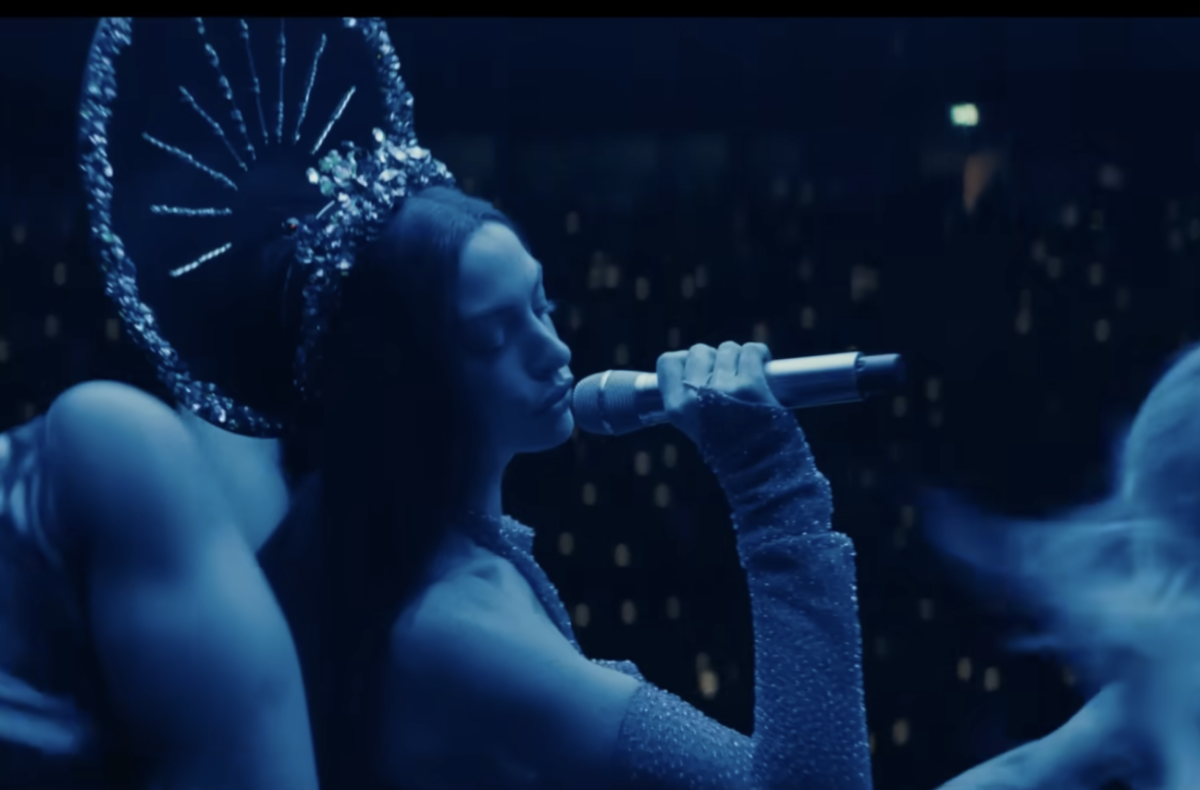
The soundtrack, now the top-selling movie soundtrack of the year with two tracks on the Billboard Hot 100, features vocals from Lee Ejae (Rumi), Audrey Chu (Mira) and Ami Kim (Zoey), who voice the songs for the group Huntrix. While multiple artists collaborated on the music, notable contributions also came from Andrew Choi, Kevin Woo and TWICE, who appear on tracks like “Soda Pop” and the end-credits version of “Takedown.”
Another notable feature about the film is how it weaves Korean culture into its world. Korean identity is shown both in subtle details and in its setting modeled off the Korean city, Gangnam, and the character design draws from anime influences, including Aeygo animations, such as the popping corn effect in the eyes that are used to express emotion. Traditional Korean weapons such as the hwando sword used by Rumi and the janggeom long sword used by Mira highlight the authentic weapon design.
However, the film fell short in the plot. The premise was interesting: a KPop group fighting an army of demons, mixing musical performance with fighting, but the structure followed a familiar timeline, episodic battles between Huntrix and demons, building toward a final battle royale. This made it, like many Netflix originals, predictable. The film took on deep themes like shame, redemption and trust, but the emotions in each scene felt forced, to the point where it was easy to notice each milestone in the movie, pushing the plot to its eventual conclusion. Even the relationships of the characters felt shallow, possibly because the story tried to juggle too many ideas at once without giving each enough time to develop.
While it’s meant to be a light, family-friendly movie, the dialogue lacked depth. Instead of exploring each character, the dialogue stuck to generic lines that didn’t feel like they added much to the overall story.
“KPop Demon Hunters” is an innovative, visually impressive film. While the plot does feel shallow and underdeveloped, its bold style and cultural reach make it hard to ignore. Like it or not, it’s a cultural phenomenon, having hit the theaters Aug. 23 and topping the box office with $18 million from sold-out shows.