

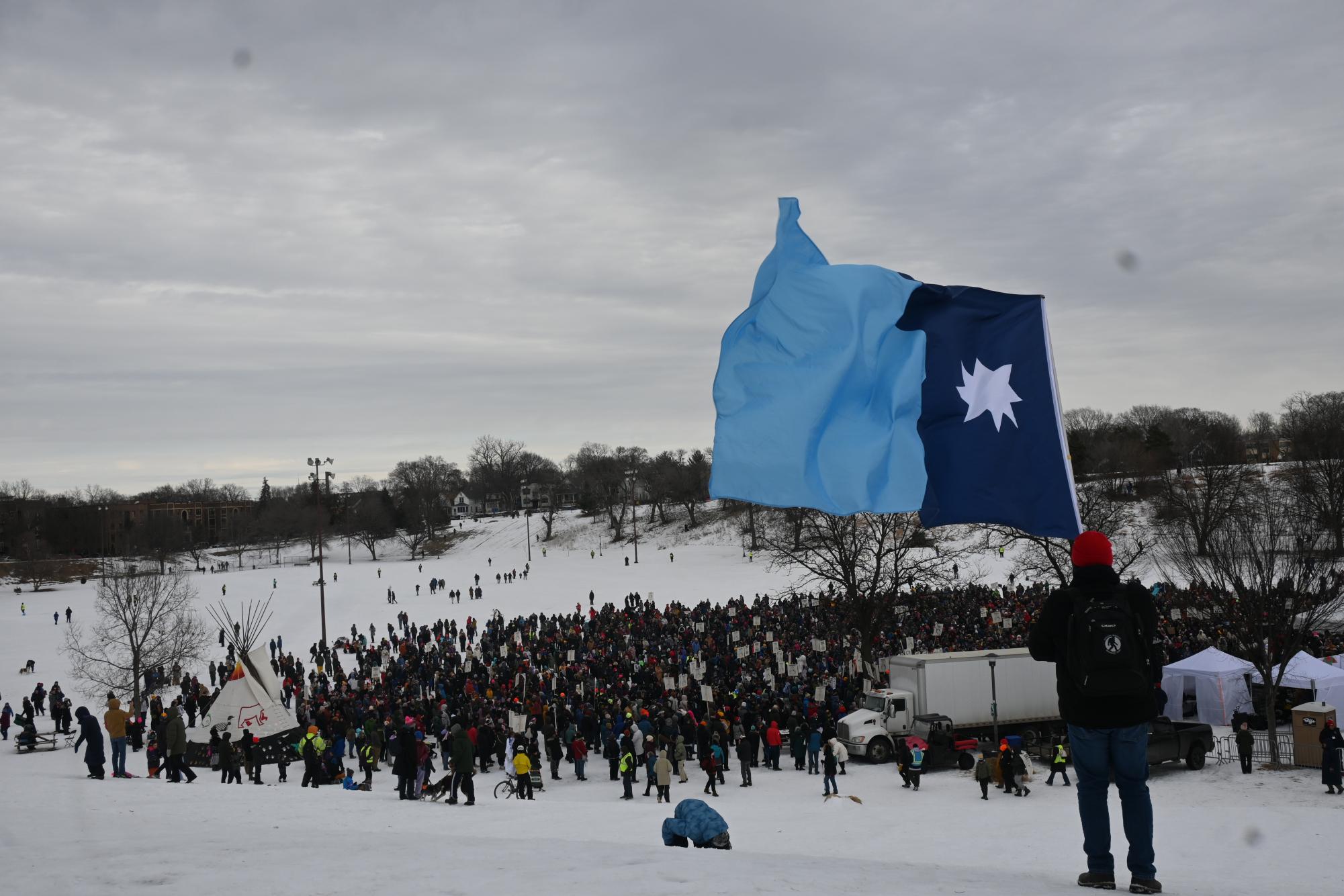
For Minnesota’s Indigenous communities, U.S. Immigration and Customs Enforcement’s occupation of their land is a reminder of 530 years of history. Given their multigenerational resistance against foreign governments, the Native people of Minnesota are united again against the ongoing arrests and detainment by ICE.
More than 50,000 Native people live in the Twin Cities, making it among the largest urban Native populations in the country. Recent arrests of tribal members, cuts to food assistance, and displacement from their homes reflect a historical pattern of oppression by the U.S. government.
On Jan. 8, the Oglala Sioux Nation reported that four of its members had been arrested by ICE. In a media statement, local tribal leaders explained that Indigenous detainees are being subjected to immigration enforcement despite their status as U.S. citizens under federal law and treaty. Tribal attorneys have attempted to locate the detainees, but the Department of Homeland Security has not responded to requests for information regarding arrests or the detainees’ whereabouts. Many of those recently released did not have charges filed against them.
The stated purpose of Operation Metro Surge is apprehending undocumented immigrants and deporting them — yet arresting Native people on their own land has led to accusations of racial profiling.“To be asked the question if you’re a citizen, if you’re a Native person, that’s both a slap in the face and it’s demeaning as well,” said Robert Two Bulls, priest and community leader at All Saints Episcopal Indian Mission in South Minneapolis. “I think that’s a big part of this whole operation. They just want to instill fear in people.”
The processing center of Operation Metro Surge is located within the Bishop Henry Whipple Federal Building at Fort Snelling, an area central to the Dakota people’s creation stories. Bdote is the confluence of the Minnesota and Mississippi rivers, but it also encompasses the land on which the Whipple Federal Building sits.
Following the Dakota uprising of 1863, Fort Snelling’s concentration camp held over 1,600 Dakota people. Descendants of Fort Snelling concentration camp prisoners are now being held on the very land their ancestors were displaced from. Reminiscent of this experience of Native people on their homelands, Minnesotans have accused the federal government of occupying their state,
The response by the Indigenous community is one of mutual support. “The Native community has rallied for the community as a whole. They have protections in place. They’re gathering food, clothing and supplies for their community members,” said Joan Conroy, senior pastor of All Nations Indian Church.
In a Jan. 21 Instagram post, Sean Sherman, founder of Owamni restaurant and executive director of North American Traditional Indigenous Food Systems (NATIFS), said, “We want to stand together because standing together makes us strong. This will always be a people’s movement that breaks down authoritarian moves by governments.”
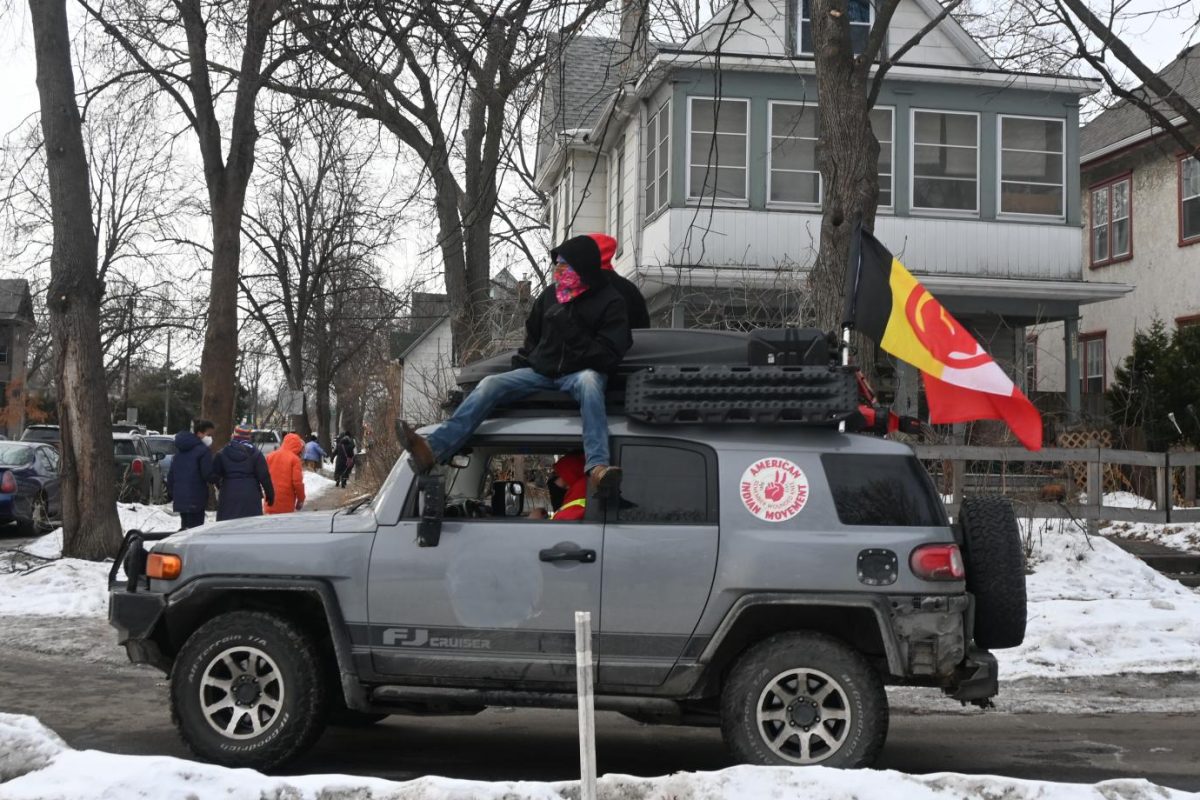
In Minneapolis a generation ago, the Indigenous resistance in the U.S. was organized by the American Indian Movement (AIM). AIM began in 1968 with the goal of combating discrimination in response to abuse of their community by the Minneapolis Police Department. Eventually, AIM expanded to protest the treatment of Native Americans at the federal level.
Today, tribal members are again being assisted by a local movement. All Nations Indian Church provides wellness and mental health support and All Saints Episcopal Indian Mission provides food and supplies. Both churches have served the Native community and their neighbors for decades. Around the city, businesses also offer updated documentation, legal advice, and cold-weather items. Community members have come from around the country in solidarity and members are instructed to declare tribal affiliation if stopped by immigration enforcement.
Historically, there has been a consistent theme to this resistance. “Native people have turned to prayer, traditional prayers or just however they come together, to support one another in prayer,“ Conroy said. “They’ve supported the whole community, Minneapolis, St. Paul, by their presence and their prayers.”
The familiarity of these events worries the Native community. However, tribal members say they feel hope because their community remains strong. “This shows to me that community does exist,” Two Bulls said. “There’s something that just needs to be a spark that lights that fire.” The present-day movement reflects a painful past for Indigenous people and, again, they are uniting as they have for generations.