


100% staff agreement
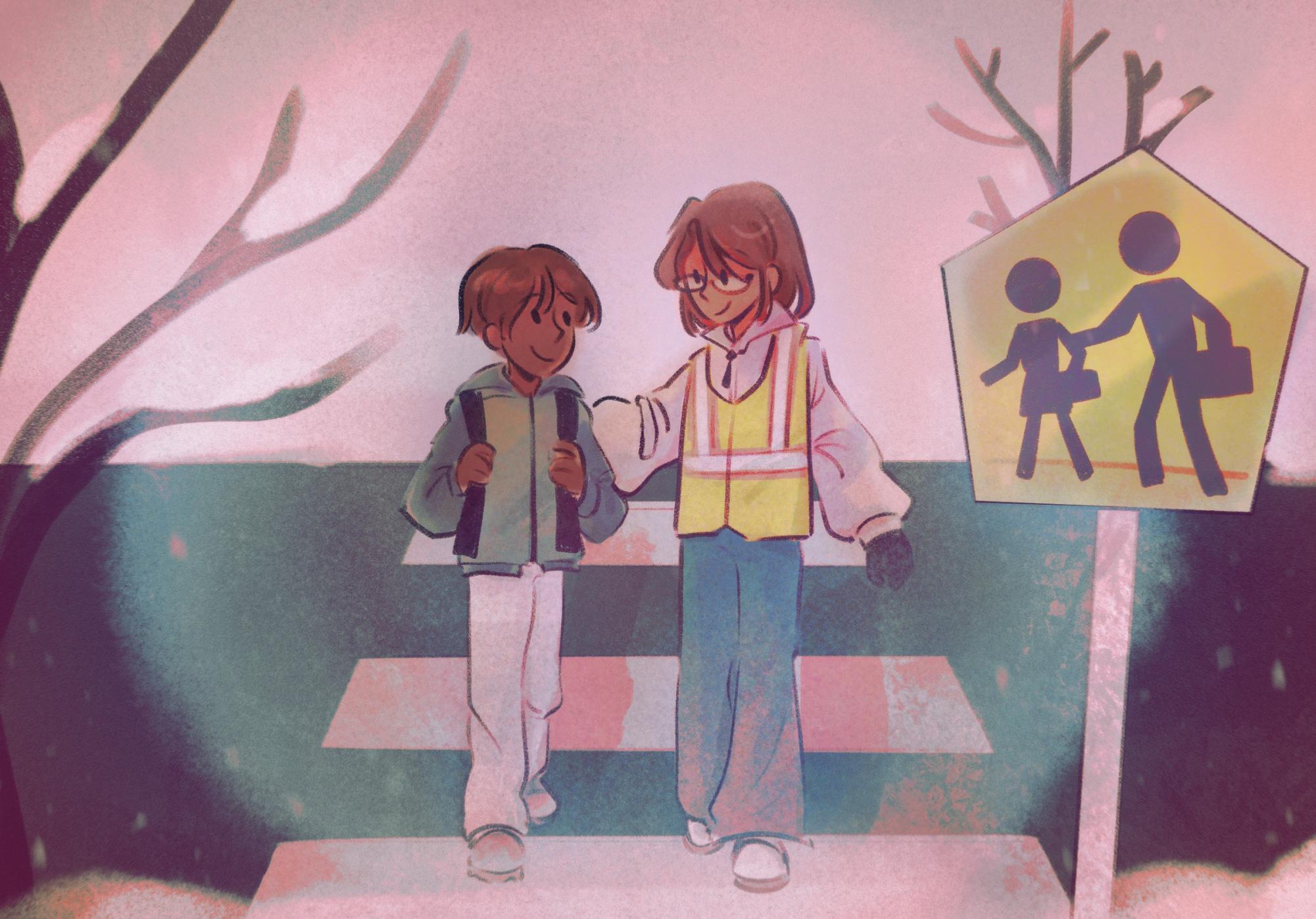
With headlines about U.S. Immigrations and Customs Enforcement presence in the Twin Cities dominating every screen, it’s hard to look away and it’s hard to feel safe. Educators have joined administrators standing outside the Randolph campus doors in the morning, increasing the adult presence outside as students are welcomed to school. Many Minnesotans opt to carry their passports at all times.
These precautions have been put into place due to the increased presence of ICE agents in the Twin Cities. The outpouring of action from community members is welcome, but they should not be necessary. ICE is inhibiting education. Empty seats plague classrooms across the Twin Cities because students are afraid federal agents will rip them out of class. Students can’t focus on an upcoming test out of concern that ICE agents could be waiting outside the building.
It is worth celebrating that, in a time when many Minnesotans are experiencing uncertainty and fear, community members are stepping up. The upper school administration has communicated a plan if ICE comes on campus, and many students have joined recent protests, with clubs and groups organizing donation drives.
Both Minneapolis and St. Paul Public Schools are offering hybrid and fully online classes for students who don’t feel safe attending in-person classes. However, the anxiety is not limited to Twin Cities schools. From pre-K to college campuses, all levels of education are feeling the weight of ICE’s presence.
During times of political turmoil, it is essential that children are present in school. A 2021 study by Mhairi Bow and Juliet R. H. Wakefield, et al., entitled “The mental health benefits of community helping during crisis,” found that finding community in uncertain circumstances reduces depression and anxiety and improves wellbeing.
Not only is physical presence important, but absence from the classroom diminishes learning. A 2024 study by Ammar Ahmed Siddiqui and Malik Zain Ul Abideen, et al., entitled “Students’ Perception of Online Versus Face-to-Face Learning: What Do Healthcare Teachers Have to Know?” reported that showing up to school, as opposed to learning remotely, leads to an increase in skill development and social awareness.
Although it is easy to feel insulated from the current turmoil as a private school, allowing the split between communities to deepen only hinders progress. While the upper school is afforded luxuries such as excellent security staff, this community is not immune from the impact of ICE.
Don’t let ICE’s presence at schools in the Twin Cities become “just another crisis.” That sentiment merely justifies complacency. Minnesota has experienced a multitude of hardships this year – specifically at schools, with the shooting at Annunciation Church and Catholic School in August – but not continuing the conversation surrounding ICE on campus prevents further action.
In response to the Annunciation shooting, Gov. Tim Walz vowed to call a special legislative session in order to address gun violence. Five months later, no special session has taken place. We cannot allow the same promises regarding safety in schools to go unmet.
The looming threat of ICE is not at all conducive to an environment of learning. Call your state and U.S. legislators and demand legislative action to prevent ICE presence on or near school grounds. Support the community through this difficult time by checking on friends and neighbors who are affected by ICE’s ongoing operations. Even when difficult, read news about ICE presence in the city and engage in informed discussion. This is an opportunity for students to take autonomy over their right to an education. Don’t let it pass by.




Varsha Venkatasubramanian • Feb 9, 2026 at 1:49 pm
This is an excellent piece!