[HUMANITY UNDER SIEGE] The United States’ latest asphyxiation of Cuba


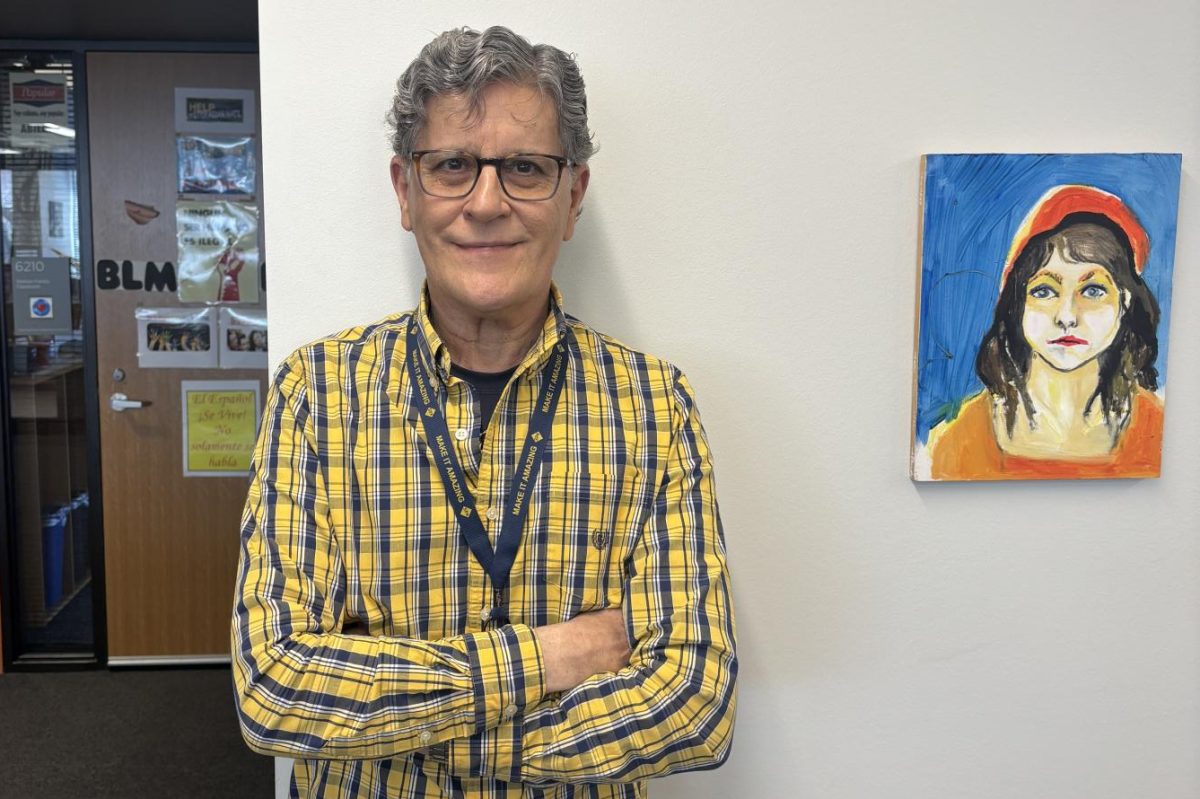
Q: As someone who is very well-versed in Cuban history and grew up in Cuba, what are your personal views on the current U.S. oil embargo against Cuba?
A: Well, the embargo in general is crazy. It’s a crazy idea because it was conceived so long ago with the specific goal of making the Cuban government collapse and [establishing] democracy in Cuba. The approach has failed for so long. And at the end of the day, who suffers the consequences are the people in Cuba, the people who live in Cuba, the Cubans. I’m a Cuban who disliked the Cuban government [very much]. Always have, that’s the reason why I’m here. I don’t agree with communism and even the way communism has been implemented in Cuba. Having said that, the embargo has been a total failure. Now, with the current [U.S. oil embargo], I feel it’s very cruel because of what that is creating for Cubans who live in Cuba. The situation is so dire. [Many Cubans] don’t have enough food to eat. They don’t have a way to preserve the little food they can get, because there is no refrigeration. Hospitals are collapsing, transportation has collapsed. The Cuban people are suffering. The suffering is not created by the [United States] totally. It’s [also] a failure of [Cuba’s] system. It’s a failure of their system, [which] is what the root cause of the problem is.
Q: Did you expect this escalation after the Trump administration had Maduro kidnapped?
A: I expected [the Trump administration] to do something. It was obvious when they started. The United States started capturing or seizing oil tankers and companies that were flagged for breaking rules [surrounding the U.S. embargo against Cuba]. That was already coming. I did not expect [the embargo to get] to the point where, now, even Mexico is afraid to send oil to Cuba because Trump is threatening to increase tariffs on importation from Mexico if Mexico sells or sends oil to Cuba. I didn’t expect it to get this bad.
Q: How do you think the United States’ stance or policies concerning Cuba have changed throughout the different presidential administrations?
A: I came to the United States in 1978 [during] the Carter administration. Then came Ronald Reagan and the Bushes, but Democratic and Republican [administrations] have all followed the same failed embargo [against] Cuba. And the only [president] who started thinking, okay, it’s time to try something new because we’ve been doing the same thing for so long, and we have achieved nothing, [was] Barack Obama when he reestablished relations with Cuba [officially in 2015] since 1961, when [the United States] broke relations with Cuba, and started opening up a little bit of trade and [allowing] American citizens to travel to Cuba [for tourism]. And that was creating a change internally in Cuba when people were given authorization by the Cuban government to start small businesses, private businesses, or even partnerships between private and government businesses, ventures and whatnot. That created a positive movement in Cuba. It opened [Cuba] up a little more, allowed Cubans to freely leave the country, which was not anything possible before. People had open access to the internet. So there were positive changes happening in Cuba that, to me, were making more of a difference than anything done before. Then came [the] first Donald Trump [administration that] stopped everything that was going on. But then came Joe Biden with a Democratic [administration], and [he] didn’t do anything to change anything that Trump had changed. And now we’re back [to] another Trump [administration]. I don’t even believe that Donald Trump is even the architect of any of these things. This is Marco Rubio’s idea of, I am going to be the savior of the Cuban people, as a Cuban American, I am going to be the one, and I think it’s ill-conceived, and I don’t know that they have a plan.
Q: What do you think has had more of an impact on people in Cuba: Cuba’s political system or U.S. intervention in Cuba?
A: I don’t think [either]. I think both [the Cuban and U.S.] governments. The government of Cuba, with the total control of information. Having said that, I have to change that because now [people in Cuba] do have free access to the internet, and so they are now more, the Cubans are now more aware of the outside world and how the outside world functions. For a long time, [Cuba was] a capsule in the Caribbean, completely self-contained, with total control of [the] media and government and everything else. [The Cuban government] still [has] total control of the media and the information that goes out. They have [still] embraced a system that, I don’t know, brainwashes people. But as we saw in the movie [Azúcar Amarga] we were watching [in Advanced Spanish: Caribbean Identities], it is hard to keep ideals when you’re hungry and when you have no medicine, when you have people with no basic medicine, simple medicine, [like] a simple antibiotic to treat an ear infection. And you see the [Cuban] people suffering because healthcare is not being delivered, because [hospitals in Cuba are] collapsing [due to] the lack of medicine and the lack of energy. The suffering is too much. And if the idea is that [the United States is] going to make the [Cuban] people suffer so much that they would, if, at the end, revolt, I don’t know that the end justifies the means that [the United States is] using, because we, as the [United States] with this embargo, we are increasing the suffering of the Cuban people. And it seems to me that [the United States wants] the [Cuban] people to suffer enough until they collapse. And that is inhumane in my view.
Q: Do you think Marco Rubio will actually be successful in overseeing a regime change in Cuba?
A: My heart tells me, I want changes to happen in Cuba. But also my heart is telling me, Marco Rubio should not be the person who will claim that victory as a liberator of Cuba, because I don’t think his heart is in the right place. As a fellow Cuban, I’m a Cuban, he’s a son of Cuban immigrants, it’s easy to be firm in those ideals when you live in the United States. You are not the one suffering in Cuba. And again, I blame the suffering of the Cuban people on the Cuban government, so it’s not that the suffering is [completely] the U.S. government’s fault. But this oil embargo seems to be intentionally done to make the [Cuban] people suffer and suffer and suffer to the point that they were running [in] the streets, and we now care if they are killed or not by their government.
Q: What do you think the future of Cuba will look like?
A: Complicated, no matter what. Complicated. It could be done, I think, transforming the government of Cuba into a democratic government. But [Cuba doesn’t] have the social and political structures that will easily transition the government into a democratic representative government. It could be done. Complicated, though. I’m assuming that the Cuban people are still being fed, look at what the imperialist U.S. government is doing to you, the suffering is their intent. And in that, the government of Cuba is able to still use [their total control over the media] to manipulate and continue to justify, see, [the United States and U.S. capitalism] are now causing the suffering. So, and in a way, [the United States is] giving the Cuban government the talking points they need to blame the suffering of somebody else.