
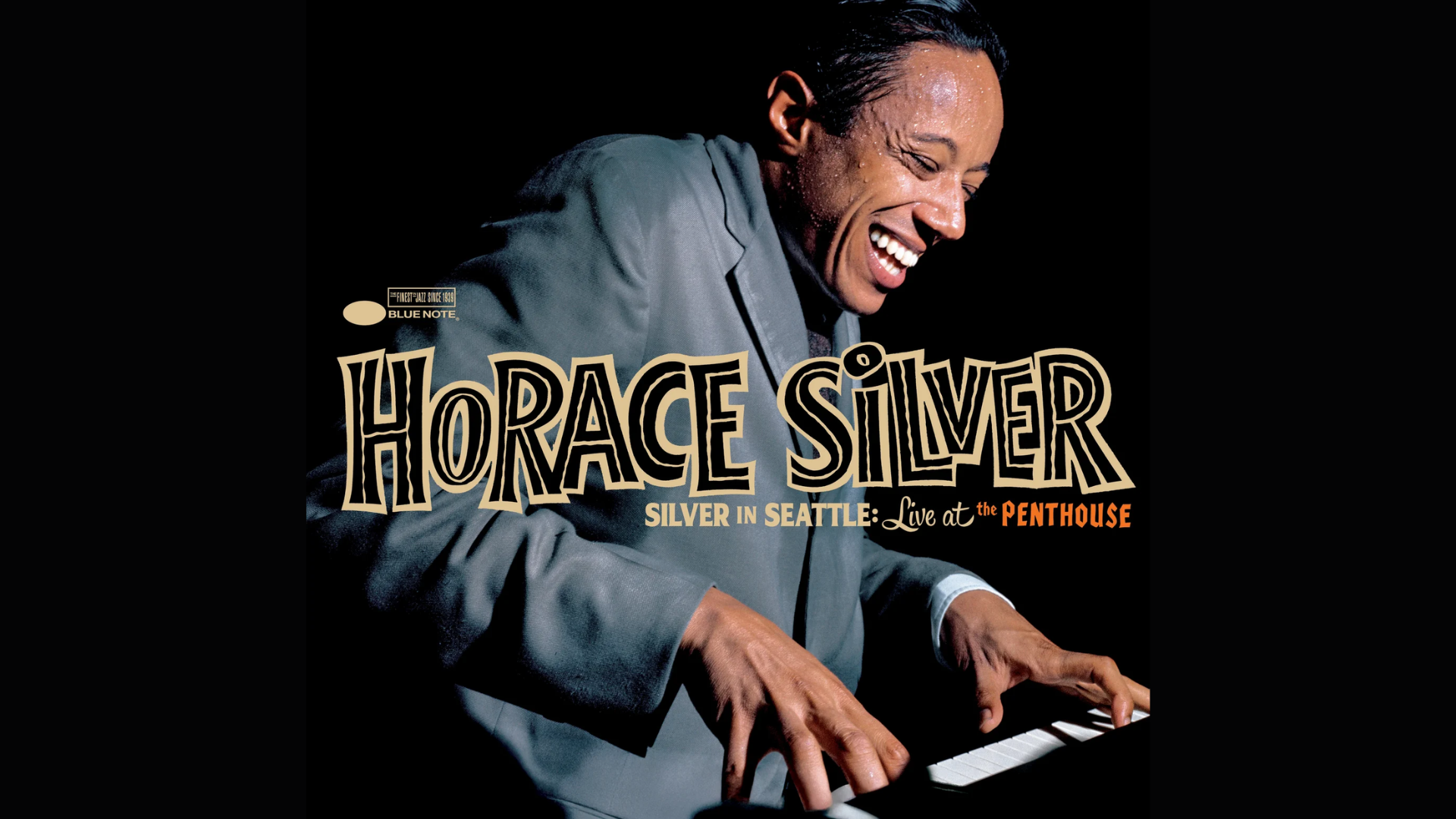
Few live recordings hit like Horace Silver burning at the jazz club: “Seattle’s Penthouse” in 1966. A bittersweet reminder of one of the greatest jazz pianists of all time.
The short-lived group on the performance, Woody Shaw on trumpet, Joe Henderson on tenor sax, Teddy Smith on bass, Roger Humphries on drums and of course Horace Silver on piano, was a rare collision of jazz giants. The kind of lineup that would have any jazz fan practically salivating to know there are recordings of them, let alone that they even played together. And that’s clear from the first track.
The set list balanced some of Silver’s classics with a few more recent tunes. The standards are played with a fresh edge, solos opened up, and rhythms and comping so intricate it demands multiple listens. Unlike a lot of jazz recordings at the time, the audio is crisp, it doesn’t sound like it was recorded inside a tin can.
Not to mention, this is a hard bop album, and when you have a young Henderson, Shaw and Silver ripping through changes while Humphries and Smith anchor and embellish, you get something about as undeniably talented and prolific as the 2016–2017 Golden State Warriors.
Specifically, on tracks like “The Cape Verdean Blues” and “The Kicker,” Henderson’s tenor lines feel sharp but fluid, constantly weaving through the catchy melody and harmonies while experimenting with rhythm. He tries unexpected jumps between notes and playful twists in his phrases, but he never loses the pulse of the song, in large part thanks to Smith’s iron-clad fingers driving the bass line.
Each track feels like a glimpse into how free and ambitious these young cats were. There’s a bounce in Silver’s chord comping and a natural fluidity when improvising through the tunes, as if his fingers were guiding him, moving on their own through the music.
“No Smokin’” was my favorite track. It felt borderline like a show-off of the genius of Shaw and Humphries, a masterclass of what a great drummer and trumpet player can do. Shaw’s ability to rip through changes at 149 BPM was only the tip of the iceberg. His bold, strong tone and rhythm choices, pushing and pulling against the beat, were most impressive.
The great drummer Roy Haynes once said, “Transitions, transitions, transitions.” Listening to Humphries, you can hear exactly what he meant. His shifts between hard bop swing grooves, bluesy shuffles and even Latin rhythms are seamless. Every shift, every fill, every groove moves with thought.
While the album is nothing new coming from Silver, hearing him and his group at their peak: young, ambitious and perfectly in sync, is oddly heartwarming. A reminder of the fire that fueled some of the greatest jazz musicians.
Only notes: how on earth could the audience not be louder? Maybe groups like this were common back in 1966, but I doubt it. Experiencing a lineup like this, at this level and live, is the kind of thing you’d be lucky to catch more than once in a lifetime.