
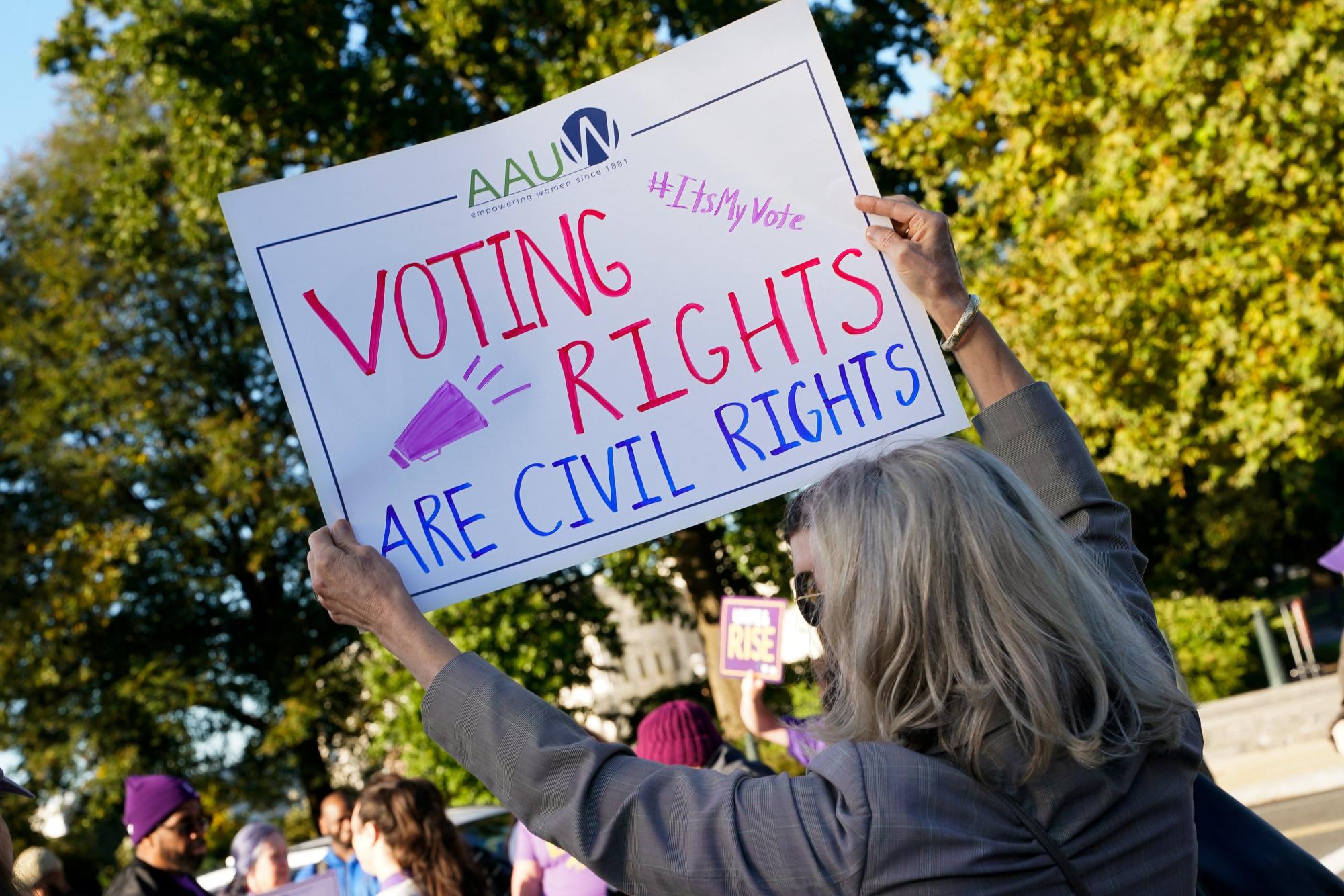
The Voting Rights Act of 1965 outlawed racial gerrymandering, a law that was supposed to protect minority voting groups. However, today, with recent Supreme Court Cases, many of these laws and protections have fallen through.
On April 29, the Supreme Court ruled 6-3 that Louisiana’s 2024 congressional map, which was redrawn to create a second majority-Black district, was an unconstitutional racial gerrymander. Although this case occurred in Louisiana, far from Minnesota, it can still have ripple effects nationwide.
Junior Iris Luther Suhr talked about the issue as a whole. “This whole map issue has really taken the headlines these past few months. I don’t think it’s good for democracy,” she said. Democracy has been negatively affected by some of these changes, as reflected in the Electoral College’s evolution.
“It’s not representative of the majority of what people believe, kind of like the Electoral College, it gives the minority more power than they should actually have,” she said. Changing the maps has led to improper voting power for minority groups.
As much as it’s affected many of the southern states, Minnesota likely won’t be affected in the same way.
“I think it won’t affect Minnesota as much as states further south … I think most of Minnesota’s black population lives in the Twin Cities area, which are already in blue districts. So I don’t think Minnesota is going to be redrawing its maps, but Minnesota is part of the U.S., which will have a completely different political climate soon,” she said.
That doesn’t mean this isn’t affecting other states, as many across the country are seeing their maps redrawn, cutting some blue states.
“The Supreme Court ruled on, is that they can’t consider race when doing that. And in this past week, we’ve seen new maps being proposed in a lot of southern states, which are now cutting blue states,” she said.
The Voting Rights Act was recently gutted and the future political climate is still to be determined.