
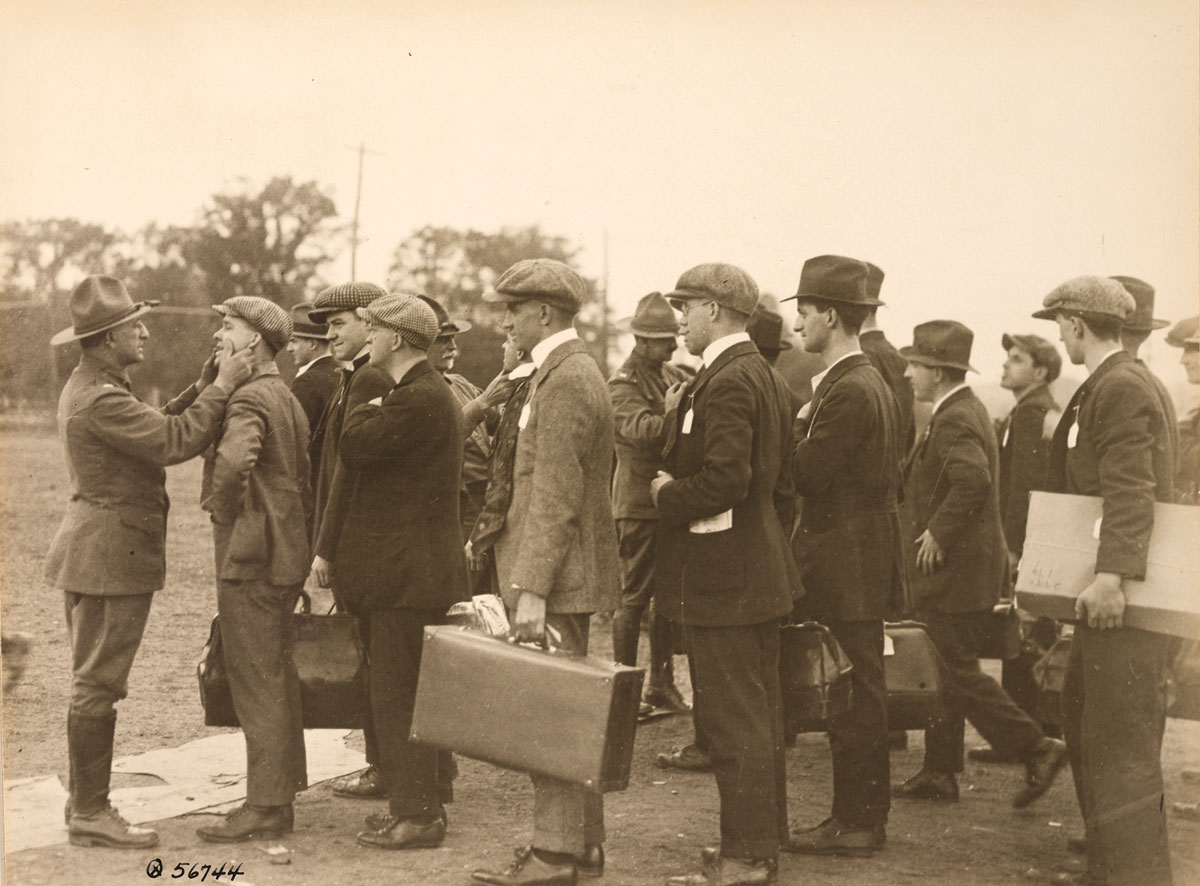
The Selective Service System (SSS) is a federal agency that holds the registry of draft-eligible Americans. Currently, almost all male U.S. residents are required to register with the SSS within 30 days of turning 18. Registering does not mean enlisting; it only places a person’s name in a database that would be used to conduct a lottery if a draft were authorized by Congress and the president. While 46 states, including Minnesota, have had automatic registration since 2004, the new federal law expands the government’s authority to register eligible men nationwide.
According to the Selective Service System’s most recent report to Congress, registration rates dropped from 84% of eligible men in 2023 to 81% in 2024. Supporters of automatic registration argue that it solves this problem. Rep. Chrissy Houlahan (D-Pa), who sponsored the provision, said it “simply moves the burden of filling the registration paperwork from the individual to the government, where it belongs.”
Critics, however, have raised concerns about privacy. The Friends Committee on National Legislation warned that the data gathering “poses a significant risk of weaponization and misuse, particularly with the potential for targeting the most vulnerable, such as immigrants and transgender young adults.”
Senior Murray Goff sees the change as relatively minor in practice.
“It’s kind of nice because you have to register anyway,” Goff said. ”By having this legislation, it’s just focusing on the draft as a whole. I don’t think it changes that much about how the draft would actually be used at all.”
The automatic registration law had been quietly on the books since December 2025, but it took one war and one ambiguous White House statement to turn it into a national conversation.
Since early March, the United States has launched a series of military strikes against Iran. The operation, which the Trump administration calls “Operation Epic Fury,” was justified by officials citing what they described as a threat posed by Iran toward the United States, Israel and other countries in the Middle East.
As the strikes continued, a question began spreading rapidly across social media: Could this lead to a military draft?
The fear began on Mar. 8, when White House Press Secretary Karoline Leavitt appeared on Fox News. Host Maria Bartiromo asked her, “Mothers out there are worried we’re going to have a draft, that they’re going to see their sons and daughters get involved in this. What do you say about the president’s plans for troops on the ground?”
Leavitt responded, saying that President Trump “wisely does not remove options off of the table,” while adding that a draft was “not part of the current plan right now.” The non-denial was clipped, shared and interpreted by many online that a draft was imminent. An early version of the provision was scrapped after misinformation spread online by influencers, including rapper Cardi B, who falsely claimed it would reinstate the draft.
The panic spread fast, particularly among people aged 18 to 25, the demographic directly affected by any potential draft. However, this was not the first time this had happened. Similar waves of draft anxiety swept the internet in 2020 during a previous spike in U.S.-Iran tensions and again in 2022 when Russia invaded Ukraine.
However, experts say there almost certainly will not be a draft, not at least for this conflict. Mark F. Cancian, a senior adviser at the Center for Strategic and International Studies, told PolitiFact, “There is no way that there will be a draft in this war.” Military history professor Tom Mockaitis from DePaul University does not think “anybody needs to lose sleep over the likelihood of being drafted and sent to Iran.”
Bringing back the draft would require Congress to pass new legislation amending the Military Selective Service Act, followed by the president’s signature. Even then, the process of holding a draft lottery, notifying draftees and training them would take time.
While the U.S. has required registration, there has been no active draft since 1972 for the Vietnam War which, as U.S. History teacher Aaron Shulow notes, was unpopular among many Americans.
“Vietnam is the one that’s most well known and controversial, in part because there was not a lot of transparency about what the conflict was,” Shulow said. “Also, the draft disproportionately fell on lower socioeconomic classes and troops of color, because there were deferments and exemptions that were available to college students married men and taken together, those factors made it look like it was a fight started by elites that had to be fought by troops from less advantaged backgrounds.”
No draft was used during either the Iraq or Afghanistan wars, both of which involved large numbers of ground troops deployed over many years.
Goff agrees that the fear is unnecessary.
“We haven’t had a draft since Vietnam and we learned then, as a country, that that’s a terrible idea, because it instantly lowers people’s respect or care or want or support of the country,” he said. “So, fears over Iran seem kind of unfounded.”
Ultimately, while automatic registration modernizes a decades-old process, it does not lower the high legislative bar needed to reinstate a draft. Despite the digital panic and rising global tensions, experts maintain that there will most likely not be a draft. For now, the change stands as a shift in federal record-keeping rather than a sign of a draft.