
Before the hallways swell with students clutching coffees and backpacks at St. Paul Academy and Summit School, upper school history teacher Ben Bollinger Danielson is already miles into his day.
He arrives at school on two wheels.
For many commuters, biking to work can seem intimidating, especially in Minnesota, where winters are long and the roads are icy. But for Bollinger Danielson, cycling is less about endurance and more about the joy it brings him.
“I think bicycles are happiness machines,” he said. “I like being happy.”
That philosophy sits at the center of Bike to Work Week. From May 11 to 17, communities across the United States recognized National Bike to Work Week, an annual campaign organized by the League of American Bicyclists to encourage commuters to consider alternative forms of transportation to driving. The week promotes cycling not only as environmentally sustainable transportation, but also as a way to improve physical health, reduce traffic congestion and strengthen community connections.
According to the League of American Bicyclists, the national event began in 1956 and has since expanded into a broader celebration that includes Bike to Work Day, community rides and local advocacy events across the country.
Minnesota has developed a strong cycling culture in recent years, particularly in the Twin Cities. Minneapolis has repeatedly been ranked among the most bike-friendly cities in the country due to its extensive trail systems, protected bike lanes and winter biking infrastructure, while St. Paul has continued expanding its own network of trails and commuter routes.
For Bollinger Danielson, the appeal is in what biking provides and his values.
“I’m someone who is happier when they’re moving and getting to be outside,” he said. “I also care deeply about our environment and any way I can reduce that sort of carbon footprint, I try to do that.”
The environmental impact of transportation remains significant nationwide. According to the U.S. Environmental Protection Agency, transportation accounts for the largest share of U.S. greenhouse gas emissions, with passenger vehicles making up a substantial portion of that total. Cycling advocates argue that even replacing a handful of car trips each week can reduce emissions while improving air quality in urban areas.
Still, commuting by bike in Minnesota comes with challenges, especially during winter.
Bollinger Danielson said he avoids riding only when roads become dangerously icy. Otherwise, he relies on layers, including insulated jackets, thick gloves and a ski-style helmet visor to protect against the cold.
Recently, Bollinger Danielson switched to a pedal-assist e-bike for his commute.
“You’re still getting exercise,” he said. “But I don’t get as sweaty, so I can come to work more quickly.”
While biking offers moments of calm and beauty, it also exposes riders to the realities of distracted driving. “You really observe how many drivers are on their phones,” Bollinger Danielson said. “At every stoplight they’re all on their devices and that’s disturbing.” Cyclists remain especially vulnerable because they lack the physical protections afforded to drivers inside vehicles.
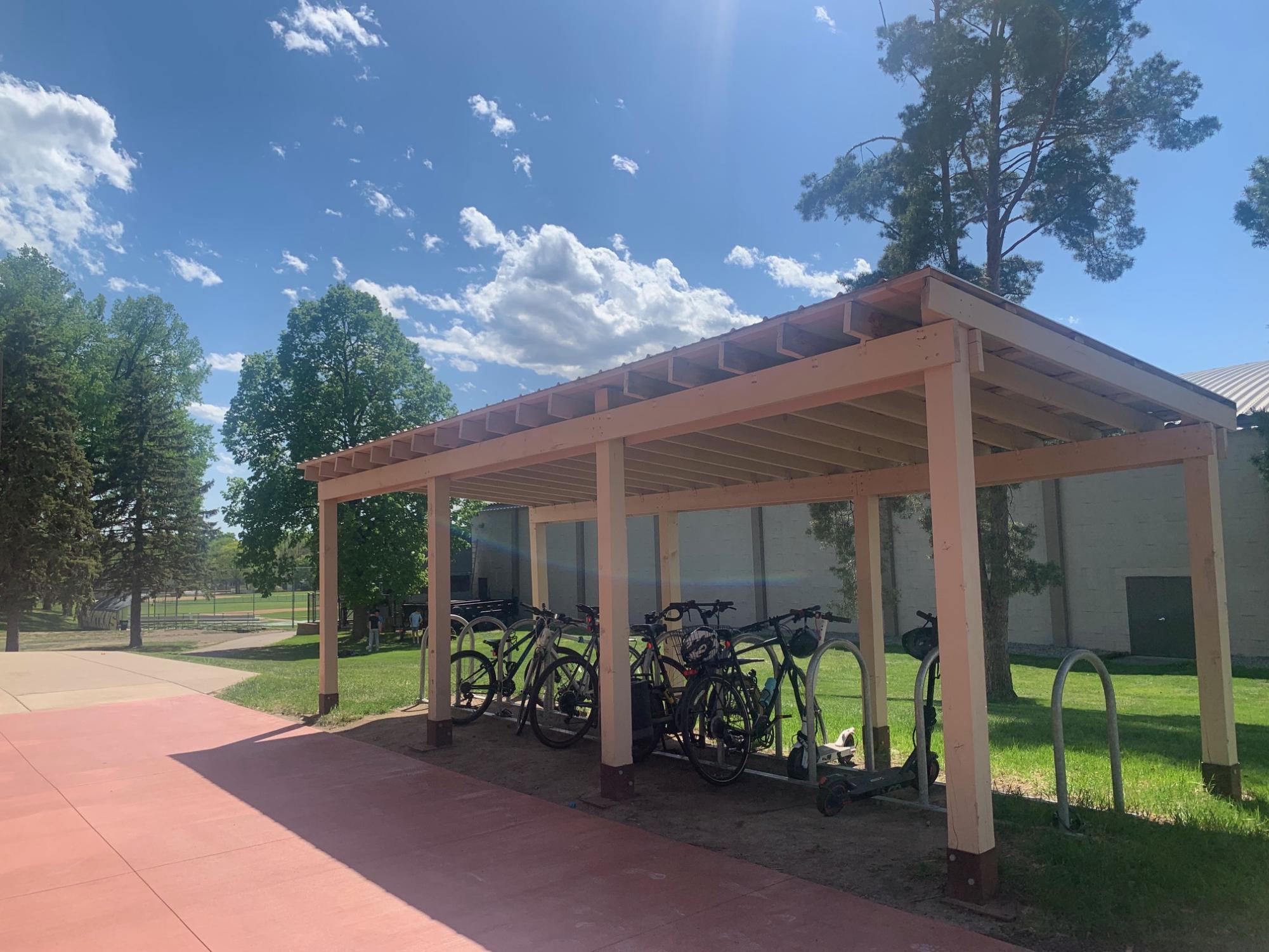
Despite those risks, Bollinger Danielson believes SPA has become increasingly accommodating to cyclists, referencing the covered bike racks installed on campus.
“There’s like these really beautiful moments,” he said. “You’re just kind of outside and no matter what time of year, these quiet mornings are beautiful.”
Bike to Work Week ultimately asks commuters to reconsider not only how they travel, but also how they interact with the communities around them. For one week each May, bicycles become more than recreation or exercise. They become reminders that transportation can also create connections.
![CALCULATING THE CHANGES. As study habits have changed, the materials used have changed too. "I remember the day when [my brother] came home with his graphing calculator, [which] had Mario. And I was blown away," Spanish teacher Peter Daniels said. (Photos: Fair Use; Wikimedia Commons)](https://www.rubiconline.com/wp-content/uploads/2026/05/Untitled-design-4-1200x800.png)