
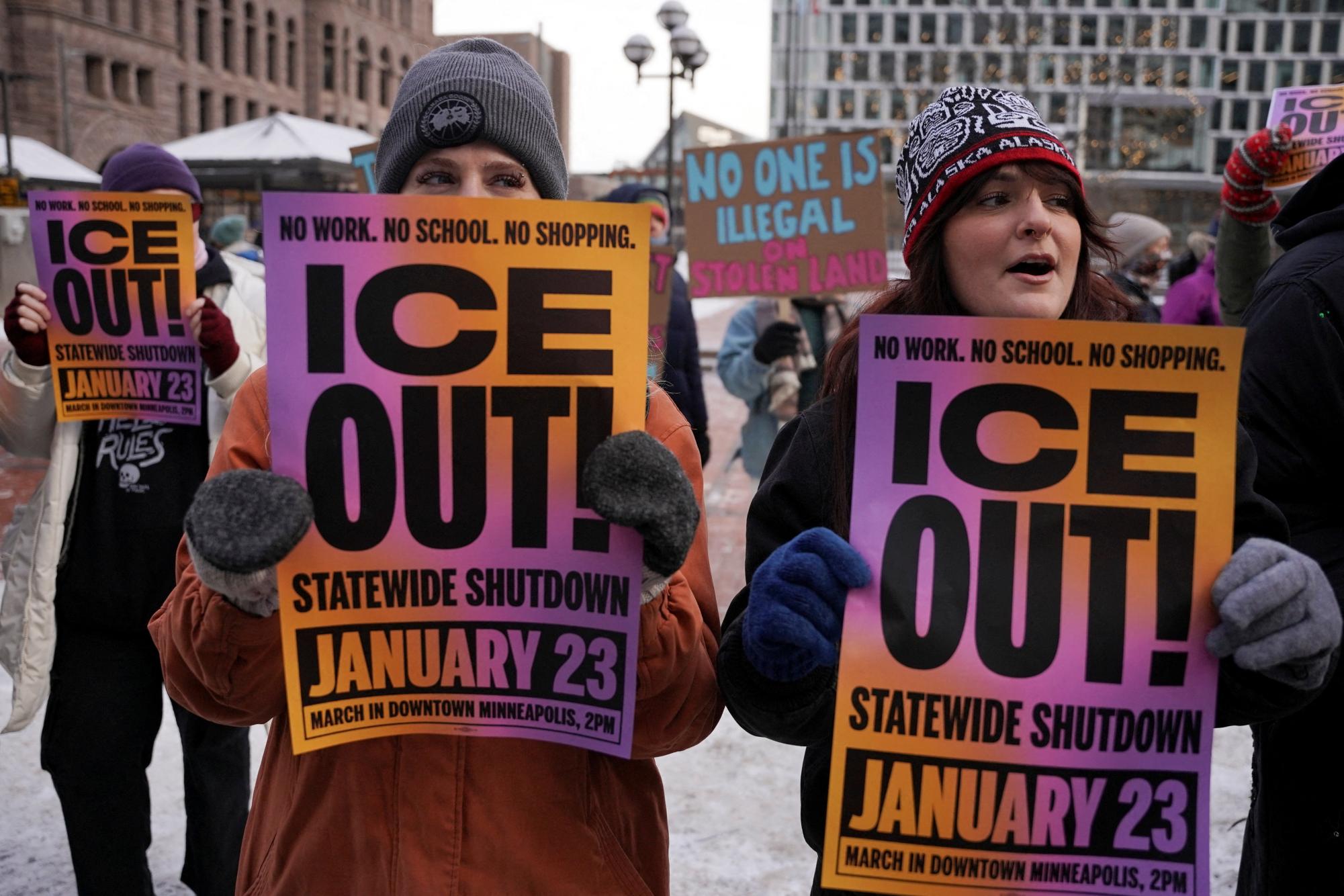
On Jan. 23, a general strike was held in downtown Minneapolis amid -20 F temperatures.
In a community widely known for “Minnesota nice,” the citizens banded together to protect their neighbors and friends. Over 50,000 people gathered at Minneapolis-Saint Paul International Airport, where people began protesting against Delta Air Lines and Signature Aviation for their perceived cooperation in abetting the deportation of neighbors, family members and friends. Many then marched to the U.S. Bank Stadium, encountering no federal agents along the way.
That day, dubbed the “Day of Truth and Freedom,” involved no work, school or shopping to protest the surge of immigration officers.
People from all over participated, including senior Fletcher Coblentz and some friends who showed their support in the frigid temperatures.
“It was really beautiful seeing everybody and seeing the massive heart that our community has and the organization and unification to stand up against something,” Coblentz said.
General strikes are extremely rare because they require extensive coordination across every department and organization. As a result, there has not been a general strike since 1934, when truckers and union members demanded better wages during the Great Depression. With general strikes reserved for only the most major political, social or economic crisis, having one focused on a single topic is a rare occurrence and brings to attention the solidarity that Minnesotans have for each other against United States Immigration and Customs Enforcement (ICE).
For those who couldn’t attend the general strike on Friday, a vigil was held in honor of Alex Pretti and many others who were murdered by ICE. The event served as a follow-up to the strike and was held at Whittier Park.
US English teacher Jessica Gokhberg attended this vigil with their mom and sister. They were planning on going to the strike on Friday, but wanted to do their part in educating the future generation and helping however best they could.
“It was an opportunity for a lot of organizing communities around immigration and anti-ICE movements to speak to their specific concerns and to give respect to the people who have been injured, murdered, and disappeared under ICE,” Gokhberg said.
The Department of Homeland Security (DHS) deployed thousands of federal agents to Minnesota in what officials describe as the largest ICE operation, bringing 2,000 to 3,000 troops into the state to handle deportations. Minnesota has been targeted due to the fraud allegations involving the Somali community. Trump stated that he would denaturalize those who were involved with this fraud.
In response, many strikes, vigils, and protests have taken place this month. The strong message coming from these events? Ice out.