

“In the end, we will remember not the words of our enemies, but the silence of our friends.” -Martin Luther King Jr.
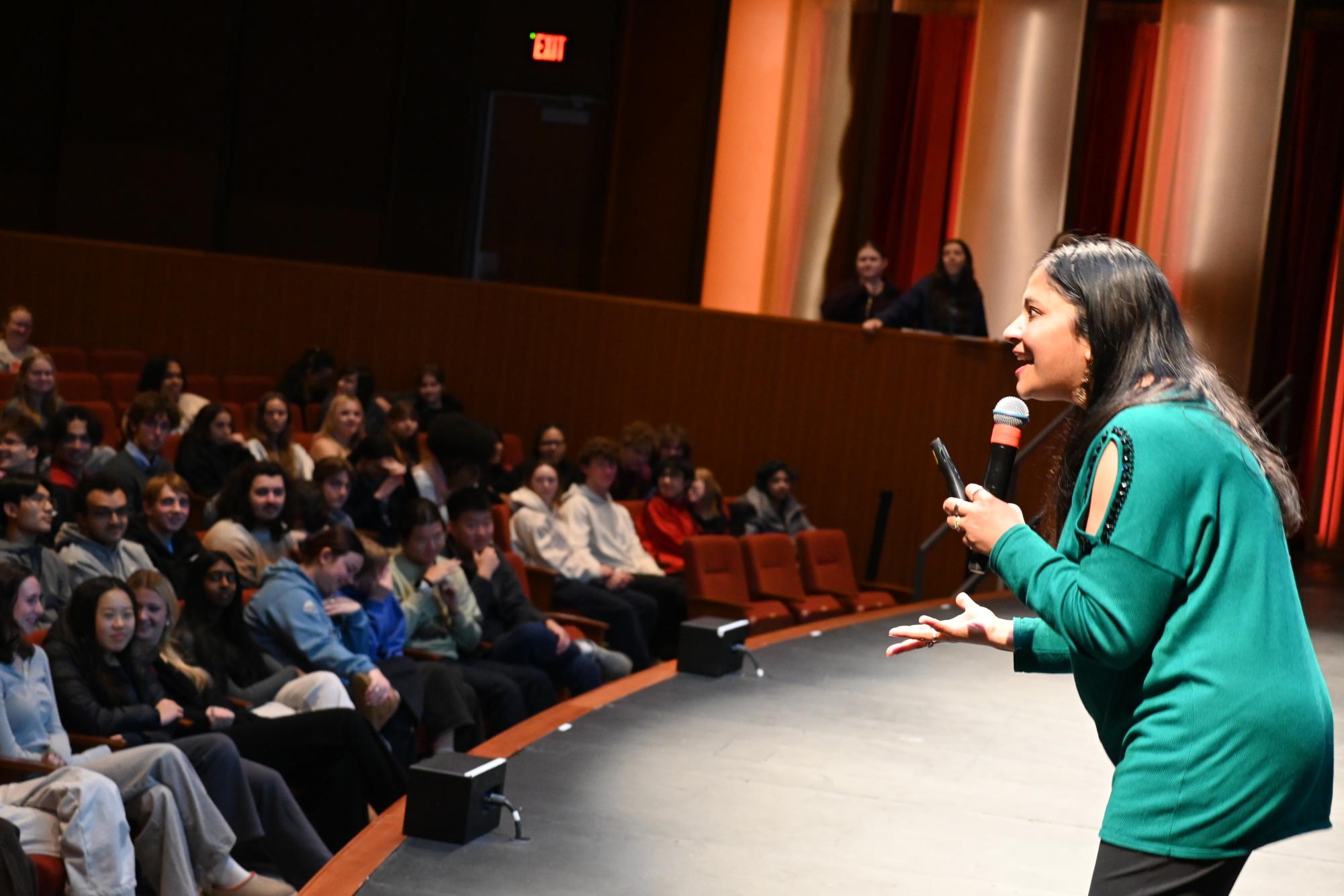
Seema Pothini opened the Martin Luther King Jr. Day assembly with these powerful words, not only to educate, but also to inspire students in the audience to take action in line with MLK Jr.’s ideals.
Pothini drew on personal encounters and extensive experience as an educational equity and diversity consultant to encourage students to speak up when they witness microaggressions. Many students, especially students from racial or ethnic minorities, experience frequent microaggressions.
Pothini described microaggressions as subtle, or unintentional discrimination, often targeting an aspect of one’s identity. Often, Pothini said, these underhanded comments are passed as jokes in order to frame the victim of the joke as “taking it too seriously.”

According to Pothini, examples of microaggressions in a school setting include: academic ability, whether one plays a varsity sport or not, socioeconomic status, race, class and so on. Audience members also provided examples like gender, sexuality, mental illness and religion.
Microaggressions are not isolated incidents; rather, they are a culmination of many incidents that weigh a person down and undermine a sense of belonging. Pothini urged students to speak up because silence is acceptance. Pothini even had everyone in the audience practice responding to a microaggression in one of four ways: through interrupting, questioning, educating or echoing.
She shared a personal experience that caused significant damage to her self-esteem and asked students what they would have said in that situation. Additionally, Pothini played three videos, each with a different scenario and had students turn to a partner and practice their response in order to build muscle memory.
The laughter became less and less each time she played the videos. Pothini noted that microaggressions are real; one does not want to be the person remembered by a peer for not speaking up when they were hurt verbally. It is important to create an environment for people to succeed.
With an obvious understanding of teenage psychology, she acknowledged that students may joke about what she discussed in the assembly. However, Pothini urged students to take her message to heart after the silliness fades, give each other the benefit of the doubt, speak up and be the community that is advertised on the SPA website.