
Junior Mattias Halloran was scrolling on Instagram on Sept. 30 when he saw a post from the Junior Science and Humanities Symposium (JSHS) Instagram page notifying the public of the science fair’s cancellation. His plans for his research project were altered, while his concern about future research opportunities in the U.S. increased.
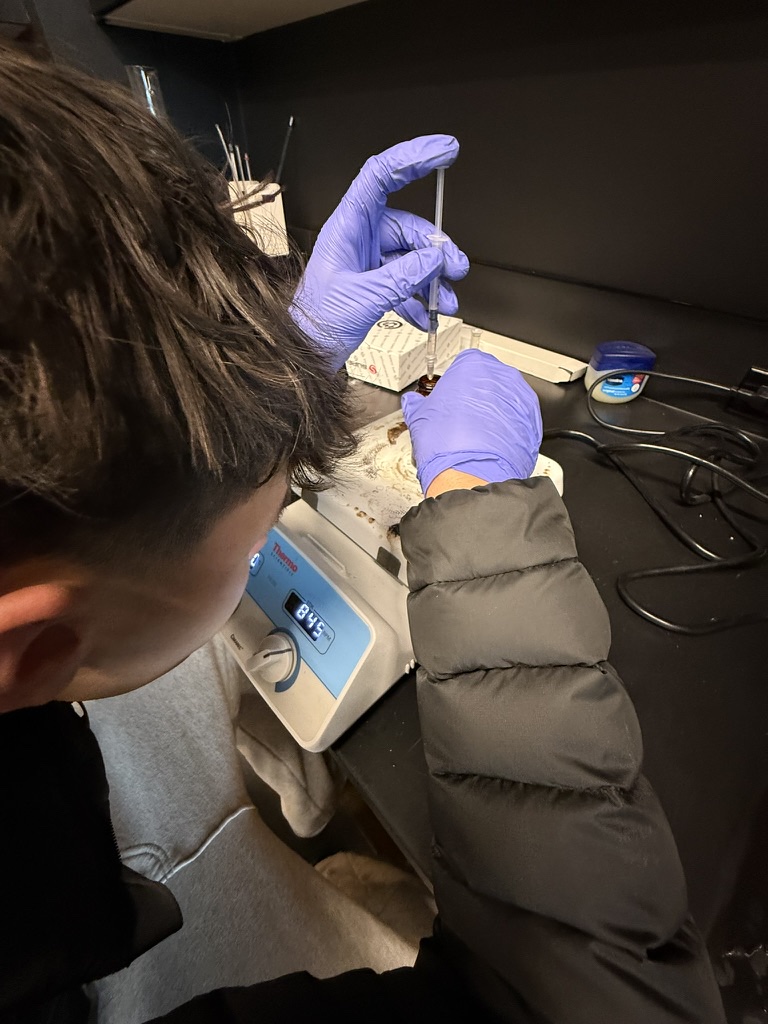
Halloran’s project focuses on improving the rate of survival for hemorrhagic stroke victims. “I’m building a nanoparticle to then deliver that drug to the microenvironment of the stroke, helping these patients and finally providing a pharmacologic option and treatment to a condition that has, currently, none,” he said. To execute this project, he spent months planning, experimenting and writing in preparation for various science fairs and events.

Meanwhile, throughout both of his terms, President Donald Trump and his administration have set a goal of reducing federal spending. His budget proposal for the 2026 fiscal year attempted to cut roughly $163 billion from non-defense discretionary spending. Trump’s secretary of defense, Pete Hegseth, corroborated this goal and, throughout the month of April, issued memos cutting $5.1 billion from the Department of Defense (DoD), which the Army, Navy and Air Force are part of. These cuts were meant to target “wasteful spending,” but they led the DoD to redraw its budget and neglected youth STEM initiatives.
These budget cuts became personal for Halloran when they led to the cancellation of JSHS, which was funded by the DoD through sponsorship by the Army, Air Force and Navy. “[JSHS] wasn’t even downsized or anything. It was just completely canceled. The website was stripped,” he said.
Halloran had been looking forward to the event scheduled for February. The event was one of the most notable of the year and a highlight for many who had attended. The cancellation of JSHS also forced Halloran to change his plan to reach a national level of competition. “A lot of people move on [from JSHS] to the national competition. That was a big track for our project and that was completely dissolved,” he said.
In previous years, students who won or received top honors at a regional JSHS competition could advance to the national level, winning scholarships, awards and recognition from prominent military and academic institutions.
Due to the cancellation, Halloran was able to work on his project for longer, but that doesn’t outweigh the loss. “I would prefer to go to this other competition [JSHS], even if it means having less data or having a worse paper,” he said.

The spending cuts to the DoD and the cancellation of JSHS were implemented changes happening independently of simultaneous congressional budget cuts. Earlier this year, Congress implemented a series of budget cuts following the rejection of Trump’s budget proposal for the fiscal year 2026.
Some of the most notable cuts were a 20% reduction to government-funded STEM education programs and a 3.4% decrease to the National Science Foundation’s (NSF) budget. The decrease in NSF funding led to the freezing or termination of 3,800 research grants, totaling about $3 billion.
Halloran believes that the destruction of this platform for scientific research and the achievements of high school students will discourage younger generations from becoming involved in STEM and worries about the future. “I think more exposure and highlighting more people and talent and seeing more opportunities will just bring more people into that field,” he said. “I think if you limit that, then [fewer] people will go into that and [fewer] people will be interested. [Fewer] people will know the opportunities that are involved.”
Though Halloran is afforded other opportunities to further his current research, the proposed budget cuts of up to 50% to research grants continue to worry him about the future of science and advancements. Despite the fair’s cancellation, Halloran will continue to work on his project and presentation for the Twin Cities Regional Science Fair on Feb. 23.