
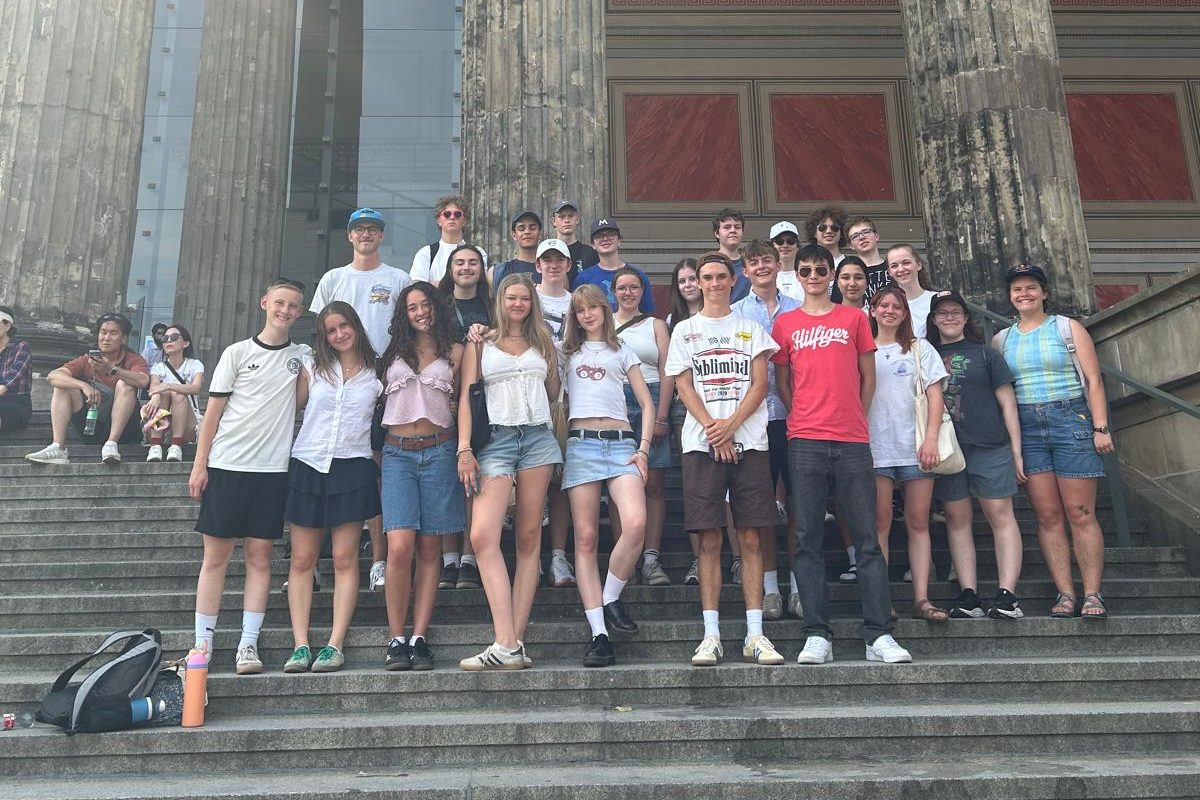
For the first time in decades, St. Paul Academy and Summit School’s German exchange program will not take place.
The suspension of the 2026-27 exchange follows SPA’s longtime partner school, Heisenberg-Gymnasium, in Hamburg, Germany, deciding it could not move forward with the program this year due to declining participation and growing uncertainty about travel to the United States.
“This would have been our 30th year,” upper school German teacher Rachel Ruddick said.
As applications for the trip to SPA increased, participation in Germany decreased.
In an email sent to German students and families, Ruddick shared a statement from the Hamburg school explaining that students felt hesitant about traveling to the U.S. because of uncertainty regarding political developments and media coverage.
Ruddick said the German school spent weeks debating whether the exchange could still happen with a smaller group before ultimately deciding to suspend the program for the time being.
“They were deciding for a while, like, ‘What should we do about this? Should we come with a smaller group?’” Ruddick said. “But they also felt uncertain [about] traveling to the U.S.”
Part of that uncertainty stemmed from proposed changes to the Electronic System for Travel Authorization, or ESTA, process. Under proposals announced in late 2025, travelers from visa-exempt countries could potentially be required to provide extensive personal information before entering the United States, including years of social media activity, contact information and family details.
“The teachers [thought] we don’t have a lot of applicants to begin with and then if we travel with these, we don’t know what the ESTA process is going to look like. We don’t feel comfortable with having students give all of this information out.” Ruddick said. “It wasn’t just social media. It’s also like information about the names of their family members, the addresses that they’ve lived at in the past, like telephone numbers, all sorts of contact information that I personally would find invasive.”
Ruddick said these concerns extended beyond paperwork alone. German teachers and students from Hamburg, worry about the broader climate surrounding immigration enforcement in the United States and international travel, considering the current conflict with Iran.
“They see scary headlines over there that probably had an effect as well on the general feelings of uncertainty,” Ruddick said. “When you’re responsible for students, you feel extra cautious and extra concerned … it’d be horrible if one of our students did get turned away [at the border].”
Despite the temporary suspension, Ruddick emphasized that the German school still greatly values its relationship with SPA and hopes to continue the partnership for future years. Still, for many students and teachers, the pause represents a loss of one of the school’s most immersive cultural experiences.
“One of the strengths of the exchange program is really getting that local connection and that deeper dive into the culture that you experience when you stay with a host family,” Ruddick said.
The exchange allowed students not only to visit Germany, but to experience daily life alongside German students their own age, attending school, navigating public transportation and living with host families. During previous visits, German students attended SPA classes, interacted with students across grade levels and offered perspectives that many students rarely encounter firsthand.
“It’s neat to see our SPA culture through somebody else’s eyes,” Ruddick said. “Not only just a different person, but someone from a totally different country.”
The language department is currently exploring possible alternatives for students affected by the suspension, especially current sophomores who may graduate before the next exchange cycle resumes. Although teachers remain hopeful that the partnership will return, the cancellation marks a significant interruption in one of SPA’s long-standing international traditions.