

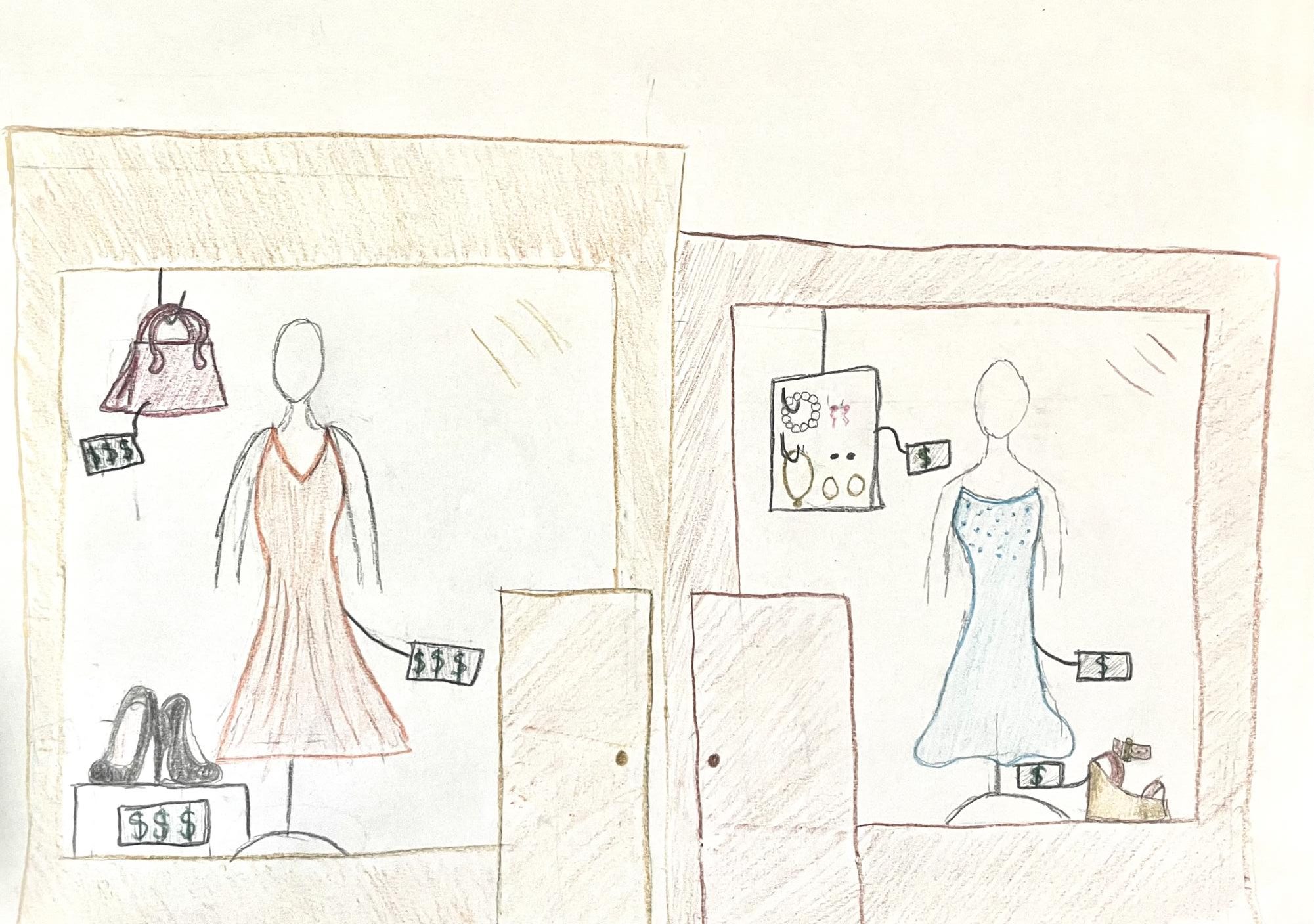
End-of-year traditions for seniors and even juniors are expensive – from prom dresses to graduation parties, money can become a concern for many.
The funds put into these events all stem from one main idea: the stereotype that after something is worn once, it can’t be worn again. It’s a social stigma driven by consumerism, social media and sexism, which pressures people, especially women, to constantly showcase new looks. Ultimately, it creates the thought that repeating outfits implies a lack of resources, fashion sense or is unhygienic.
Social media prompts this thought. New is better and old is boring. If an outfit is already photographed, it can not be worn again and instead, an image posted must feature a “unique” outfit that has just been bought.
The average senior is already spending $150 to $700 on a prom dress. They also need to figure out transportation, hair, accessories, shoes and nails. Then, in two weeks, they have graduation, where they are expected to wear a navy blue suit or a white dress. In another week, they have their grad party, which they have already spent $1000 on. There, they are expected to wear another nice piece of clothing never seen before. In addition, earlier that year, they had already spent money on clothes for their senior pictures and a photographer.
So, when a senior has all of those events within the span of a few months, how are they supposed to be thoughtful with their money while dealing with the social pressures and expectations to constantly buy new clothing?
The best way is to set yourself apart from social pressures and focus on what really matters. Set personal boundaries and foster self-awareness to distinguish yourself from external expectations. Though that is much easier said than done.
Another great way is to utilize options that are cheaper and more environmentally friendly. Buying dresses or outfits at thrift stores or on second-hand platforms like Poshmark or Depop lets you get cute, trendy styles at a much lower price. Many stores across the Twin Cities, like Buffalo Exchange, have heels, dresses and accessories for very reasonable prices. Second-hand clothing prevents uber-consumerism and promotes the reuse of clothing, since most people don’t have a reason to rewear a prom dress.
There are also other, free alternatives. One example is the local non-profit, Pass Down the Gown (PDTG). From a large selection of dresses, PDTG provides free rentals for school dances or other occasions. Another option is borrowing or trading dresses with friends; you can get your own pictures with a “never-seen-before” dress on your Instagram profile, while also preventing single-use waste. Both PDTG and trading promote a circular fashion economy, extending the lives of clothes and keeping them from landfills.
Senior year can be an expensive time, but utilizing cheaper and sustainable alternatives that still get you the new look everyone wants to see will be your best friend.