
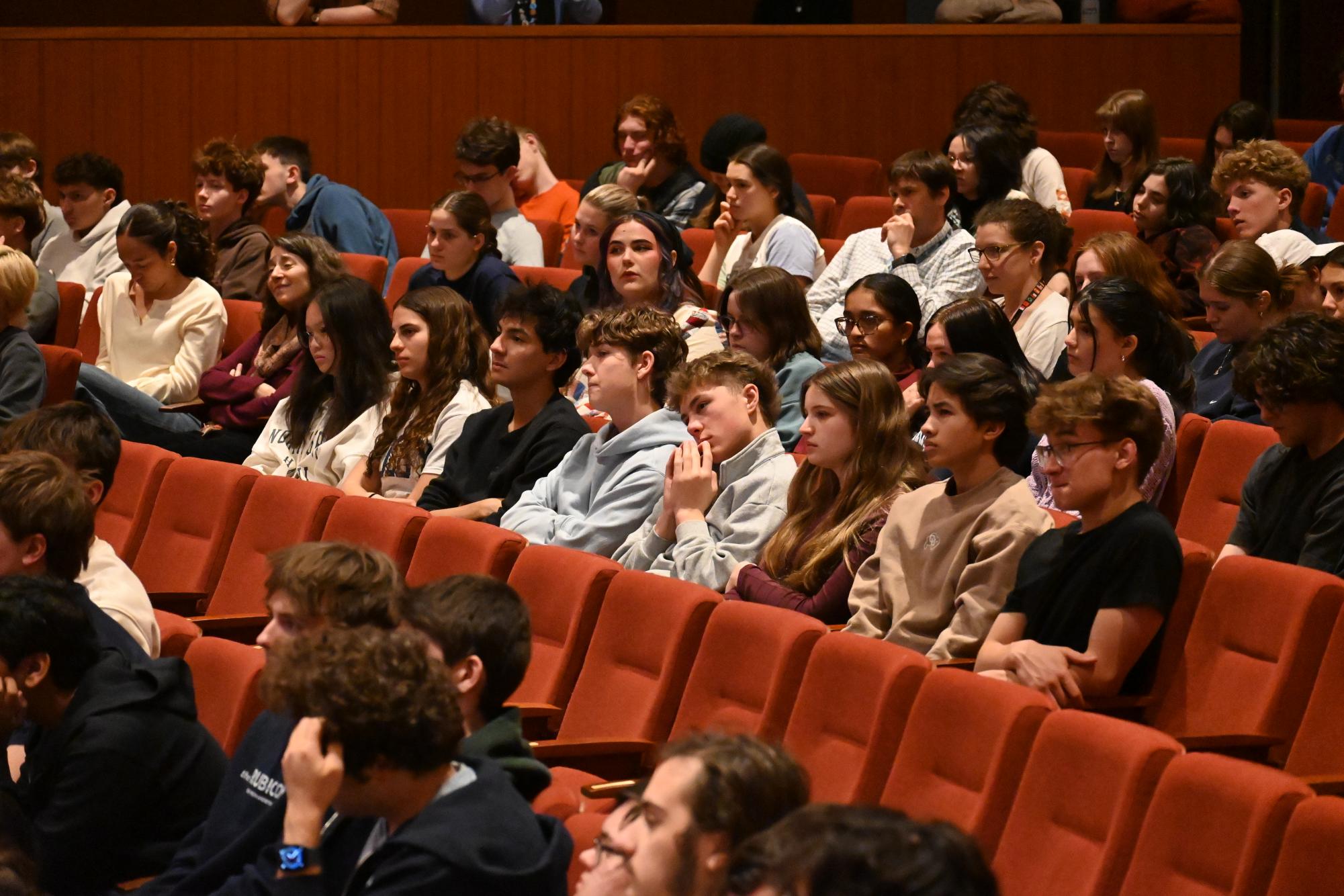
“Another assembly?” is a common rhetorical question heard when walking through the halls of the Randolph Campus, and it’s understandable. Every week during X-period, students gather in the Huss Center for Performing Arts to hear a range of topics discussed by panels, guest speakers, alumni, student groups or members of the administration.
While some of these presentations are undeniably important, the jam-packed schedule of assemblies is beginning to take away from time that student interest groups and affinity groups could be using to meet. If a student interest group plans to give a presentation at an assembly, for instance, they would need time to meet and plan beforehand – but the schedule has so far allowed for very little.
During shortened weeks or special schedules, club time typically gives way to assemblies, making it clear where the priorities land. An alternating schedule would be more beneficial: for example, if every other week were shorter than usual, meaning one X-period spot would be removed, then assemblies and club periods could alternate, rather than assemblies taking clubs’ spot entirely.
Furthermore, some of the speakers are set up with little to no student input, leaving the community uninterested in the topics that are being presented.
Some speakers seem to have been selected at random, with no real relation or connection to the student body. One such speaker, an alumnus of the school and CEO and co-founder of Tabs, Ali Hussain, spoke to students about artificial intelligence, but did not draw much engagement from students. Another assembly, featuring a panel of teachers speaking on the integration of AI into the classroom, seemed to repeat similar ideas, despite the less-than-enthusiastic reactions from the community.
Covering the topic twice, despite the lack of excitement about the subject the first time around, solidified the school’s apparent lack of regard for student input. The assemblies also tend to feel repetitive, as though they’re only there to fill an X-period. This can be harmful and disappointing for students who find safe spaces and important connections through their student interest groups.
According to the Centers for Disease Control, feeling connected at school and to peers makes teenagers less likely to experience health risks like substance abuse, violence and poor mental health. Affinity groups serve this purpose by creating a space where students can connect over a shared identity. These identities may be otherwise marginalized, making the time spent in those spaces all the more meaningful.
If the school’s goal is to build community, the focus should be on activities that foster student connections, such as clubs and affinity groups. More time should be allowed for these groups to meet, and assemblies should not be prioritized over clubs and student organizations.
Students cannot create connections when sitting quietly in the chairs at Huss, but they can do so when surrounded by peers and participating in activities they enjoy.