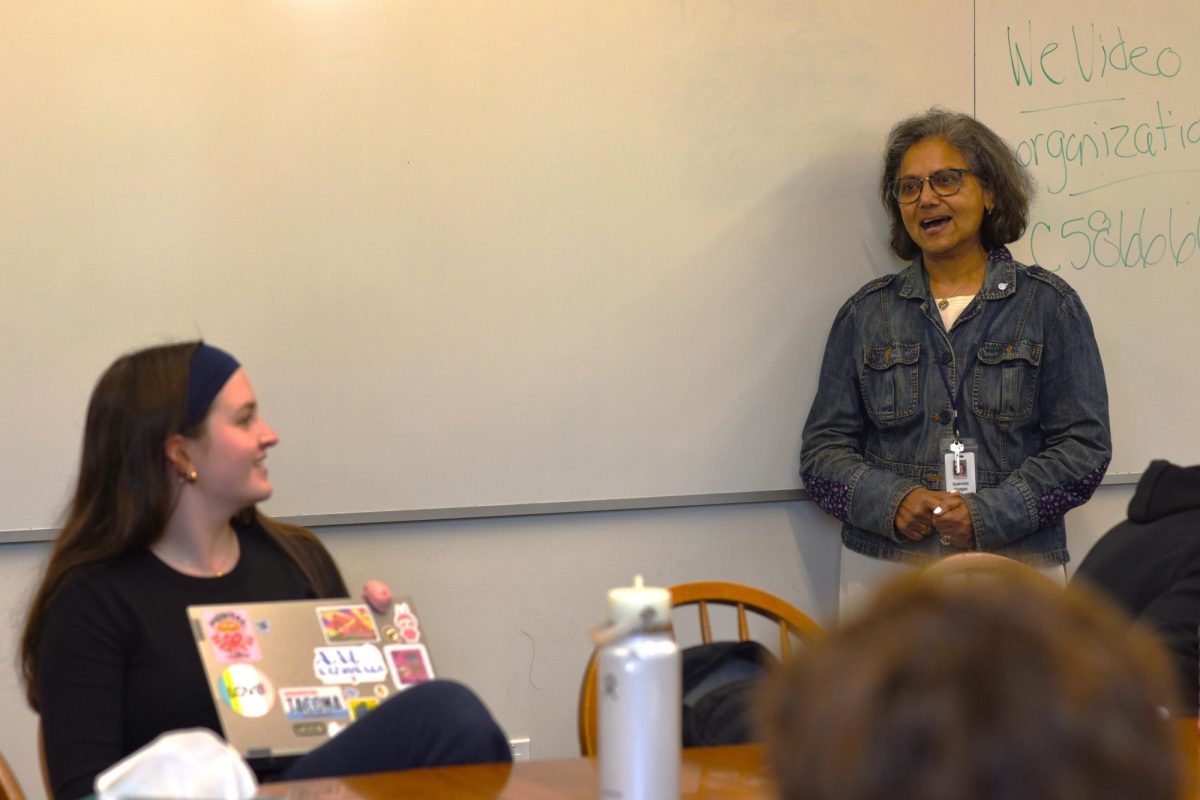


The senior speech intro, like the speech itself, is a cherished SPA tradition. From parodies to props, intros are an opportunity for students to celebrate their friends using ample creativity. Assistant Principal for Student Life Stacy Tepp, who oversees the intro review process, is more familiar with the tradition than anyone.
Over the past two years, Tepp has helped review intros when more faculty were involved; however, this is her first year running the process solo. Speakers ask their friends to write an intro for them and submit it to Tepp. For each intro script submitted via the “Senior Speech Intro Form” in Google Classroom, she looks for two main things before granting approval: The intros are supposed to be under 30 seconds long and have a celebratory tone.
“I’m really just looking to see if they’re celebrating the person. I just read one today, and it was funny, but in a celebratory way. I can imagine that the person, when they hear their friends say this, is gonna smile,” Tepp said. “That’s my end goal.”
Intros can also help speakers relax and enjoy their moment on stage. For many students, giving their speech can be nerve-racking. Speech day, after all, is a big day for many seniors, when they get to speak after hearing hundreds of others do so before them if they’ve attended throughout high school.
Getting to be celebrated and have a chance to laugh beforehand can set the right tone to embrace the experience.
Often, people use the intro as an opportunity to roast their friends. Tepp believes intros should strike a good balance between being fun and teasing and being cautious to make sure everyone in the space is okay with what’s being said.
“It should have a celebratory tone, because there [are] definitely times when a family’s been embarrassed by what’s been said, or the speaker’s been embarrassed, or faculty have been embarrassed,” she said. “I have Ms. Irish help me look through a lot of them, because honestly, I’m old and I don’t catch all the connotations and things in them. The two of us will talk about some of them and get back to students if there’s something that we feel like crosses the line or isn’t appropriate.”
On a large scale, another important consideration for Tepp is how the intros support the speeches.
“Some of the speeches can be really heavy. We want intros to be, again, fun and celebratory, but also we can’t have them so crazy that they totally detach from the moment,” she said. “Imagine we had all these crazy intros and then this really serious speech right after it. I think that can do the speech a disservice.”
To ensure everyone gets an intro, Tepp keeps track of the speakers in her calendar and will reach out to them at the beginning of the week to remind them to have people submit their intro script. If it’s getting close to the deadline and no intro has been submitted, she will often ask who is doing a speaker’s intro and reach out directly to them. For typical Friday speeches, the intros are due by the end of the day on Wednesday.
“There’s always a little drag in there, so I’ll just follow up with the speaker and their advisor,” she said. “The advisor is a great person to check in [with], because, for what it’s worth, sometimes it’s hard for students to find the right people to introduce them, and so knowing that your advisory group can always be a group that puts something together — yeah, you want to know that they have your back.”
Along with Design and Innovation Specialist Chris Huebner, Tepp also helps print the posters of speakers that are signed by students after speeches.
Tepp offered a reminder that, several years ago, before she was working at SPA, the administration surveyed the senior class and was a bit surprised and taken aback by the strong feelings seniors harbored in support of the intro tradition. Students shared that they deeply enjoyed having the chance to get up on stage and talk about their friends.
“I think the best intros are when you can tell that these friends have spent all this time together, they just love this person, and they’re like, this is what we love about you,” Tepp said.
The next set of senior speeches, after the all-important intros, will be during X-period on Friday, Mar. 13.
![CALCULATING THE CHANGES. As study habits have changed, the materials used have changed too. "I remember the day when [my brother] came home with his graphing calculator, [which] had Mario. And I was blown away," Spanish teacher Peter Daniels said. (Photos: Fair Use; Wikimedia Commons)](https://www.rubiconline.com/wp-content/uploads/2026/05/Untitled-design-4-1200x800.png)