[THEATER REVIEW] Winter One Acts share a range of serious and funny shows

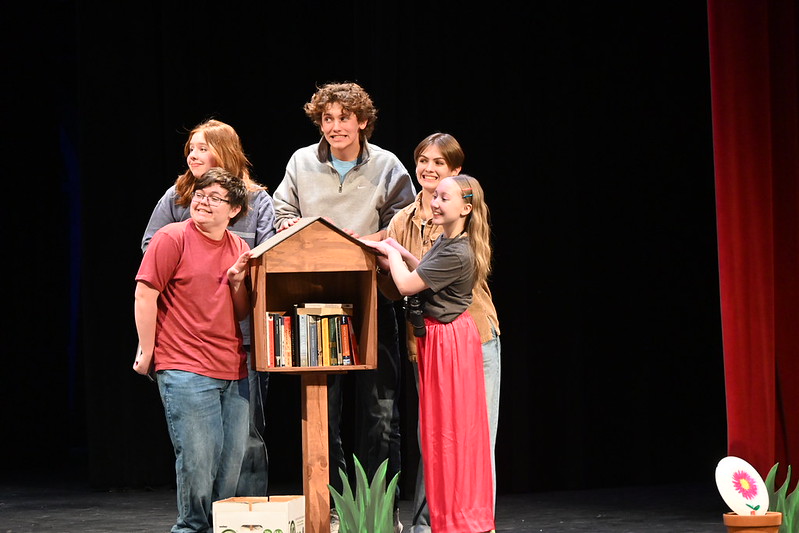
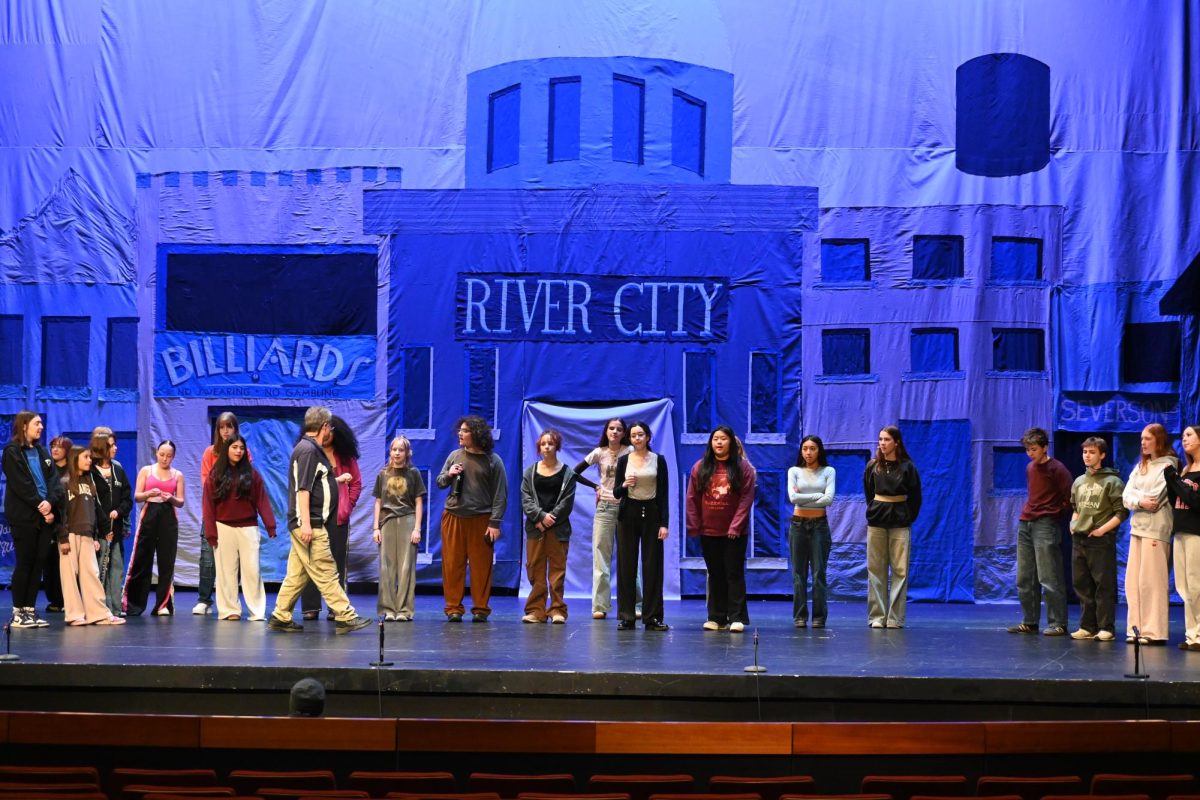
The night kicked off with a play directed by Jon Ferguson called “It’s the good bits that I find hard to talk about”. It followed a neighbourhood that was plagued with old friends leaving to continue with their lives.
The library remains a constant symbol of stability as it goes through multiple fights between childhood friends, and survives indifferent treatment from a wannabe tough guy who only reveals their soft side when gathering books. There were many relationships between characters that were explored in this play, and all of them ended up being resolved in the end by repairing the mini library.
Many eccentric characters are shown with Birdie (senior Bea Rhone) being an avid bird watcher, Maurice (senior Murray Goff) a radio host and Preston (senior Patrick Wall) Maurice’s co-radio host being present in all the scenes to continue each own little bit.
The largest conflict is when childhood friends Maurice and Preston bump into each other and reveal that they grew distant. When they bump into each other, an argument takes place about what half of the street each person gets, and they both end up arguing over who gets the library. This argument stems from Maurice’s injury and Preston slowly distancing himself. After they get into a physical argument and break the mini library, they realise they went too far which is a bit cliché. The fake slow-mo of them tearing the library apart was a well placed comedic relief from the fast-paced argument that led up to it.
Many characters are ending up leaving for college or other things and the ending wasn’t a normal happily ever after. This new unexpected surprise was welcoming, and led to an ending where everyone accepted each other and everyone escaped their norm. The ending with Sylvie (junior Sunde Auberjonois) and Andy (junior Anneli Wilson) reading a short book capped off the expectation that everyone was going to stay and change was not expected.

The second show of the night commenced after a brief intermission as conversations grew and dropped. “Like glue” directed by senior Zahra Wiedmann had a deeper view of the relationship between a mother and her daughter. The show was in chronological order and followed the daughter’s eventual path to independence and not relying on her mom.
In the first scene, a younger Mary, the mom (9th grader Delaney Anderson) has mood swings while continuously reprimanding a young Ana, the daughter (9th grader Liv Cole) then acting caring and asking her what she wanted to eat. Without the background information, it was a bit hard to follow as the mom would switch personalities frequently. This became more apparent later and worked well as a lead in.
In the next scene, a young Ana (senior Franny Wagner) was sitting with her boyfriend, David (sophomore El Nelson) immediately after they got kicked out of a party. Ana believes that her relationship with her mom estranged her and caused people to think how weird she is. Using that as her reason, she gets kicked out and continues to rant about how she needs to check on her mom. This builds upon the idea that she is super dependent and proves how necessary this scene was. It got a little repetitive when Ana kept insisting it was her fault and David kept denying, extending the bit and causing it to feel overstayed.
The final scene came with a lot of bombshells. An old Mary (senior Elzie Bieganek) is in her hospital bed and Ana (senior Frances Matthews) dressed in a nurses outfit comes to speak with her. Mary keeps avoiding the topic of the father and tells a lot of lies which Ana points out. Ana slowly distances her relationship with her mom while Mary tries to grasp at the lingering Ana and keeps drawing her back with fake promises and false tales. This back and forth was super authentic with Bieganek’s distressful acting adding to the strained relationship.
Overall each scene had wonderful acting and interactions between the mom and daughter worked out great. The only awkward areas were the extended bit between David and Ana that felt it overstayed its welcome.

The final show of the night had a much more comedic vibe than the earlier two shows. “When bad things happen to good actors” directed by junior Eva Johnson and junior Meili Windorski is filled with interruptions that are made to seem intentional. The play is supposed to be some rendition of “Dorothy in the land of Oz” but lots of mishaps happen, testing Dorothy’s (sophomore Izzy Middlebrook) limits over her failed role as the main character.
The first mistake that happens is with farmer Ben (Jianli Windorski) who pretends to forget their lines. His acting was so good that there was a tangible sense of awkwardness when he was asking for his lines. The one thing that tipped off that the mishaps were jokes was the stage director coming on stage and making up excuses for the understaffing.
After this initial introduction into what this play might entail, multiple spectacles were put into place. Lot’s of jokes came in with people acting as excited parents who ruined the show, a sound technician who wanted to go their own path and a tin man who can never catch their cue.
In the beginning of each joke, the audience was filled with laughter at being surprised by another unexpected mistake, but some bits just overstayed and were repetitive. One of these examples is when the building manager (senior Tressyn Weiss) was testing the alarm system, they played it one too many times. After playing it one more time, it seemed boring, but as if sensing the dying joke, they dropped the bombshell that he just got divorced, saving the joke one last time.
Overall, the amount and quality of each joke varied depending on how well prepared the actors were to enact them, and after each joke, they would set up to work on another one, leaving the audience guessing at what might be a joke and what might be part of the play.