
For some, college is the next step after graduating from high school; however, it is not the choice for all. Especially as tuition is increasingly expensive, it is time for college prep schools to reconsider the perception of other options after high school.
Traditionally, college prep schools are educational institutions specifically designed to prepare students for higher education through rigorous academics, Advanced Placement courses and specialized college counseling. These schools typically feature smaller class sizes, high academic standards and comprehensive extracurricular activities to foster intellectual and personal development.
However, the accessibility of college has changed. Since President Donald Trump’s second term began, funding cuts have severely impacted student loan programs and university grants. According to an October 2025 article by Cecelia Smith-Schoenwalder for U.S. News and World Report, titled “Tracking Trump’s Crackdown on Higher Education,” Trump’s One Big Beautiful Bill set a total lifetime borrowing limit of $257,500 for all federal student loans. This means millions of students entering college do not have a way to pay tuition and are under greater debt pressure.
According to a November 2025 article by Cleo Krejci for Minnesota Post titled “Minnesota lawmakers spotlight impact of canceled federal higher education grants,” the state has been hit especially hard by funding cuts. At universities and colleges across Minnesota, over $50 million for student scholarships, educational development and research has been cut. As a result, the average student faces an increased risk of debt in undergraduate and graduate studies.
While other options for supporting students in low-income households exist, like QuestBridge, funding cuts ensure fewer students will receive the support needed to pay for college. Thus, the time is right not only to step back from the college focus but also to promote other options that benefit the average student.
Two other paths can be promoted to replace college. The first is with trade schools. Trade schools are postsecondary institutions that provide specialized, hands-on training for specific skilled trades and technical careers. Unlike traditional colleges, they focus entirely on practical skills, enabling students to enter fields such as welding, plumbing or healthcare in less than two years.
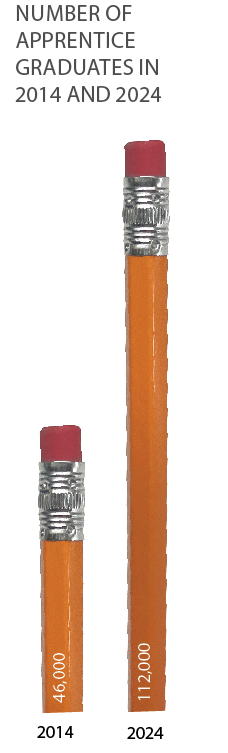
The second is with an apprenticeship. An apprenticeship is a career pathway that allows individuals to gain hands-on experience in manufacturing, energy, telecommunications and transportation, while learning under the guidance of experienced mentors. Unlike traditional college, apprenticeships combine practical training with classroom instruction, helping students develop real-world skills without accumulating student debt.
For both of these options, students who are committed have an easier time getting accustomed to their choice and can build skills needed for their future work much quicker than in college, without imposing massive amounts of debt on themselves.
While not as well known, options like trade school and apprenticeship can be promoted by increasing awareness in high schools, highlighting successful career stories, partnering with local businesses and educating parents and counselors about the high earning potential and job security available in skilled trades and technical careers.
Colleges and universities can also take similar actions. Rather than forcing students to commit to a major they may be unsure of, additional methods for identifying their goals and wishes can be implemented to direct them towards the right path to success.
While college is treated as the primary route to higher education after high school, current administrative actions threaten to prevent students from pursuing their goals.
True college prep schools should consider other options, such as trade schools and apprenticeships, for the entire student body. After all, the goal for higher education is to promote success in later life, and each student achieves success in their own way.