
Today, violent conflicts affect millions of people worldwide. The majority of them are driven by selfish political ambitions that harm many people in the regions nearby. These wars leave behind displaced families and communities struggling with loss and uncertainty. Beyond the immediate destruction, the consequences carry on through generations, forcing entire communities to rebuild their sense of normalcy and safety. While each conflict has its own history and causes, the experiences of those caught in the middle often share similarities. It is easy for those far from the warzones to feel disconnected. However, empathy and understanding are essential, and these are the main issues that need to be addressed.
In a world where global crises can feel distant or overwhelming, it becomes even more important to intentionally pay attention. Staying informed about global conflicts, listening to the stories of those affected, and recognizing our shared humanity can help bridge the emotional gap that distance creates. Practicing empathy—whether by supporting humanitarian efforts, engaging in meaningful conversations, or simply refusing to turn away from the suffering of others—allows us to play a small but vital role in fostering awareness and compassion. By choosing to care, we take the first step toward a more conscientious and connected world.
Just under four years ago, Russian President Vladimir Putin ordered 200,000 soldiers to invade Kyiv, the capital city of Ukraine, restarting the Russia-Ukraine War. Since February of 2022, Russia has gained more than 4,000 kilometers of land, and there have been over 40,000 casualties caused by the war. The Russia-Ukraine conflict has had a harmful outreach with it negatively affecting many countries, not just those inside its borders. It has driven up global gas and oil prices and disrupted trade networks across Europe, showing that the effects of war seldom stay contained. The war was sparked by long-standing political and historical disputes over territory, illustrating how ambition for land and influence can lead to human suffering on a vast scale.
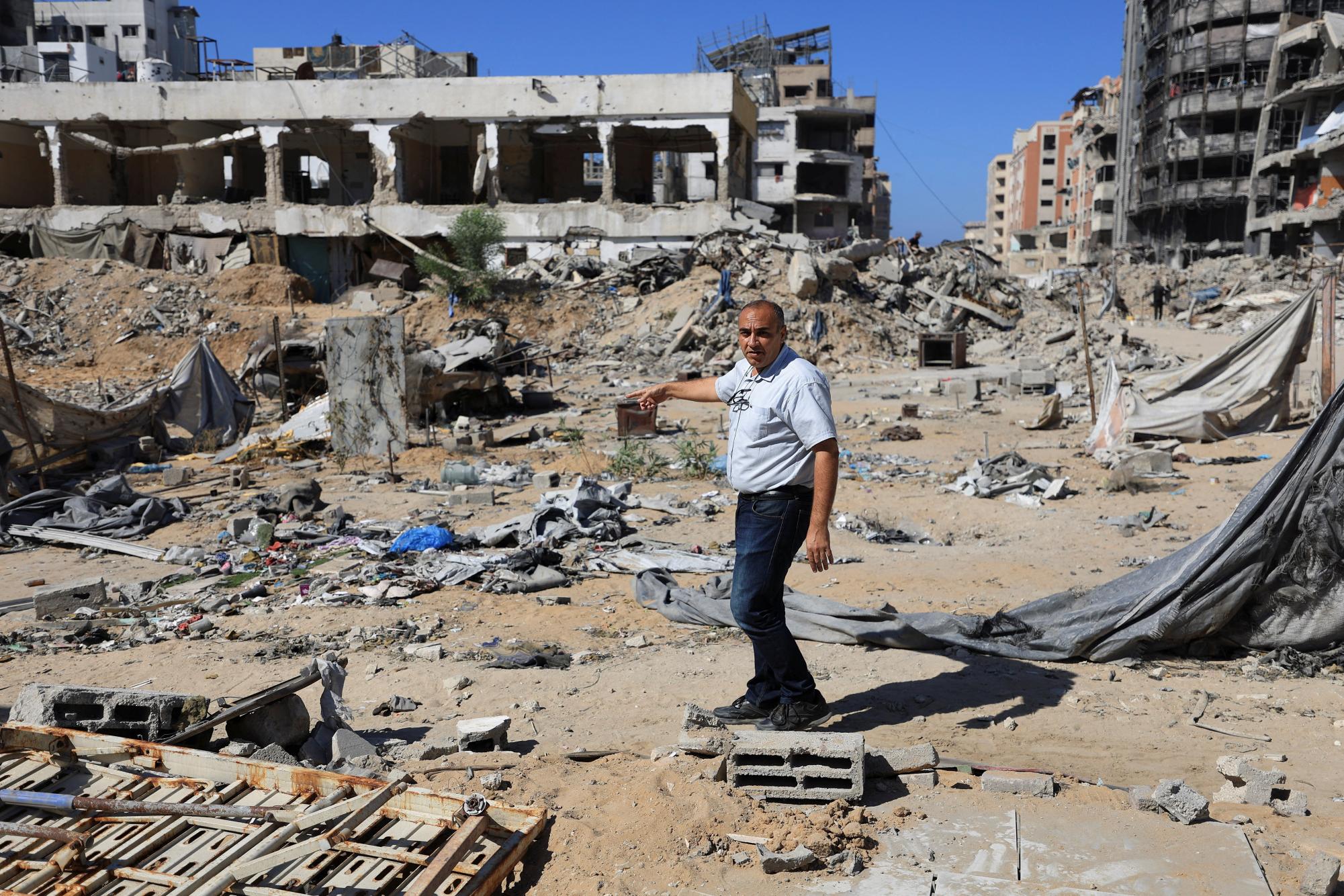
Another major conflict that continues to affect millions is the Israel-Hamas war. What began in October 2023, when Hamas launched an attack on Israeli communities, led to large-scale violence that has killed tens of thousands of Palestinians and caused severe devastation in Gaza. Entire neighborhoods have been reduced to rubble, leaving civilians without access to clean water, food or shelter. The fighting has deepened divisions that have existed for decades, and the destruction illustrates how political conflict repeatedly places civilians at the center of danger. The war has drawn global attention and protests, with nations struggling to agree on a path toward peace. Yet amid the political statements and international debates, human suffering remains the most visible consequence. Families are torn apart, and generations grow up in an environment of fear and uncertainty.
Both of these wars, though different in geography and history, reveal the same truth: violence born from ambition and revenge only multiplies loss. Civilians endure the cost of decisions made by those in power, while their futures are shaped by events they cannot control. The lessons from these conflicts show that genuine peace cannot exist where compassion is ignored. A nation’s strength should not be measured by its ability to conquer but by its willingness to protect life.